
Study of Myanmar earthquake helped model shaking on the San Andreas — Live Science
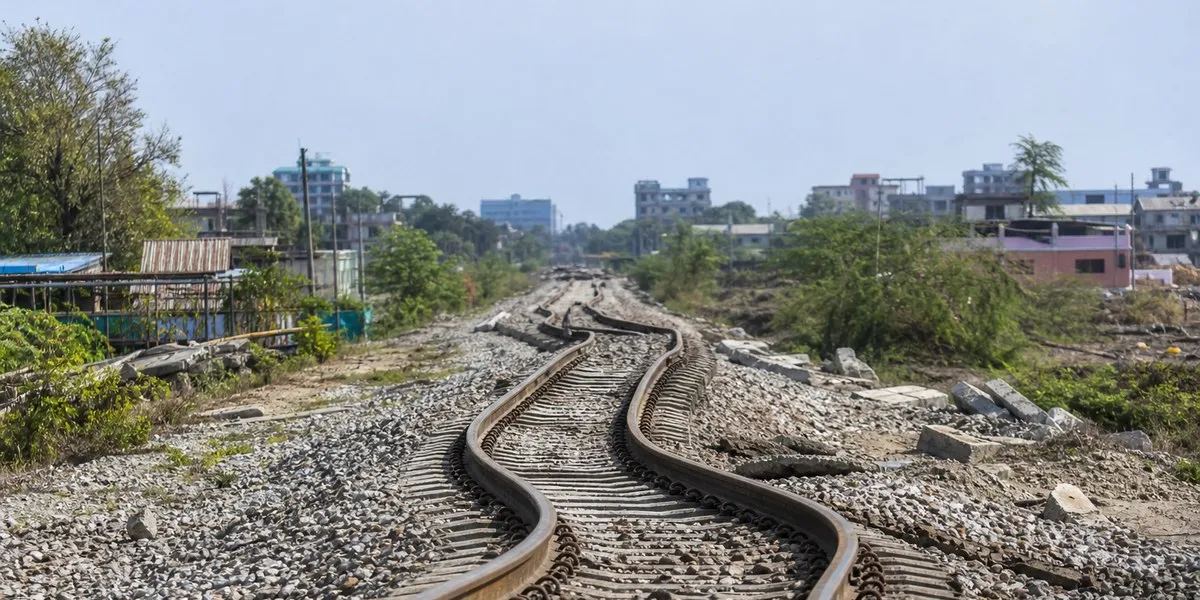
A new study of the magnitude 7.7 earthquake that occurred near Mandalay, Myanmar, on March 28, 2025, showed that the shape of a fault can affect the strength and distribution of shaking. These data may help scientists model the consequences of a possible major earthquake on California’s San Andreas Fault more accurately, Live Science reports.
Structure of the Sagaing Fault
The Myanmar earthquake’s tremors were also felt in Bangkok, located about 1,330 kilometers away. At least 3,700 people were killed. Researchers analyzed detailed satellite data and a surveillance camera recording that captured the ground rupturing during the fault’s movement.
Modeling showed that the Sagaing Fault is not a vertical plane underground. In its northern section, the fault surface slopes westward; in the central section, it is vertical; and in the southern section, it slopes eastward. According to Alice-Agnes Gabriel, a geophysicist at the Scripps Institution of Oceanography at the University of California, San Diego, stronger shaking usually occurs in the direction of the fault’s dip.
More current news is available on the UA.News Telegram channel Telegram.
Significance for California
The Sagaing Fault shares features with other strike-slip faults near populated areas, including the San Andreas. California’s fault also dips inland, toward California’s high desert. If a possible major earthquake on the San Andreas develops similarly to the event in Myanmar, stronger shaking may occur on its inland, less populated side rather than in coastal areas.
Scientists also found that individual segments of the Sagaing Fault had been locked and accumulating stress for 186 years. Using data available before the earthquake, the team was able to predict the trajectory, shape and speed of the rupture’s propagation. Gabriel stressed that it is impossible to predict the exact time and location of an earthquake, but long-term observations of faults can help forecast certain characteristics of such events.
Researchers are working to update the model of a possible major earthquake on the San Andreas. The results are planned to be used to prepare the population, inform building codes and support the work of emergency response services.




