
Melting ice accelerates the rounding of the solid Earth — Live Science
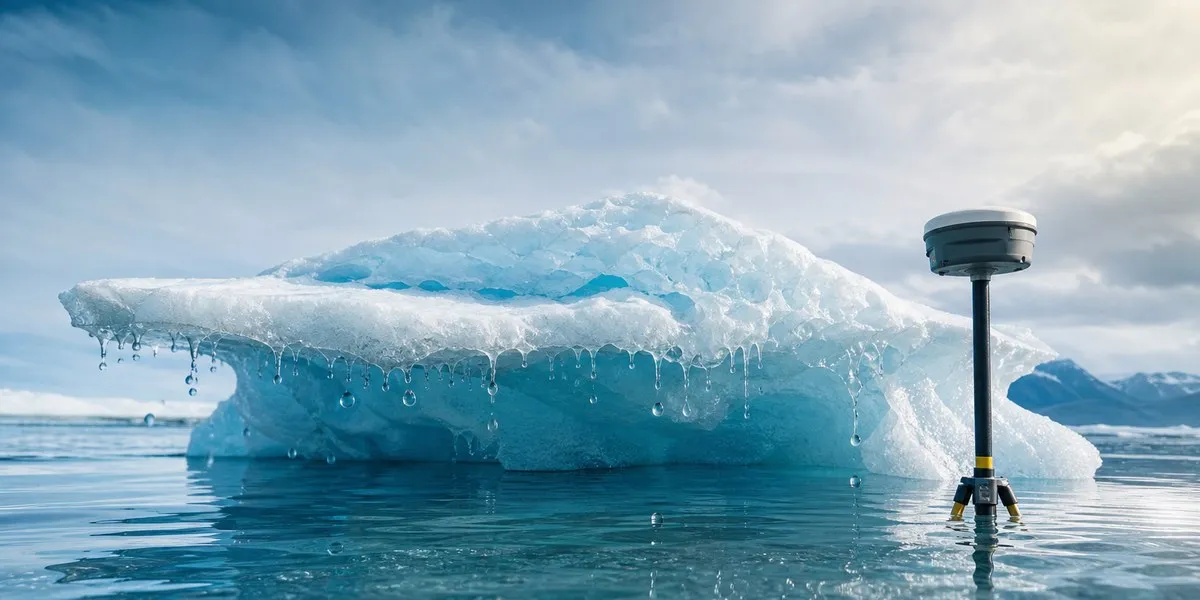
A study based on satellite geodetic measurements has shown that melting ice at the poles accelerates the rounding of the solid part of the Earth. The planet is not a perfect sphere: due to its rotation, it is somewhat flattened near the poles and has a bulge in the equatorial zone. As Live Science reports, changes in shape are mainly linked to melting polar ice and mass redistribution.
Measuring the planet's shape
Geodesist Christoforos Kotsakis of Aristotle University of Thessaloniki in Greece developed a method for analyzing Global Navigation Satellite System (GNSS) data to track vertical changes in the Earth's surface more accurately. According to his calculations, in 2011–2015 the poles were rising, while the equatorial bulge was decreasing by about 1 millimeter per year.
For comparison, in 1997–2000 the solid part of the Earth was becoming rounder by about 0.5 millimeters per year. The researcher concluded that the rate of this rounding is increasing by about 0.4 millimeters per year with each subsequent decade.
More current news is available on the UA.News Telegram channel Telegram.
The impact of melting polar ice
Melting ice reduces the load on the Earth's crust in polar regions, causing it to rise slowly. At the same time, the increase in mass near the equator is associated with a decrease in the bulge of the solid surface in this zone.
For the Earth together with its oceans, the result is different: the planet as a whole is becoming somewhat more flattened — by about 0.8 millimeters per year. This is explained by ocean water moving from the poles toward the equator and increasing the equatorial bulge more than the solid rocks are becoming rounder. Researchers also use gravitational field measurements together with GNSS data to track ice melting in Greenland and Antarctica and the movement of ocean water.




