
Gamma-ray source may be a trace of a neutron star merger — South China Morning Post
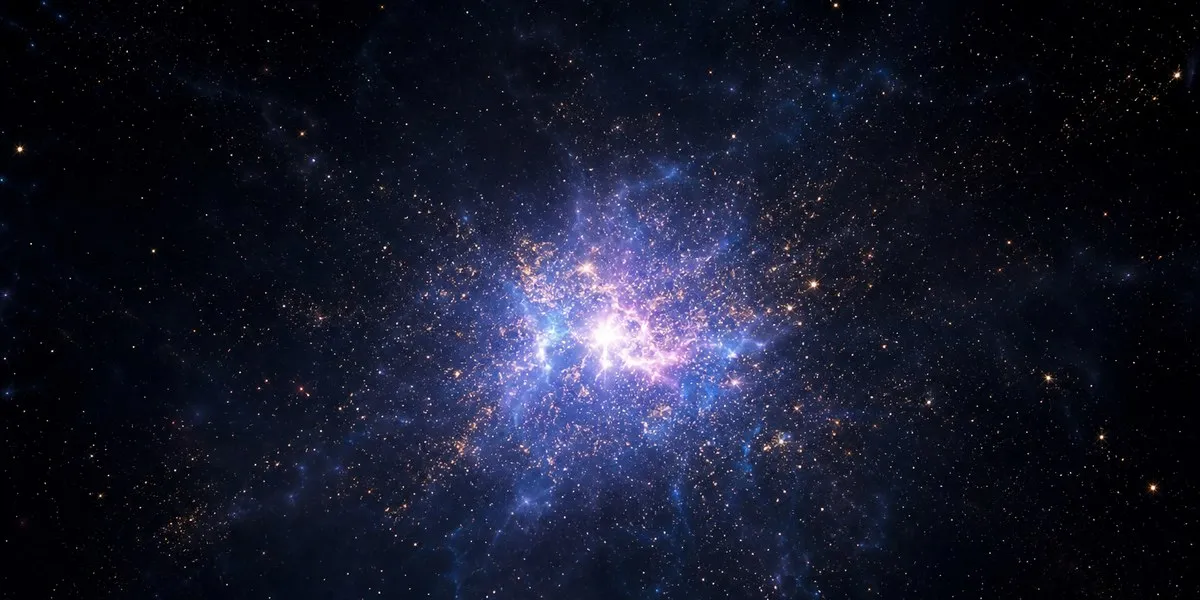
Chinese and US researchers have suggested that a mysterious source of high-energy gamma radiation in the Milky Way may be the remnant of an exceptionally rare collision of two neutron stars. The conclusions of the team from the Chinese Academy of Sciences and the University of Notre Dame are set out in a preprint on arXiv that has not yet undergone peer review, South China Morning Post reports.
Possible source of heavy elements
The authors of the study, led by Prantik Sarmah of the Institute of High Energy Physics of the Chinese Academy of Sciences, believe that the merger may have occurred less than a thousand years ago. They say this is indicated by the small size and high brightness of the glowing cloud that may have remained after the event.
During a collision of neutron stars, atoms and a large number of neutrons are ejected. By capturing neutrons, atoms can form heavy chemical elements, including gold, platinum and uranium. After such a collision, the remnants, under the described scenario, collapse into a black hole.
More current news is available on the UA.News Telegram channel Telegram.
The researchers noted that the initial flash may have been comparable in brightness to Jupiter in the night sky, but it did not last long and faded within several days. It would have been difficult to observe from China, Japan and Europe because of its location far in the southern part of the sky. At the same time, according to the authors' estimate, the event occurred many thousands of light-years from Earth and posed no danger to life on the planet.
How the hypothesis will be tested
The gamma-ray source was first detected by High Energy Stereoscopic System telescopes in Namibia. It is located well below the plane of the Milky Way's disk, where most similar objects are usually concentrated. It had previously been linked to a pulsar or the remnant of an ordinary supernova, but no pulsar was found nearby, nor was a shell characteristic of a supernova remnant identified.
The neutron star merger scenario can be tested by searching for faint gamma radiation from the radioactive decay of heavy elements. Current technology is not sensitive enough for this, but such observations could potentially be carried out by the proposed Chinese MeV Gamma-Ray Observatory space observatory. Astronomers can also search for a light echo of the initial flash reflected by dust using large telescopes in the Southern Hemisphere, including the Vera Rubin Observatory in Chile.




