
NASA plans to send three SkyFall helicopters to Mars in 2028 — Space.com
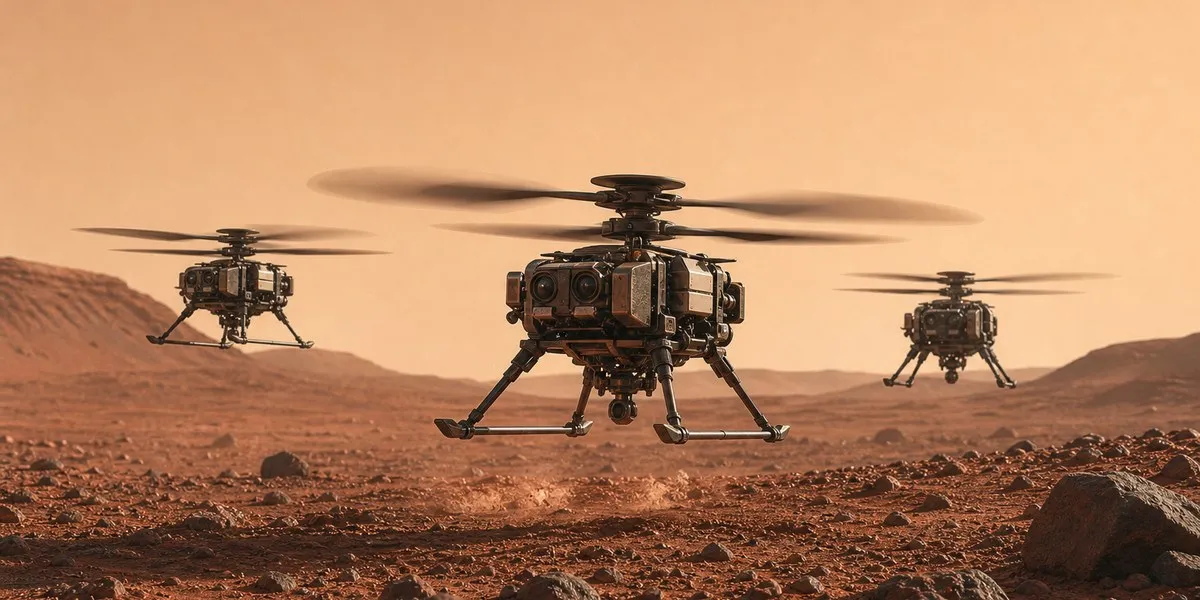
NASA is accelerating the development of three SkyFall Mars helicopters, which are to depart for the Red Planet in 2028 aboard the Space Reactor-1 Freedom spacecraft. The vehicle, equipped with a nuclear power system, is expected to deliver a capsule containing the aircraft to Mars’ northern hemisphere in spring, when the risk of dust storms is lower, Space.com reports.
Independent landing
The three identical helicopters are planned to be released into the Martian atmosphere at an altitude of approximately 1,000 meters. After separation, they are expected to deploy, descend and land on the planet’s surface independently. This deployment method does not involve a single-use lander or a rover carrier, as was the case with Ingenuity, which operated alongside Perseverance.
SkyFall is being developed based on the experience of Ingenuity, which completed 72 flights in Jezero Crater, although it was initially designed for only five. The new vehicles will be slightly larger but will operate according to the same principle. They are being designed for six months of operation, with the goal of extending this to one Earth year.
More current news is available on the UA.News Telegram channel Telegram.
Searching for ice beneath the surface
Each helicopter will receive five scientific instruments and navigation cameras. They will study Mars’ subsurface structure, the geomorphology and geology of the terrain, meteorological conditions, and the radiation environment. The vehicles will also carry ground-penetrating radar capable of detecting layers of rock or buried ice at depths inaccessible to orbital radars.
The project’s guideline for selecting a landing site is areas with deposits of subsurface water ice and glacial or periglacial landscapes. According to project scientist Matthew Golombek of NASA’s Jet Propulsion Laboratory, the helicopters will be able to cover one to two kilometers every other Martian day, while the total length of their routes could reach 200–300 kilometers.
NASA plans to hold the first workshop on potential landing areas at the beginning of next year and the second in late 2027. The missions are intended to select scientifically valuable sites beyond the landing ellipse, including for the search for ice, which is important both for studying Mars’ climate history and for future crewed expeditions.




