
Google opens access to AI watermark detector — Premium Times Nigeria
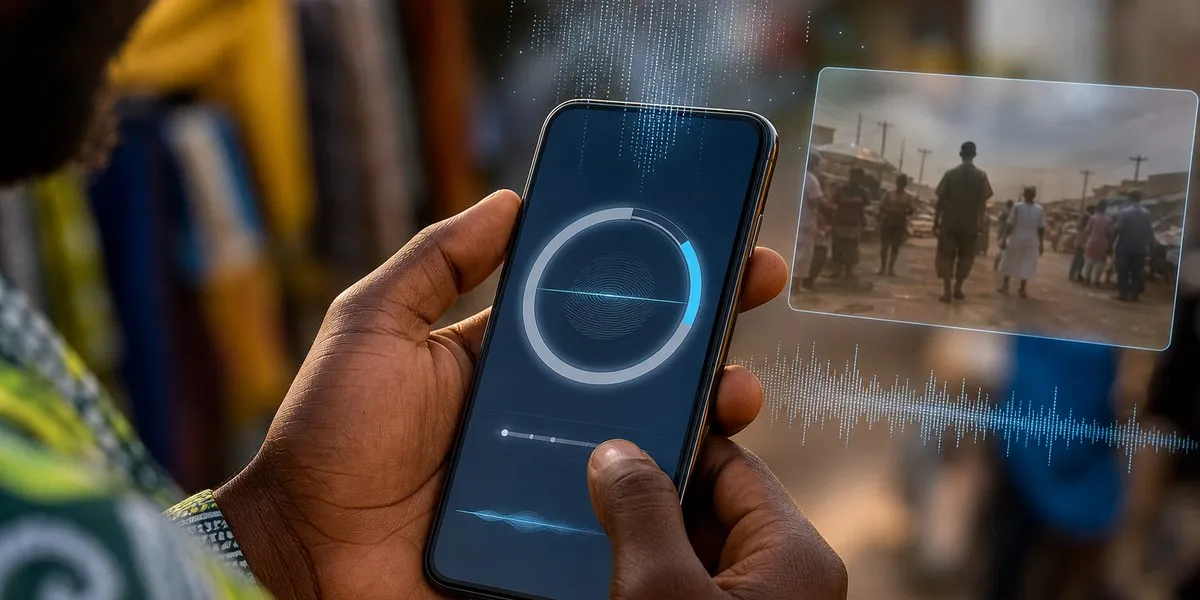
Google has opened global English-language access to the SynthID Detector platform, which makes it possible to check images, videos and audio for invisible watermarks embedded by supported artificial intelligence systems. In Nigeria, the service may be an additional tool for verifying questionable content ahead of the 2027 general elections. Premium Times Nigeria reported this, citing a company statement.
How SynthID Detector works
Users can upload a media file to the service, after which it checks it for recognizable SynthID watermarks. This digital signal is added to content during its creation: it is invisible to humans but can be detected by Google's technology.
After scanning, the platform reports whether a file was created or modified using supported AI technologies. According to Google, watermarks in images and videos are intended to remain detectable after cropping, applying filters, compression and changes to frame rate. In audio, the signal is inaudible to listeners and is intended to withstand the addition of noise, changes in playback speed and compression into MP3 format.
The detector currently recognizes marks in content created by Google tools and companies participating in the initiative, including OpenAI, NVIDIA and Kakao. The service can be accessed through a Google, Apple or OpenAI account. Apple is expected to join the initiative later.
More current news is available on the UA.News Telegram channel Telegram.
Limitations of verification
SynthID Detector is not a universal tool for detecting AI-generated content. It primarily searches for watermarks added by Google or participating companies. Therefore, the absence of such a mark does not prove that a file is authentic or entirely created by a human.
The service also does not determine whether real events are correctly described in an authentic photo or video: material may be shared with a false date, location or caption. The article notes that verification should be combined with an analysis of the source, metadata, reverse image searches, comparison of landmarks, and contacting people or organizations involved.
Google said that since the launch of SynthID in 2023, it has embedded such watermarks in more than 180 billion AI-generated images and videos, as well as in about 240,000 years of generated audio.




