
NASA has scheduled DAVINCI's launch for December 2030 — Ars Technica
In the United States, NASA plans to launch the DAVINCI mission to Venus in December 2030 — a year earlier than the previous schedule envisaged. The VERITAS mission, according to its deputy principal investigator Dan Nunes, has funding and is scheduled for launch in November 2032. Ars Technica reported the update following a meeting of the Venus Exploration Analysis Group.
DAVINCI descent vehicle
DAVINCI is to deliver a parachute descent vehicle into Venus's atmosphere. A flyby of the planet in early 2032 is expected to prepare the release of the probe for its descent to the surface on October 3, 2032.
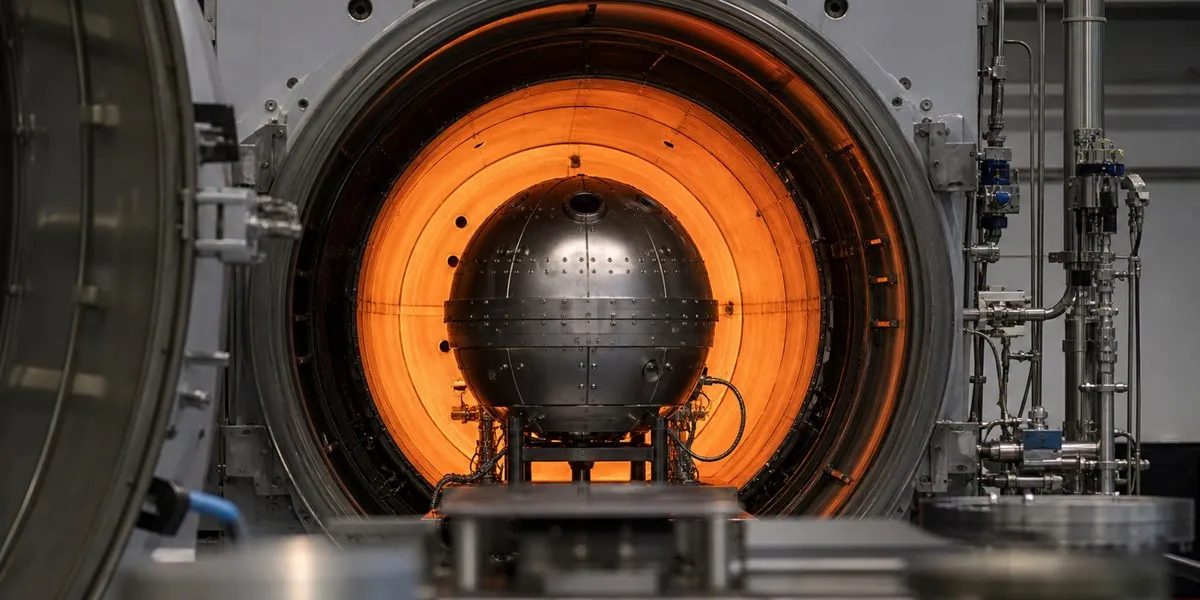
The titanium descent vehicle will operate on battery power and travel from space to the surface in about an hour. Data and images will be transmitted to Earth via radio communication with the carrier spacecraft before it disappears beyond the horizon. DAVINCI is expected to obtain the first direct images of Venus's surface since 1982.
The mission team conducted experiments intended to show how cameras and scientific instruments would collect data during the one-time descent. A probe prototype was also tested at extreme temperatures: the insulated sphere kept the temperature of internal components below 30°C.
More current news is available on the UA.News Telegram channel Telegram.
Mapping Venus
VERITAS is planned to launch about a month after DAVINCI's descent. The spacecraft is expected to arrive at Venus around mid-2033, undergo an aerobraking phase, and then begin regular observations.
The orbiter will carry a radar intended to substantially improve the detail of Venus surface maps compared with the Magellan mission, including in areas of active volcanoes. Previously, budget pressure put VERITAS at risk of cancellation and delayed its development. Budget constraints also forced NASA to abandon supplying a radar instrument for the European Envision mission, whose launch to Venus is scheduled for 2032.
According to Ars Technica, ending support for Envision and canceling the Mars Sample Return program freed up funds to continue work on DAVINCI and VERITAS.




