
New megaraptor species that lived 120 million years ago identified in Britain — ScienceDaily
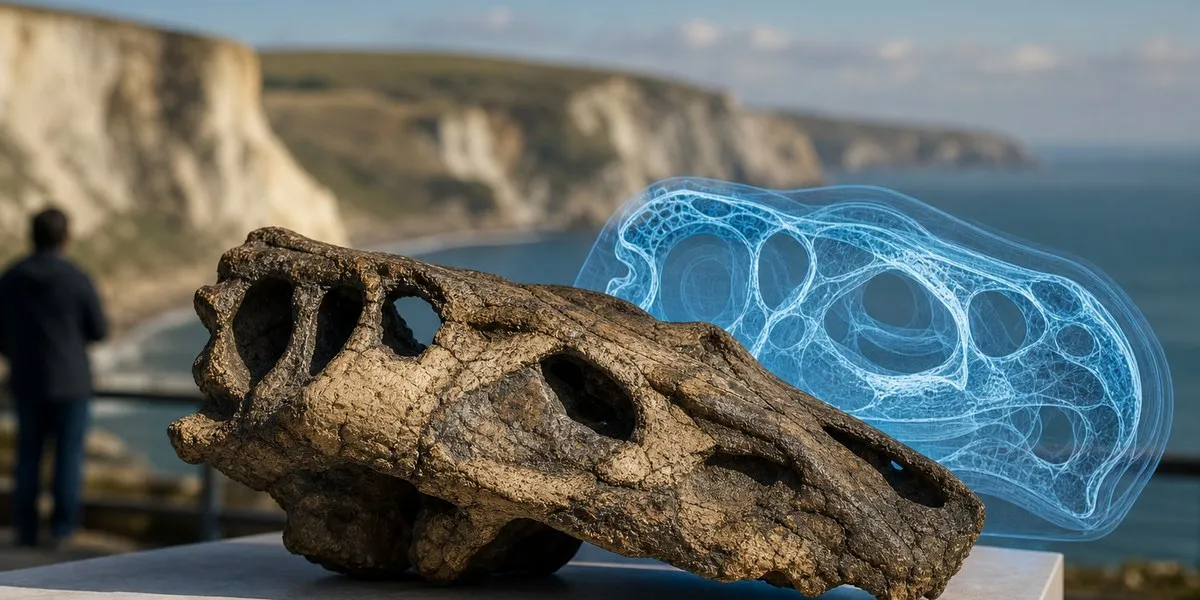
Researchers on the Isle of Wight in the United Kingdom have identified a new species of predatory dinosaur that lived about 120 million years ago. A fragment of the rear part of its skull had been kept in the Natural History Museum collection since 1924, but its scientific significance was established only now. As ScienceDaily reports, the species was named Invictibellatrix amberina.
The first megaraptor in Europe
A team of scientists led by specialists from University College London concluded that the dinosaur belonged to the megaraptors, a group of bipedal predators related to tyrannosaurs. At the same time, megaraptors differed from them in having narrower skulls, powerful forelimbs and large curved claws used to seize prey.
Invictibellatrix amberina became the first known representative of megaraptors found in Europe. Previously, paleontologists assumed that these dinosaurs evolved in Asia, spread through Europe and later reached Gondwana, the ancient southern supercontinent that included the territories of modern-day Africa, South America and Antarctica. The new find supports this version of the group's dispersal.
Reconstruction from a skull fragment
According to the study authors' estimate, the animal was three to four metres long and slightly more than 1.5 metres tall. It may have had feathers, and its claws were probably 10 to 20 centimetres long. Researchers believe the predator fed on small dinosaurs, lizards and mammals.
More current news is available on the UA.News Telegram channel Telegram.
To analyse the remains, the researchers used computed tomography, creating a three-dimensional model of the skull fragment and its internal cavity. They compared its anatomical features with the remains of tyrannosaurs, spinosaurs, raptors and other predatory dinosaurs. The specimen's distinctive features include an oval opening in the area where the spinal cord connects to the brain and an hourglass-shaped crest.
A museum find
The fossil was found by amateur paleontologist Reginald Walter Tully at the foot of a cliff on the southwestern coast of the Isle of Wight. During his lifetime, he collected more than a thousand fossil specimens, which the Natural History Museum acquired after his death, including the skull fragment.
The name Invictibellatrix means “invincible woman warrior,” while the species name amberina refers to the amber in the rocks from which the specimen originated and the female name Amberina. The study results were published in the journal Royal Society Open Science.




