
OpenAI claims to have solved the Navier–Stokes problem
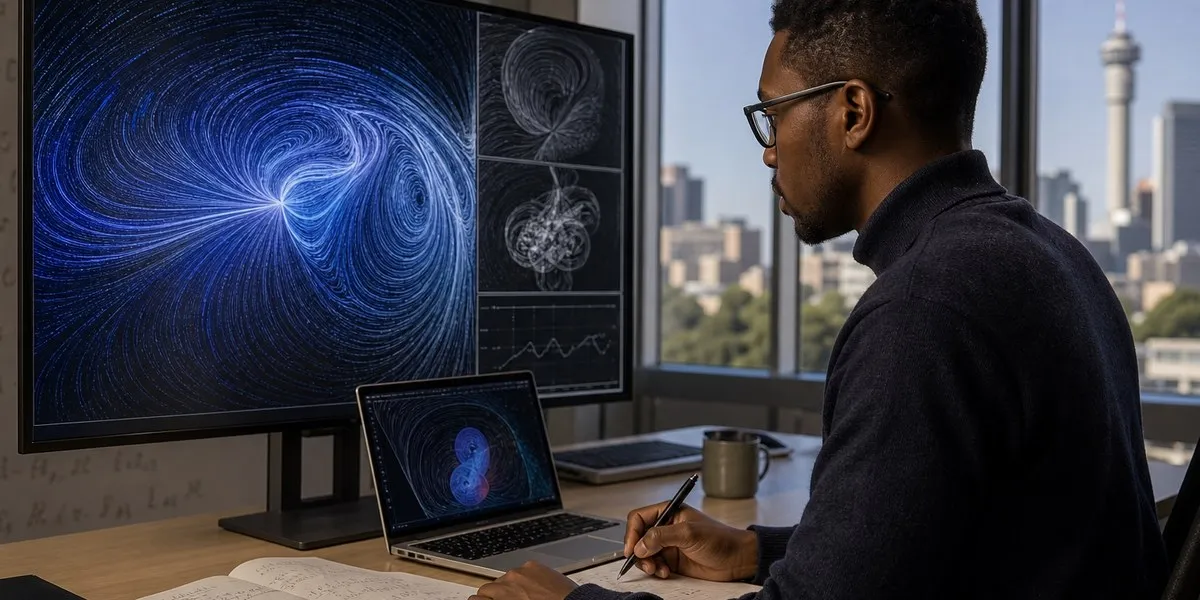
South African outlet Daily Maverick reported that on September 8, OpenAI claimed to have solved one of the Clay Mathematics Institute’s Millennium Prize Problems — the Navier–Stokes problem. According to the outlet, the company’s unreleased model spent 88 hours on it, but the result is still awaiting scientific peer review.
The Navier–Stokes equations, formulated by Claude-Louis Navier and George Gabriel Stokes in the 19th century, describe the motion of fluids. They are used in weather forecasting, calculations of tides and ocean currents, modeling aircraft wings, and blood flow in arteries. The question of proving or disproving their correctness under all necessary conditions had remained unresolved for decades.
The researcher’s claim
Tristan Buckmaster, a professor of mathematics at New York University, stated that OpenAI’s approach matched a method he had been developing with Levent Alpöge, an Anthropic employee. According to him, they used artificial intelligence tools, including OpenAI models, uploading drafts of ideas, mathematical techniques, and unpublished notes.
More current news is available on the UA.News Telegram channel Telegram.
Buckmaster claims that before announcing the result, OpenAI insisted on speaking with him and offered two options for further action. In his version, one of them involved him and Alpöge publishing a partial result, after which OpenAI would announce a complete solution the following day. The other option, Buckmaster said, involved his publication, claiming the $1 million prize, and making a public statement that the problem had been solved solely with the help of OpenAI’s platform. He also said that he was asked not to list Alpöge among the authors of the work.
OpenAI’s response
OpenAI researcher Sébastien Bubeck called the accusations against him false and inflammatory, stating that he acted in accordance with standard academic norms. OpenAI insists that no one at the company had seen Buckmaster and Alpöge’s work before its publication.
At the same time, according to Daily Maverick, an OpenAI statement says that the company cannot completely rule out the possibility that anonymized data obtained during the use of its products helped improve its models. The outlet also raises the question of who should receive scientific recognition for discoveries made with the involvement of artificial intelligence.




