
AI images in the 1980s style require electricity and water — Kathmandu Post
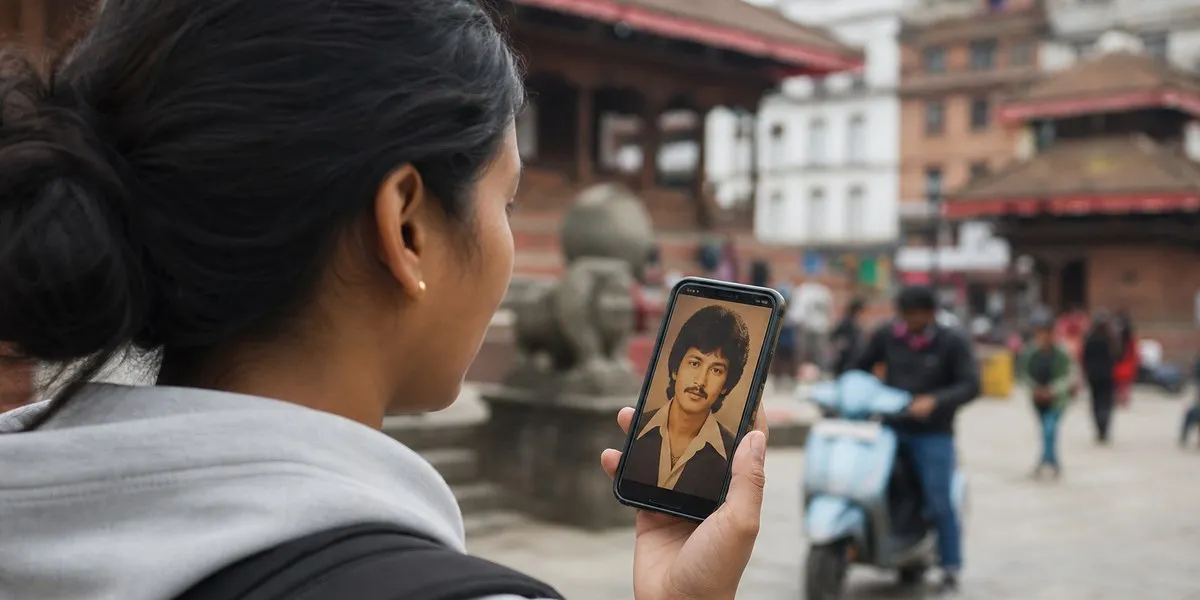
In Nepal and other countries, a trend for artificial intelligence-generated portraits in the style of the 1980s is spreading across social media. Such images are created in seconds, but their generation requires data centers to operate, as well as significant amounts of electricity and water to cool equipment, Kathmandu Post reports.
Artificial intelligence researcher Mahesh Kushwaha noted that technology companies design products to encourage user interaction and content sharing. According to him, this trend is especially noticeable in Nepal due to active social media use and rapid adoption of global digital trends.
Electricity consumption
A user request passes through network infrastructure to data centers, where graphics processors perform intensive computations. A study by Hugging Face and Carnegie Mellon University covering 17 modern AI models found that the energy consumption of models for similar tasks can differ by up to 46 times depending on their architecture.
Researchers estimate that generating one image using AI requires an average of 2.9 watt-hours of electricity — approximately the amount needed to fully charge a smartphone. Doubling an image's resolution increases the need for computational energy by 1.3 to 4.7 times.
More current news is available on the UA.News Telegram channel Telegram.
The International Energy Agency estimated global data center electricity consumption at 415 terawatt-hours in 2024, or about 1.5% of global demand. According to the cited data, this figure rose to 485 terawatt-hours in 2025 and could reach 950 terawatt-hours by 2030.
Data centers' water footprint
AI's environmental impact is not limited to electricity. Kushwaha named three main factors: energy consumption and associated emissions, the use of water for cooling, and the material footprint of equipment and infrastructure.
A study led by Shaolei Ren, an associate professor at the University of California, Riverside, showed that generating a standard AI image directly and indirectly leads to the evaporation of about 29 milliliters of water. Under the researcher's model, global AI infrastructure could consume between 4.2 billion and 6.6 billion cubic meters of water annually by 2027.
A Google report states that one simple text prompt to the Gemini model consumes approximately 0.24 watt-hours of electricity and 0.26 milliliters of water. The document's authors noted that processing images and videos requires significantly more resources. Kushwaha stressed that responsibility for environmental consequences should concern not only users, but also developers' decisions and AI companies' business models.


