
OIST develops portable sensor for detecting PFAS in water — News-Medical
Researchers at the Okinawa Institute of Science and Technology (OIST) have developed a prototype portable platform for detecting per- and polyfluoroalkyl substances (PFAS) in water without the need to send samples to a specialized laboratory. News-Medical reports.
PFAS are synthetic chemicals resistant to degradation that can accumulate in water, soil, and living organisms. They are often called “forever chemicals.” Traditional PFAS analysis involves collecting samples and transporting them to laboratories equipped with mass spectrometers, which requires time and money.
Synthetic antibodies for the sensor
The device uses molecularly imprinted polymers (MIPs) designed to bind to target PFAS molecules. Such polymers are formed around the required substance, which is then removed. The result is a structure capable of recognizing and capturing that molecule again, which is why MIPs are also called synthetic antibodies.
More current news is available on the UA.News Telegram channel Telegram.
The sensor records changes in electric current when PFAS molecules bind to the polymer coating. According to the developers, a larger change in current corresponds to a higher concentration of the substances in a water sample. No additional chemical reagents are required for measurement.
Prototype for PFOA and PFOS
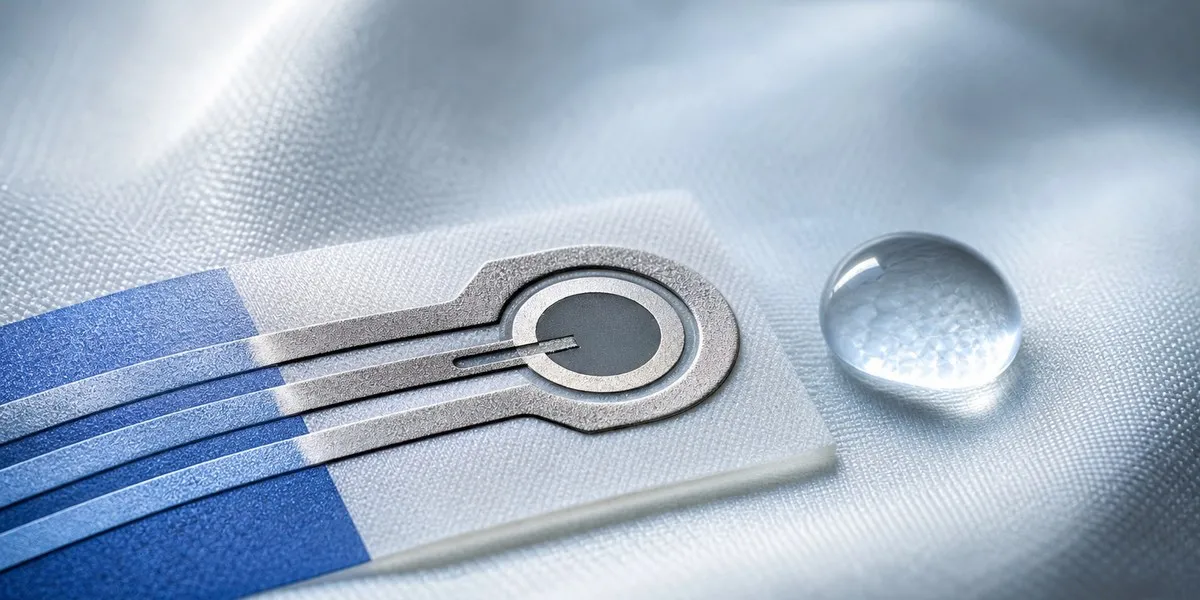
For the prototype, the researchers used screen printing to produce 100 disposable electrodes on reused fabric in several hours. The electrodes were coated with PFAS-specific MIPs and connected to commercially available potentiostats—devices for measuring electrical signals that can be connected directly to a smartphone or laptop.
The prototype is configured to detect two common representatives of this group: PFOS and PFOA. The authors of the study, described in the journal Biosensors and Bioelectronics, note that the MIP manufacturing method is modular: the target molecule can be replaced with another substance from the PFAS group. At the same time, they emphasized that the technology requires further development and field validation.




