
Frog disappearances in Brazil linked to chytridiomycosis — ScienceDaily
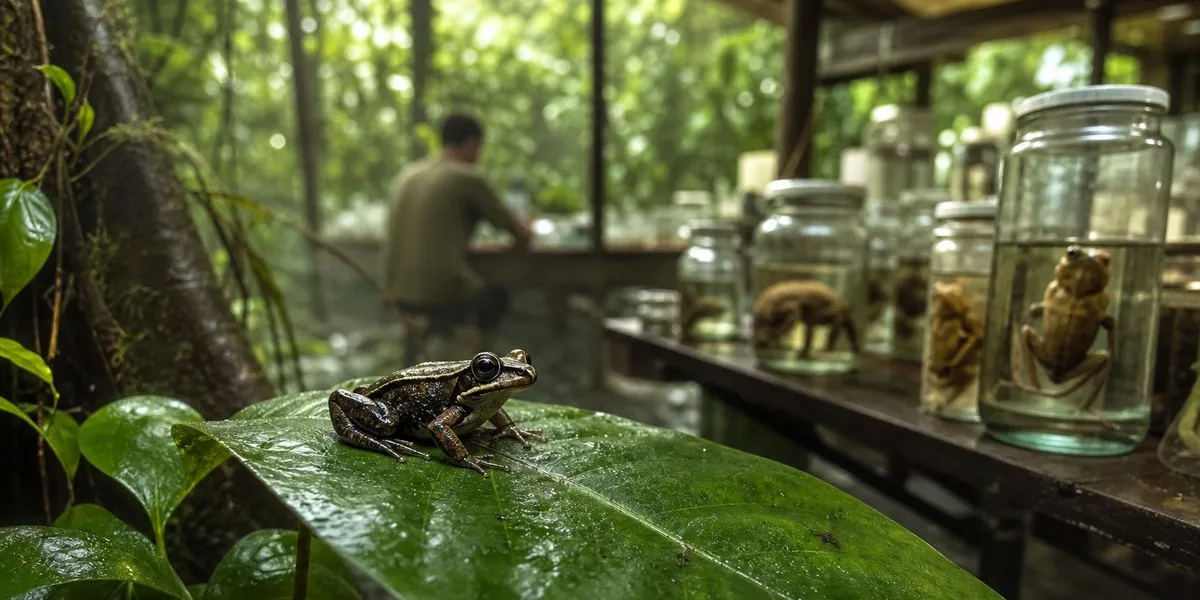
Scientists have linked a sharp decline in frog numbers at the Boracéia Biological Station in Brazil’s Atlantic Forest to the spread of the fungus Batrachochytrium dendrobatidis, which causes chytridiomycosis. As ScienceDaily reports, the evidence was obtained by studying museum amphibian specimens collected before and after the population decline in 1979–1982.
Museum specimens indicated the spread of the fungus
A team from the Center for Conservation Genomics at the Smithsonian’s National Zoo and Conservation Biology Institute, together with specialists from Pennsylvania State University, analyzed more than 370 preserved amphibians from 17 species. Some of the animals were collected in the 1970s, before the main period of population decline, while others were collected in the 1980s, after it.
Researchers found no traces of chytrid infection in any specimen collected before 1979. At the same time, more than half of the individuals collected in the 1980s tested positive for the fungus. Scientists believe this indicates the emergence and rapid spread of the pathogen in the local amphibian community during the period when their numbers were falling.
More current news is available on the UA.News Telegram channel Telegram.
The study’s authors note that the species that experienced the most severe declines showed no noticeable signs of infection in the preserved specimens. In their view, particularly vulnerable frogs may have died so quickly after infection that they did not enter museum collections. Species with more stable populations, by contrast, may have been better able to tolerate the infection.
Some populations recovered
In 2022–2024, the researchers visited Boracéia six times together with colleagues from the University of São Paulo. They were able to find 12 of the 17 species represented in the historical collection. Five species were not detected during the modern surveys, so their current status at the station remains uncertain.
Chytrid infection continues to occur among local frogs, but most populations, according to the researchers’ conclusions, have recovered after the decline of the early 1980s. Scientists suggest that species that were previously severely affected may have developed greater tolerance to the fungus over subsequent generations. The study results were published in the journal Molecular Ecology.




