
Electric vehicles have saved Ukrainians 72 billion hryvnias
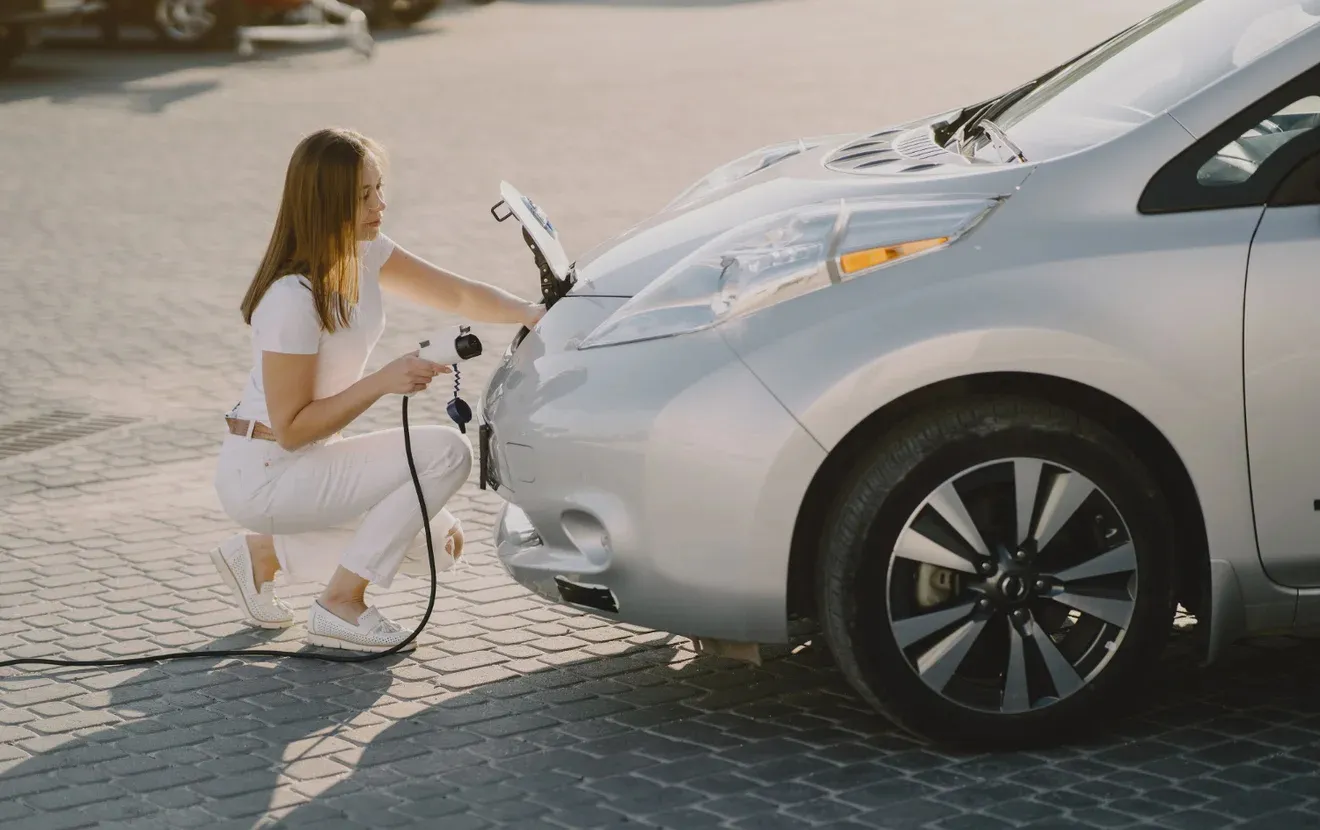
Since the start of the full-scale war, the number of electric vehicles in Ukraine has increased fivefold. During this time, their owners have saved approximately 72 billion hryvnias on fuel, and the country has been able to reduce its dependence on imported oil. At the same time, after tax incentives ended, the electric vehicle market began to slow down rapidly.
Electric vehicles in Ukraine have become not only a way to spend less at gas stations but also one of the factors contributing to the country’s energy security. This is stated in a joint study by the organization Transport & Environment and the civil society organization “Ekodiya.”
According to the researchers, since the start of the full-scale invasion, the fleet of electric vehicles in Ukraine has increased fivefold. While such vehicles were previously a rarity, there are now over 250,000 electric cars registered on Ukrainian roads. Infrastructure has developed in parallel. The number of charging stations has nearly tripled over the past few years, and the number of charging points has exceeded 8,000.
The main conclusion of the study is that electric vehicles have allowed Ukrainians to save enormous amounts of money on fuel. According to the authors’ estimates, owners of such vehicles have saved approximately 72 billion hryvnias. In addition, the country was able to avoid spending approximately 16 billion hryvnias on oil imports.
The researchers note that Ukraine purchases over 85% of its gasoline and diesel abroad. Therefore, every switch to electric transport helps reduce dependence on imports. Electric vehicles have also helped avoid the consumption of approximately four million barrels of oil.
Another important result is a reduction in environmental impact. According to experts’ estimates, electric vehicles have prevented the emission of about 1.5 million tons of CO2. The study emphasizes that electric vehicles have become part of Ukraine’s overall energy security strategy.
Despite rapid growth, the market situation changed after tax incentives for electric vehicle imports expired. As the study’s authors note, by the end of 2025, electric vehicles accounted for over 40% of new cars. However, by the first quarter of 2026, this figure had dropped below 10%.
The reason was the expiration of the VAT and import duty exemptions. Experts warn that additional tax pressure could further slow market development.
Separately, the researchers highlighted the cost of charging. In Ukraine, charging at home can be up to 14 times cheaper than at public stations. According to the report’s authors, this is precisely what makes electric vehicles a cost-effective alternative to internal combustion engine cars. However, not all owners have the option to install a home charging station.
Residents of apartment buildings often face difficulties when installing charging stations. These include technical, financial, and bureaucratic hurdles. This is especially true for buildings where decisions must be coordinated with the homeowners’ association. The study’s authors believe that procedures need to be simplified, and clear rules should be established for homeowners’ associations
Despite active infrastructure development, Ukraine still lags behind many European countries. Today, on average, there is one charging station for approximately 35 electric vehicles. By comparison, in Central and Eastern European countries, this ratio is one charging station for every five vehicles.
Additionally, Ukraine’s TEN-T network does not yet fully meet EU requirements. According to the study, by 2026 only 31% of the core network will comply with the European AFIR regulation. At the same time, this is nearly ten times more than it was two years ago.
The study’s authors recommend not imposing additional tax burdens on electric vehicle owners after the expiration of tax incentives. They also propose simplifying the installation of home chargers, actively developing fast-charging stations and charging hubs with solar power generation, and gradually bringing Ukrainian infrastructure up to EU standards.
“Electric vehicles have become not only a way for drivers to save money but also an important element of the country’s energy sustainability,” the study states. Experts are convinced that the further development of electric transport will help Ukraine reduce its dependence on imported fuel and integrate more quickly into the European space. This is reported by Transport & Environment.
The situation with queues varies at Ukrainian border crossings with EU countries and Moldova. The heaviest traffic is observed at certain crossings into Poland, Hungary, and Romania.


