
Holiday on November 10, 2026 — Memorial Day of Saint Constantine of Kahi
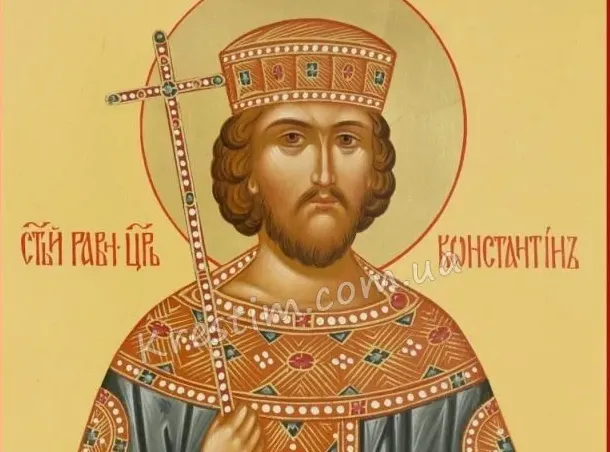
On November 10, Orthodox Christians commemorate St. Constantine-Kakhi the Great Martyr, a Georgian prince who lived in the 9th century. He was known for his wealth, generosity, and aid to the needy, and during the Arab invasion, he led the army and was taken captive. According to church tradition, the prince refused to renounce Christianity even under threat of death and died a martyr’s death.
Saint Constantine-Kakhi lived in the 9th century in the historical region of Kartli, in eastern Georgia. He came from an influential princely family and held a high social status. The nickname Kakhi is associated with his origins in Kakheti—a historical region in the east of the country. According to church hagiographies, Constantine was born around 767 and lived to be about 85 years old. He was known not only in Georgia and the Caucasus but also at the Byzantine court.

Despite his considerable wealth and influence, the prince, according to legend, did not focus solely on his own well-being. He helped the poor, supported churches and monasteries, and cared for people in need. Constantine also made a pilgrimage to Jerusalem, where he visited Christian holy sites and donated funds to local churches. Upon returning to his homeland, he continued to support the holy sites and, according to his hagiography, sent substantial donations to Jerusalem every year. It was this combination of social influence, generosity, and piety that made him a revered figure among Georgian Christians.
How the Prince Was Taken Captive
Constantine’s life coincided with a difficult period in Georgian history. In the 9th century, Arab armies were launching campaigns against Georgian lands, and the local population was subjected to attacks and religious persecution. One of the military commanders operating in the region was Buga-Turk, who led the army of the Abbasid Caliphate. In 853, his army invaded Kartli. During the campaign, Tbilisi and other settlements were ravaged, and the Christian population faced the threat of persecution.

Despite his advanced age, Constantine did not stand idly by. According to church hagiographies, he was about 85 years old when, together with his son Tarkhuj, he led the Kartli army. The decisive battle took place near the city of Gori. The forces were unequal, and the Georgian army was defeated. Constantine and his son were taken captive by the Arabs. At first, the prince was taken to Buga-Turk, and later sent to Samarra—a city in central Iraq—where Caliph Jafar al-Mutawakkil resided.
Why the Prince Refused to Renounce Christianity
According to church tradition, the caliph was aware of Constantine’s influence among the Georgians and Christians in general. Therefore, he initially tried to persuade the captive prince to convert not only through threats but also through promises. He was offered honors, wealth, and a high position in exchange for renouncing Christianity. However, Constantine refused. He remained steadfast, even though he understood that such a response could cost him his life.
The prince’s reply to the caliph has been preserved in his hagiography: “I do not fear your sword, but I fear the One who can destroy both soul and body.” These words convey the central idea of his martyrdom—faithfulness to his convictions even in the face of death. After his refusal, Constantine was thrown into prison. There he was kept in chains and subjected to abuse.
Later, two Armenian nobles were brought to him; they had previously renounced Christianity and gained the caliph’s favor. They tried to persuade the prince to follow their example and agree to the ruler’s terms. But Constantine refused to listen to their entreaties. According to tradition, he replied that he had no intention of following those who had renounced their faith, and asked to be left alone to pray.
The church hagiography describes the prince’s final moments as a time of prayer and trial. Despite beatings and torture, he continued to pray. Ultimately, the caliph ordered the prisoner’s execution. Constantine was beheaded on November 10. According to tradition, his body was displayed on a high pole to intimidate local Christians. After some time, his remains were buried, and a few years later, the Georgians transported them back to their homeland. There are discrepancies in the sources regarding the year of the saint’s death. The Georgian Encyclopedia cites the year 853, while church hagiographies—in particular, materials from the Orthodox Church in America—indicate the year 852. At the same time, the date of commemoration—November 10—appears in church calendars and the saint’s hagiographies.
How the Day of Remembrance Came About and Why It Is Observed
The Georgian Orthodox Church canonized Constantine of Kakhia as a saint as early as the 9th century—shortly after his death. He is honored as a great martyr because, according to church tradition, he was killed for refusing to renounce the Christian faith. His story has been preserved in a separate ecclesiastical work—*The Martyrdom of Constantine of Kakhia*. This text recounts the prince’s origins, his charitable deeds, his military campaign, his captivity, and his execution. It became one of the sources through which the memory of Constantine has been preserved in the Georgian religious tradition.

For believers, this day is an opportunity to commemorate not only the prince’s tragic death but also the virtues attributed to him in his hagiography. Among these are mercy, generosity, care for the poor, courage, and devotion to his convictions. A special place in his story is occupied by the combination of his high status with his willingness to help others. Constantine possessed wealth and power, but, according to legend, he also used them to support the needy and Christian holy sites.
How This Day Is Observed
The feast day of Constantine of Kahi is primarily a religious observance. In churches dedicated to the saint, services may be held, prayers recited, and his life story recounted. Believers turn to him in prayer, asking for spiritual strength, courage, and endurance in difficult circumstances. On this day, the saint’s memory may also be honored through the reading of church texts and stories about his life.
This date does not have a separate nationwide secular celebration, similar to public holidays or major folk festivals. The main focus is on religious observance. In Georgia, the commemoration of Constantine of Kakheti is part of a broader tradition of honoring saints who suffered for the Christian faith. His name can also be found in church calendars and collections of the lives of Georgian saints.
When Is It Celebrated in 2026?
Church calendars list two dates—November 10 and November 23. This is due to the difference between the Julian and Gregorian calendars: November 10 on the old style corresponds to November 23 on the new style. At the same time, the Georgian Orthodox Church’s calendar for 2026 specifies November 10 (New Style) as the day of remembrance for Constantine of Kakheti.

In 2026, November 10 falls on a Tuesday. If, however, the calendar uses the Old Style date, the corresponding commemoration according to the Gregorian calendar falls on November 23, a Monday. Therefore, when preparing for this date, it is important to consider which church calendar a particular community uses.




