
October 9, 2026 — The Day of Remembrance for Andronikos and Afanasy: History and Traditions
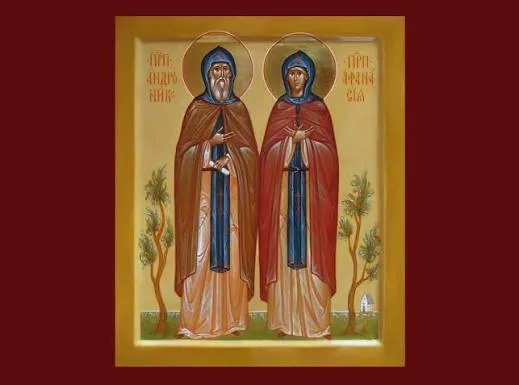
On October 9, according to the new church calendar, the memory of the Venerable Andronikos and his wife Athanasia is honored. The couple lived in Antioch in the 5th century, and after a terrible family tragedy, they both devoted their lives to prayer and service to God. In 2026, the day of remembrance falls on Friday, October 9.
The commemoration of the Venerable Andronicus and Athanasia falls on October 9 according to the new church calendar. The corresponding date according to the old style is October 22. This is how the day is listed in church calendars, and the commemoration of the couple is included in the liturgical calendar as a separate celebration of the saints. Interestingly, the date of commemoration could vary across different ancient church traditions. The Orthodox Encyclopedia notes that in calendars of Constantinopolitan origin, Andronikos and Athanasius were commemorated on March 2. At the same time, in the records of the Jerusalem tradition, their commemoration fell on October 9. Subsequently, it was the October date that became established in the modern calendars of a number of Orthodox churches.

In the Ukrainian church calendar, this day is also dedicated to the Apostle James the son of Alphaeus. The calendar of the Ukrainian Greek Catholic Church explicitly lists October 9 as the commemoration of “our Venerable Father Andronikos and his wife Athanasia.” Therefore, October 9 is not merely a folk holiday or a day associated with traditional omens. Above all, it is a day of ecclesiastical remembrance for people whom Christian tradition considers examples of marital fidelity, mercy, patience, and spiritual fortitude.
Who Were Andronicus and Athanasia?
Andronikos and Athanasia lived in Antioch in the 5th century, during the reign of Emperor Theodosius the Great. Andronikos was a goldsmith—that is, a craftsman who worked with precious metals. Athanasia was the daughter of another goldsmith named John. The couple was well-off, but, according to church tradition, they did not put wealth first. Their hagiography recounts that Andronikos and Athanasia divided their wealth into three parts. They used one part to help the poor, gave the second part to support and adorn the church, and kept the third part for their own family. In this way, they sought to balance family life, work, and helping others. Charity is one of the main traits emphasized in their hagiography.
The couple also strove to live a devout life and pray regularly. Some accounts of their lives note that they attended church and observed fasting. They were known as people who did not turn away from those in need. Therefore, the memory of Andronikos and Athanasia is associated not only with their subsequent monastic life but also with how they behaved even back when they were an ordinary family. Of particular significance in their story is that they remained spiritually close even after choosing the monastic path. Their lives became an example of how a married couple can endure difficult trials together. That is why the saints are often mentioned in the context of family, mutual support, and fidelity.
A Grievous Loss That Changed Their Lives
Andronikos and Athanasia had children—a son, John, and a daughter, Mary. According to their hagiography, both children suddenly fell ill and died. This was a tremendous blow to the parents. At this moment, the couple did not turn away from one another or abandon their faith, but instead decided to completely change their lives. After this tragedy, Andronikos and Athanasia resolved to devote themselves to serving God. They left their home and set out on a pilgrimage. First, the couple arrived in Jerusalem, where they visited the holy sites. After that, they traveled to Alexandria to venerate the relics of the holy martyr Mina.

In Egypt, they met the Venerable Daniel. It was he who helped them decide on their future path. On his advice, Athanasia entered the Tavenisiot women’s monastery, while Andronikos became a monk and remained with the elder Daniel. Thus, their family life gave way to a shared spiritual journey, although they subsequently lived apart. Andronikos spent twelve years in silence and prayer. Athanasia also led a strict monastic life. They no longer lived as husband and wife in the conventional sense, but continued to support one another spiritually.
The Most Interesting Part of the Saints’ Story
One of the most unusual parts of their hagiography concerns the reunion of Andronikos and Athanasia many years later. Andronikos set out on a pilgrimage to Jerusalem. On the way, he stopped in Egypt, where he unexpectedly met a monk. He had no idea that the person standing before him was his own wife, Athanasia. By that time, Athanasia was wearing men’s monastic robes and had changed so much due to her austere lifestyle and asceticism that her husband did not recognize her. She, however, knew who she had met. According to legend, Afanasyia did not reveal her identity and introduced herself as the monk Afanasy. This allowed them to continue their journey as monks.

Later, they found themselves near one another and may even have lived in the same monastic community, but Andronikos did not know that his companion, Athanasius, was his wife. This episode is one of the most famous details of their lives. It underscores just how far both had gone in their pursuit of solitude and the spiritual life. When Athanasius died, her secret was revealed. Andronikos learned that the monk Athanasius, whom he had known, was in fact his wife. According to church tradition, Andronikos lived for seven more days after her death. After his death, he was buried alongside Athanasia.
Why Andronikos and Athanasia Are Honored Together
This story is significant above all because both spouses were canonized as saints in the Church tradition. They are not separated in memory, for they journeyed together through married life, the loss of their children, pilgrimage, and monastic devotion. Their example shows that they viewed trials not as a reason to drift apart, but as a path to mutual support and prayer. Their hagiography specifically highlights their generosity. The couple did not hoard everything for themselves but gave a portion of their wealth to the needy and for the needs of the church. For the Christian tradition, this is an important example of charity. For them, helping others was not a one-time act but a part of their daily life.
Another important aspect is their ability to accept difficult circumstances. The loss of their two children was a terrible tragedy for them, but they did not abandon their spiritual life afterward. That is why, on the day commemorating them, people speak of patience, prayer, charity, and trust in God. Their lives are also often held up as an example of a Christian marriage. Andronikos and Athanasia supported one another even before they decided to become monks. After that, each went their own way, but their story remained a shared one.
How This Day Is Observed
For believers, the main way to observe the saints’ feast day is through prayer. On this day, church services are held in which Andronikos and Athanasia are commemorated. People can pray for their loved ones, ask for peace for their families, good health for their loved ones, and the strength to endure difficult circumstances. It is especially fitting on this day to remember those who are alone or grieving a loss.
Traditionally, church holidays are not merely about feasting or entertainment. Their meaning lies in prayer, good deeds, and helping others. Therefore, on this day, you can offer support to someone going through a difficult time, help elderly relatives, or make a donation to those in need. This approach aligns well with the example set by Andronikos and Athanasia, who gave a significant portion of their wealth to the poor.
On this day, families can talk about mutual support and how important it is not to leave a loved one alone during difficult times. You can also read the lives of the saints or simply spend some time in silence and prayer. For those who follow church traditions, this can be an opportunity to reflect on their own attitude toward helping others. At the same time, one should not treat the numerous everyday “prohibitions” found online as mandatory church rules. The Church does not establish a universal list of activities that are supposedly strictly forbidden on this day. It is far more important not to quarrel, not to offend others, not to refuse to help, and to spend the day in a way that benefits both yourself and your loved ones.
Folk Traditions and Superstitions
In the folk calendar, October 9 has other names as well, including “Yakov the Cold” or “Yakov the Woodcutter.” These names were no longer directly associated with Andronikos and Athanasius, but rather with the commemoration of the Apostle James the Son of Alphaeus, who is also remembered on October 9. That is why the folk customs associated with this date should not be completely equated with the lives of Andronikos and Athanasius. Our ancestors believed that during this period, autumn gave way to a colder season. According to folk beliefs, the water in wells grew colder, and the nights became increasingly cooler. At this time, people were already actively preparing for winter, checking their firewood supplies, and insulating their homes. This is where one of the day’s names comes from—“Yakov the Woodcutter.”
There were also weather omens. For example, morning fog was considered a sign of damp weather in the coming days. A clear sky was associated with a warm and long autumn. And cold water in the well supposedly signaled that frosts would soon arrive. Today, such signs should be viewed precisely as part of folk culture, rather than as an accurate way to predict the weather.
What to Do and What Not to Do on October 9
According to folk tradition, it was advised not to spend this day in arguments, insults, or conflicts. It was believed that one should not refuse to help someone in need. Hospitality and a friendly attitude toward others were also encouraged. These customs align well with the stories of Andronikos and Afanasy themselves, who often helped those in need. Additionally, people were advised not to be lazy and to prepare for the cold weather. People would finish their household chores, inspect their homes, and check their supplies. However, the claim that it is supposedly strictly forbidden to work, do housework, or perform certain tasks on this day has no universal religious basis.

It is best to view such recommendations as folk customs rather than religious laws. The main significance of the day remains the remembrance of two people who chose the path of mercy, prayer, and service. Therefore, instead of fearing superstitions, you can spend this day peacefully, do a good deed, and spend time with your loved ones.
Interesting Facts About Andronikos and Athanasius
The name Athanasius derives from a Greek word meaning “immortality.” In his hagiography, this is symbolically linked to the spiritual memory of the saint.
Andronikos was not a monk from the very beginning. Before entering monastic life, he was a married man and worked as a goldsmith. That is precisely why his story is also interesting in that it illustrates the various stages of human life—family, work, loss, pilgrimage, and monasticism.
Another interesting fact is that the couple did not simply renounce their wealth but sought to distribute it so that a portion of their funds would go toward helping others. According to his hagiography, they gave a third to the poor, a third to the church, and used the rest for their family.
It is also known that the commemoration of Andronikos and Athanasia has a long history in the church calendar. The Orthodox Encyclopedia notes that their commemoration on October 9 is recorded in the liturgical manuscripts of the Jerusalem tradition as far back as the Middle Ages. This date was later established in the calendars of the Kyiv and other Eastern Christian traditions as well.
What This Day Teaches Us
The story of Andronikos and Athanasius is, above all, about how people endure difficult trials. Their lives were not carefree, even though they had wealth and a family. They endured the death of their children, left their familiar home, and began a completely different life. Their example also reminds us of the importance of mercy. For them, helping others was part of daily life, not just a one-time gesture. That is why, on the day we commemorate these saints, it is fitting to do something kind for another person.
Another important theme is supporting loved ones. Andronikos and Athanasia endured the greatest tragedy of their lives together. Their story reminds us that in difficult moments, people especially need compassion, patience, and someone to be there for them. Therefore, October 9 can be observed not only according to the church calendar but also as a day for reflecting on simple things: helping someone in need, making peace with a loved one, thanking family members, or simply finding time for prayer and quiet. It is precisely these actions that best reflect the spirit of the commemoration of Saints Andronikos and Athanasius.




