
Architect Yoon Kyung-sik on the essence of religious architecture — Korea Herald
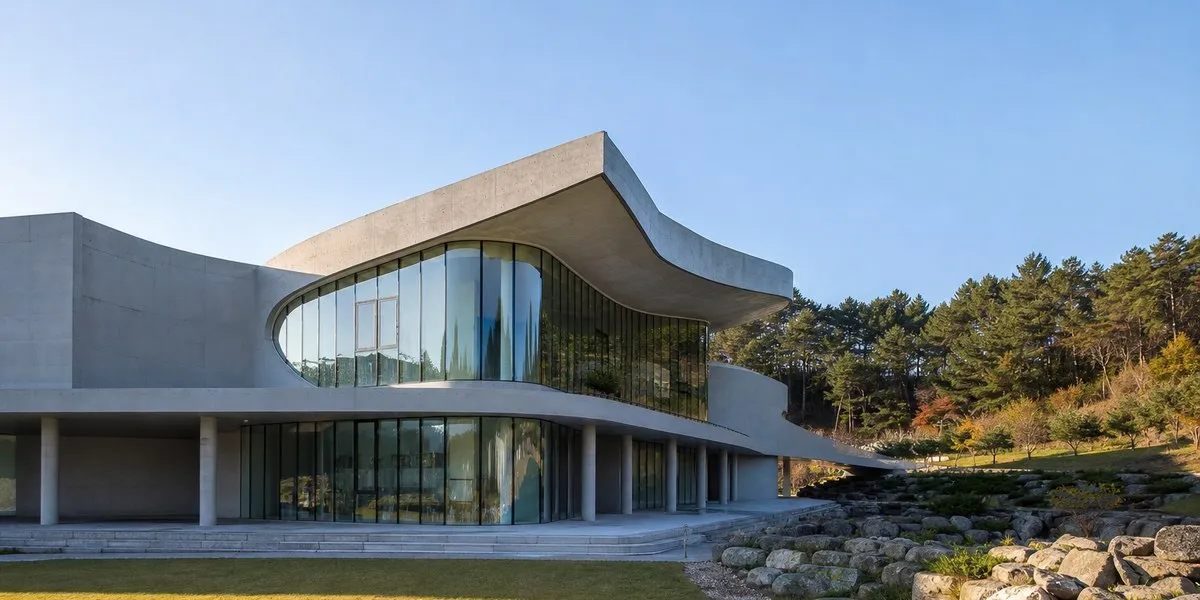
In South Korea, architect Yoon Kyung-sik said that religious architecture should not emphasize the grandeur or authority of faith, but help people understand its core values. The chairman and architect of KACI International outlined his approach in an interview with The Korea Herald ahead of Herald Design Lounge 2026, which will take place on October 2 at Dongdaemun Design Plaza in Seoul.
According to Yoon, churches and temples should be understandable not only to believers but also to modern visitors without a religious affiliation. He describes his approach as architecture that is “less religious, but more like Buddha” and “less religious, but more like Jesus.”
Philosophy instead of symbols
The architect noted that religious architecture must work not only with human life and dwelling, but also with faith, death and ideas about what comes after it. He pointed out that Christian architecture over time began to express authority through monumental spires and large-scale interiors, while Buddhist architecture did so through elaborate decoration and large statues.
Yoon believes that architecture should remain faithful to the core values that Buddha and Jesus sought to convey, rather than demonstrate religious authority. According to him, this is not about adding religious symbols as design elements, but about embodying religious philosophy in the architecture itself.
More current news is available on the UA.News Telegram channel Telegram.
Dharma center after a fire
The architect applied this approach at the Inwolsa Dharma Center in Gangneung, Gangwon Province. The Buddhist temple was rebuilt after the previous structure was destroyed by a forest fire in 2023. Due to a limited budget and the risk of another fire, Yoon and the temple’s abbot decided not to reproduce the traditional wooden building.
The new structure has a curved form inspired by a crescent moon and the shape of Buddha’s eyebrows as described in Buddhist texts. The name Inwolsa is associated with the image of the moon reflected in Gyeongpo Lake. Inside, a wall made of perforated blocks in different colors refers to the Buddhist metaphor of Indra’s net, which describes the interconnectedness of all beings and things.
Yoon has worked at KACI International since 1984. He also worked at the U.S. architectural firms Leonard Parker Associates, Cesar Pelli & Associates and NBBJ. His portfolio includes religious and cultural facilities, residential and hotel projects.




