
October 28, 2026 — Independence Day of Czechoslovakia
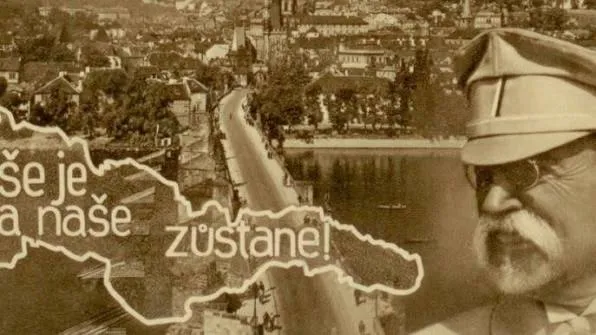
On October 28, the Czech Republic celebrates the Day of the Establishment of the Independent Czechoslovak State—a national holiday commemorating the events of 1918. It was then, at the end of World War I, that the Czechs and Slovaks were given the opportunity to establish their own state after a long period as part of the Austro-Hungarian Empire. Although Czechoslovakia ceased to exist in 1993, this date remains important to Czech national memory.
The day marking the establishment of the independent Czechoslovak state is celebrated annually on October 28. In 2026, the holiday falls on a Wednesday, and the Czech Republic will celebrate the 108th anniversary of the founding of Czechoslovakia. It is one of the country’s most important national holidays, commemorating the emergence of modern Czech statehood and the struggle for national self-determination. In the Czech calendar, the holiday is called Den vzniku samostatného československého státu, which in Ukrainian means “Day of the Establishment of the Independent Czechoslovak State.” It should not be confused with Czech Statehood Day, which is celebrated on September 28. The October date commemorates the proclamation of Czechoslovakia in 1918.

October 28 is an official national holiday and a day off in the Czech Republic. It is observed by government agencies, civic organizations, cultural institutions, and ordinary citizens. For many Czechs, this is not just an opportunity to relax, but a day to remember the people who enabled the country to break free from Habsburg rule and establish its own republic. Czech government institutions also recognize the historical significance of this date. The Czech Ministry of Foreign Affairs calls the anniversary of the founding of Czechoslovakia one of the country’s most important holidays. It symbolizes a turning point in the centuries-long history of Czech statehood.
Why Czechoslovakia Declared Independence in 1918
Until 1918, the Czech lands and the territories of modern-day Slovakia were part of the Austro-Hungarian Empire, although they had different administrative statuses. Bohemia, Moravia, and part of Silesia belonged to the Austrian part of the monarchy, while the Slovak lands were part of the Hungarian part. For decades, Czech and Slovak political leaders had sought greater autonomy, the preservation of their national cultures, and the right to determine their own future.
The outbreak of World War I in 1914 exacerbated these issues. Austria-Hungary fought in the war on the side of Germany and the other Central Powers, while its economy and political system gradually weakened. By the end of the war, the empire was facing food shortages, popular discontent, and a rise in nationalist movements. Against this backdrop, the idea of creating an independent Czechoslovakia gained increasing support.

Czech and Slovak politicians working outside the empire played an important role. They sought to persuade the Entente powers to support the creation of a new country. In 1916, Tomáš Garrigue Masaryk, Edvard Beneš, and Milan Rastislav Štefánik became key figures in the Czechoslovak National Council, which coordinated the overseas independence movement.

Gradually, the leading Entente powers came to support the idea of an independent Czechoslovakia. France recognized the Czechoslovak National Council as a provisional government in June 1918, Great Britain did so in August, and the United States in September. This was an important diplomatic step, as the future state received international support even before its official proclamation.
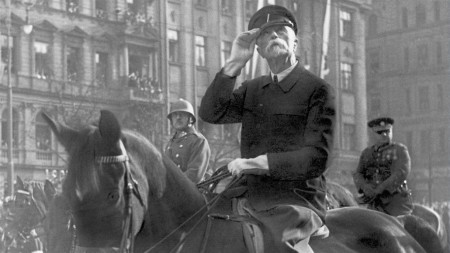
At the same time, the struggle for independence took place not only at the negotiating table. Czechoslovak legions fought on various fronts of World War I, including in France, Italy, and Russia. They consisted of volunteers, émigrés, and prisoners of war who supported the idea of creating their own state. Their participation in the war helped draw the Allies’ attention to the Czech and Slovak national movements.
How Czechoslovakia Declared Independence
In the fall of 1918, the Austro-Hungarian Empire was rapidly approaching collapse. The war had exhausted its economy, the army was losing its ability to continue fighting, and the empire’s peoples were increasingly demanding independence. In Prague, Czech political leaders were preparing to establish their own state, coordinating their efforts with representatives of the émigré movement.

On October 18, 1918, Tomáš Garrigue Masaryk issued the Declaration of Independence of Czechoslovakia in the United States, known as the Washington Declaration. The document affirmed the right of the Czechs and Slovaks to determine their own future and build a democratic state. Masaryk opposed the continuation of Habsburg rule and believed that peoples should not remain under a government they did not recognize.

However, the key events unfolded directly in Prague on October 28. On that day, news spread that Austria-Hungary had agreed to the terms of the armistice. Part of the population interpreted this as confirmation of the empire’s final defeat and began taking to the streets. People gathered in public squares, displayed national symbols, and voiced their support for the creation of an independent state.

The Czech National Committee took control and issued the first law establishing an independent Czechoslovak state. Thus, October 28 became the official date of its founding. At the same time, the declaration of independence was not the result of a single decision, but rather of a prolonged political struggle, international diplomacy, and events triggered by the collapse of Austria-Hungary.
Independence was proclaimed amid great enthusiasm, but the new state faced complex challenges. It was necessary to establish government institutions, organize an army, stabilize the economy, and define the relationship between Czechs and Slovaks. Despite these difficulties, Czechoslovakia became one of the new states of Central Europe that emerged after the end of World War I.
Who Was at the Founding of the New State
One of the key figures in the creation of Czechoslovakia was Tomáš Garrigue Masaryk. He was a philosopher, educator, and politician who consistently advocated for the creation of an independent state for the Czechs and Slovaks. During World War I, Masaryk worked abroad, meeting with representatives of the Allied powers and persuading them to support the Czechoslovak movement. After independence was declared, he became the first president of Czechoslovakia.

Eduard Beneš was one of Masaryk’s closest associates. He engaged in diplomatic work, helped organize resistance against Austria-Hungary abroad, and represented the interests of the future state before the Allies. Later, Beneš served as Minister of Foreign Affairs and eventually also became president of Czechoslovakia. Milan Rastislav Štefánik was a Slovak politician, astronomer, and military officer who served in the French army. He helped organize the Czechoslovak Legions and worked to secure international recognition for the future state. Štefánik played an important role in fostering cooperation between the Czech and Slovak independence movements.
Politicians working within the country also played an important role. Among them were Alois Rašin, Karel Kramář, and Antonín Švehla. They participated in the creation of the National Committee and the organization of the transfer of power following the collapse of the empire. Thus, independence was the result of the joint efforts of the émigré movement and political figures in Prague itself.
How October 28 Is Celebrated in the Czech Republic
The celebrations are typically solemn and commemorative in nature. The main events take place in Prague, where government officials honor those who contributed to the creation and defense of the state. One of the main venues for the ceremonies is the National Memorial on Vitkov Hill. There, wreaths are laid at the Tomb of the Unknown Soldier, and those who died for their country are remembered.
Government officials, military personnel, clergy, and cultural figures participate in the ceremonies. Flowers are also laid at monuments and memorial sites associated with Tomáš Garrigue Masaryk. In particular, official events are held at his grave in Lány and at the monument in Prague’s Hradčany district. In cities and villages, people also visit local memorials to lay flowers or light candles. A separate tradition is the ceremonial changing of the guard at Prague Castle. It attracts the attention of residents and tourists who come to watch the ceremony. On this day, the Czech president also appoints new army generals, underscoring the holiday’s state and military character.

In the evening, a ceremony for presenting state awards takes place at Prague Castle. The president honors individuals who have made significant contributions to the country’s development, culture, science, education, sports, civic life, or national defense. The names of the honorees are usually announced during the formal ceremony. This is one of the most anticipated parts of the celebration, attracting significant attention from the Czech media.

In addition to official events, various cities host exhibitions, historical lectures, and cultural events. Museums may organize themed programs dedicated to the founding of Czechoslovakia and the events of World War I. Schools and educational institutions teach about the history of the state and its founders. At the same time, the holiday does not have a single mandatory family tradition: the main emphasis is placed on historical remembrance and state ceremonies.
What Happened to Czechoslovakia After 1918
After declaring independence, Czechoslovakia united the Czech lands, Slovakia, and Transcarpathia. The new state also included territories in Silesia, parts of which were the subject of disputes with neighboring countries. The country had a developed industrial sector in the Czech lands and a significantly more agrarian economy in other regions. This created both opportunities for development and challenges in governing a multinational state.

During the interwar period, Czechoslovakia became a parliamentary republic. Under President Masaryk, the country upheld democratic institutions and boasted one of the most developed industrial economies in Central Europe. At the same time, various national communities lived within the state, including Czechs, Slovaks, Germans, Hungarians, and Rusyns. Their political interests did not always align, which later became one of the challenges facing the country.

In 1938, following the Munich Agreement, Czechoslovakia lost the border territories of the Sudetenland, where a significant German minority lived. In March 1939, Nazi Germany occupied Czech territories, establishing the Protectorate of Bohemia and Moravia, while Slovakia declared itself an independent state dependent on Berlin. After World War II, Czechoslovakia was restored, but it later came under the rule of a communist regime.

In 1989, the Velvet Revolution took place in the country, bringing an end to communist rule. Four years later, on January 1, 1993, Czechoslovakia peacefully split into two independent states—the Czech Republic and Slovakia. The split took place by agreement among political representatives of both republics, without any large-scale armed conflict. Despite this, the Czech Republic continues to celebrate October 28 as the birthday of the unified state that preceded the modern republic.
Interesting Facts About the Holiday
- Independence was declared amid news of the war’s end. In late October 1918, reports spread throughout Prague that Austria-Hungary had agreed to the terms of an armistice. Part of the population interpreted this as the definitive end of imperial rule and took to the streets. That is when the events that led to the proclamation of an independent Czechoslovakia began. Historians note that the information that sparked the mass demonstrations was not entirely accurate, but the date has become a symbol of the nation’s birth.
- Czechoslovakia had already gained international recognition even before its proclamation. Politicians and legions abroad worked to ensure that the future state would have the support of its allies. France, Great Britain, and the United States recognized the Czechoslovak National Council as the provisional government even before October 28. This helped the new state get up and running more quickly after the collapse of Austria-Hungary.
- October 28 is National Awards Day. In the Czech Republic, the ceremony for presenting the highest state honors is traditionally held on this holiday. The president awards individuals for their contributions to the country, society, culture, and science. It is one of the most important official events of the year.
- The holiday outlived Czechoslovakia itself. Although the joint state of the Czechs and Slovaks ceased to exist in 1993, October 28 remained a national holiday in the Czech Republic. It commemorates the historic moment when the modern statehood of the Czech people came into being. For Slovakia, this date also holds historical significance, although the country’s main national holidays are tied to its own history and independence.
Why October 28 Remains an Important Date
For the Czech Republic, October 28 is, above all, a day to commemorate the struggle for the right to determine the country’s future independently. The creation of Czechoslovakia was the result of many years of political work, diplomacy, and the participation of volunteers in World War I. This date serves as a reminder that independence did not come about on its own: behind it were specific people who worked toward a common goal.

The holiday also provides an opportunity to reflect on the democratic ideals that were important to the nation’s founders. Masaryk and his colleagues sought to build a republic based on political representation and civil rights. Over the following decades, Czechoslovakia endured occupation, a communist regime, and a peaceful division, but October 28 has retained its place in historical memory.

Today, it is a day when Czechs honor the founders of their state, lay flowers at memorials, participate in solemn ceremonies, and reflect on the country’s path to independence. For modern-day Czechia, October 28 is not only a remembrance of 1918 but also an opportunity to reflect on the meaning of statehood, democracy, and responsibility for the future.




