
The Dniester River Is Facing the Threat of Severe Low Water Levels
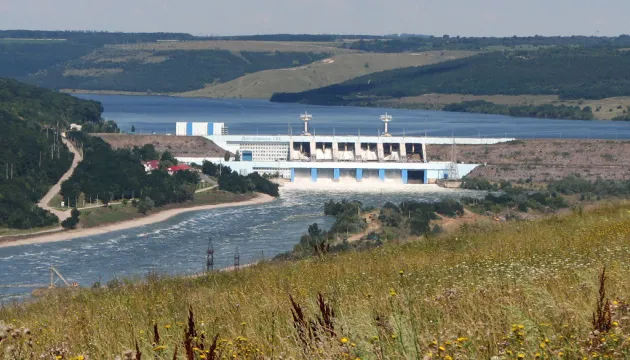
Ukraine and Moldova have agreed to reduce the water discharge from the Dniester Integrated Hydropower Complex to 75 cubic meters per second. The reason is the critically low inflow of water into the Dniester Reservoir, which continues to decline. On August 7, it stood at only 42 cubic meters per second—17% of the monthly average and the lowest level in the reservoir’s history.
The situation with the Dniester’s water levels has been growing increasingly dire recently. Very little natural water is flowing into the Dniester Reservoir, and the latest forecasts offer no reason to expect a rapid improvement.
As a result, Ukraine and Moldova are forced to monitor every cubic meter of water more closely. During the fifth extraordinary meeting of the Commission on the Sustainable Use and Protection of the Dniester River Basin, the parties agreed to set the discharge from the Dniester Integrated Hydropower Complex at 75 m³/s.
The decision was made precisely because of the further deterioration of the hydrological situation. The Ukrainian side emphasizes that the problem has been evident for several months now. “The water situation on the Dniester continues to worsen. Ukraine has been restricting water use on its territory since June. Currently, restrictions are in place for 92 water users, so we must approach every joint decision regarding water discharge from the Dniester Integrated Hydrocomplex with particular responsibility,” said Iryna Ovcharenko, Deputy Minister of Economy and Environment of Ukraine.
Both Ukraine and Moldova need water
The Dniester is of great importance not only to Ukrainian communities. The river supplies water to areas of Moldova and, in particular, affects Chisinau’s water supply. That is why the situation with the Dubasari Reservoir in Moldova was discussed separately during the negotiations. The capital’s drinking water supply depends on the amount of water flowing into it.
According to available data, the total inflow to the Dubosary Reservoir is approximately 90 m³/s. This may indicate the presence of an additional lateral tributary downstream of the Dniester Reservoir. Ukraine asked the Moldovan side to provide more detailed information on exactly how water from the Dubosari Reservoir is used and for what purposes it is allocated.
At the same time, Ukraine expressed its readiness to continue cooperating with Moldova. However, as representatives of the Ukrainian side emphasized, joint decisions must take into account the actual condition of the Dniester River and the capacity of the Dniester Reservoir.
The Dniester’s water level has fallen to a record low
The most concerning factor is the latest data on water inflow. In early August, the average inflow into the Dniester Reservoir was only 48 m³/s. This is approximately 19% of the monthly average. And on August 7, the figure dropped even lower—to 42 m³/s, or 17% of the average.
According to the Ukrainian Hydrometeorological Center, this is the lowest inflow in the entire history of the Dniester Reservoir, which began operations in 1985. In other words, the current situation is not merely difficult. By this measure, it has become unprecedented in the entire history of observations.
Low water levels mean that the reservoir is receiving significantly less water naturally than usual. If this trend continues, the issue of allocating water among various needs will become even more acute.
Restrictions are already in place in Ukraine
Due to the water shortage, Ukraine began restricting water use as early as June. Currently, these restrictions apply to 92 water users. The goal is to use available resources more carefully, as water reserves are not unlimited. Given the critically low inflow, every decision regarding water discharge must take into account the needs of the population, the economy, and the condition of the river itself.
That is why the Ukrainian side emphasizes the need for constant monitoring of the situation. If the Dniester’s water level continues to drop, the agreements between Ukraine and Moldova may be revised.
What’s Next
The parties have agreed not only to set a new discharge level but also to continue constant monitoring of the Dniester. They will continue to monitor the situation in order to respond to changes in a timely manner. If the river’s water level deteriorates further, the Commission on the Sustainable Use and Protection of the Dniester River Basin will hold a new extraordinary meeting.
The Commission’s scheduled meeting is set for late August. At that time, the parties will be able to assess whether the situation has changed and whether additional measures are needed. For now, the main task is to prevent further depletion of water resources. The Dniester is a shared river for Ukraine and Moldova, so its condition directly affects both countries.
Current indicators show that the problem has already gone beyond normal seasonal fluctuations. The lowest inflow in the history of the Dniester Reservoir is forcing the countries to act more cautiously, and how the situation develops will depend primarily on whether the natural inflow of water begins to recover.
This was reported by the Ministry of Economy and Environment of Ukraine.
Ukraine has expressed its readiness to provide support to Moldova and propose solutions should the hydrological situation on the Dniester River worsen. This was announced by Moldova’s Minister of the Environment, Gheorghe Hazder, following talks with his Ukrainian counterpart, Oleksandr Kravchenko.
Earlier, Ukraine and Moldova agreed on joint actions in response to the critical drop in water levels in the Dniester. Over the next two weeks, water releases from the Dniester Reservoir will be reduced from 100 to 85 cubic meters per second.
As a reminder, the Moldovan Ministry of Foreign Affairs has warned its citizens about heightened checks, interrogations lasting several hours, and instances of coercion to sign contracts with the Russian Ministry of Defense when attempting to enter Russian territory.




