
Researchers claim ancient contacts between China and New Zealand — South China Morning Post
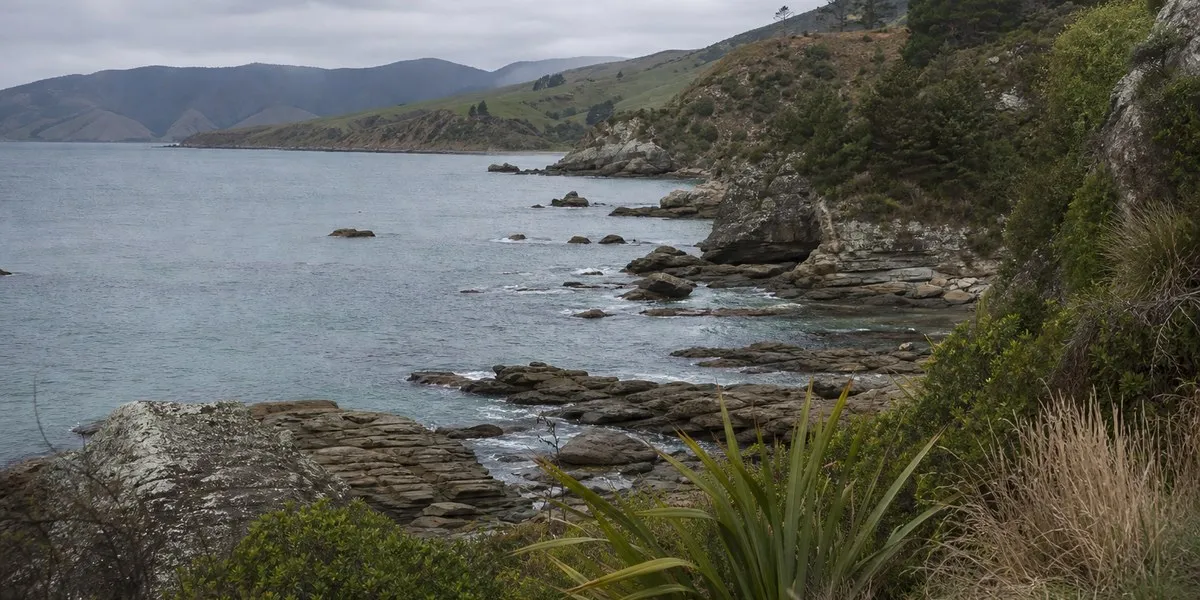
In New Zealand, researchers have put forward hypotheses about possible ancient contacts between the islands and China that contradict the generally accepted version of settlement by the ancestors of the Māori in the 13th century. As reported by the South China Morning Post, researcher Wang suggested that a Chinese presence may have lasted from 190 BC until approximately 1600.
At the Commonwealth of World Chinatowns conference in Penang, Malaysia, Wang also suggested that Ming dynasty admiral Zheng He may have died near New Zealand during his seventh maritime expedition. According to her version, after sailing to the Americas, the squadron may have returned via Cape Horn and reached New Zealand, while the ships may have been destroyed as a result of a meteorite impact in the Tasman Sea around 1435 or 1436.
Claims of shipwrecks
Wang referred to research by the late independent British surveyor T. K. Bell. According to her, during magnetic surveys in 2003, 2006 and 2017, he discovered 78 shipwrecks. She claimed that 24 objects more than 100 metres long and about 40 metres wide may be large Chinese vessels, in particular because of allegedly distinctive two-fluked anchors.
As possible evidence of a Chinese presence, Wang also cited a fortified site at Governors Bay on the South Island, canals, metal-smelting sites, barrack-like structures and stone carvings. She believes that a stone on the North Island depicting an elephant and bearing a linear inscription may be of Chinese origin.
More current news is available on the UA.News Telegram channel Telegram.
Expert scepticism
Li Yueling, president of the Seven Seas Institute of Chinese Calligraphy, said that the origin of the elephant carving remains uncertain. According to him, during the period to which Wang attributes the find, Chinese writing was already developed, and the symbol on the stone does not correspond to early Chinese signs denoting an elephant.
Li was also unable to confidently link to Chinese writing a sign resembling the character for “mountain” on a stone from the Moeraki cliffs. He noted that the carving technique does not show features typical of Chinese stone inscriptions from the relevant period. Leading historians and Māori groups view theories of pre-colonial Chinese contacts with scepticism.
Robert Jones, director of the future Museum of Anomalous Antiquities of New Zealand, called for further study of artefacts including the Korotangi stone bird, a Tamil bell and porcelain items found in Northland. He acknowledged that neither he nor his team have academic qualifications.


