
Former President Obasanjo backs review of oil revenue distribution — Premium Times Nigeria
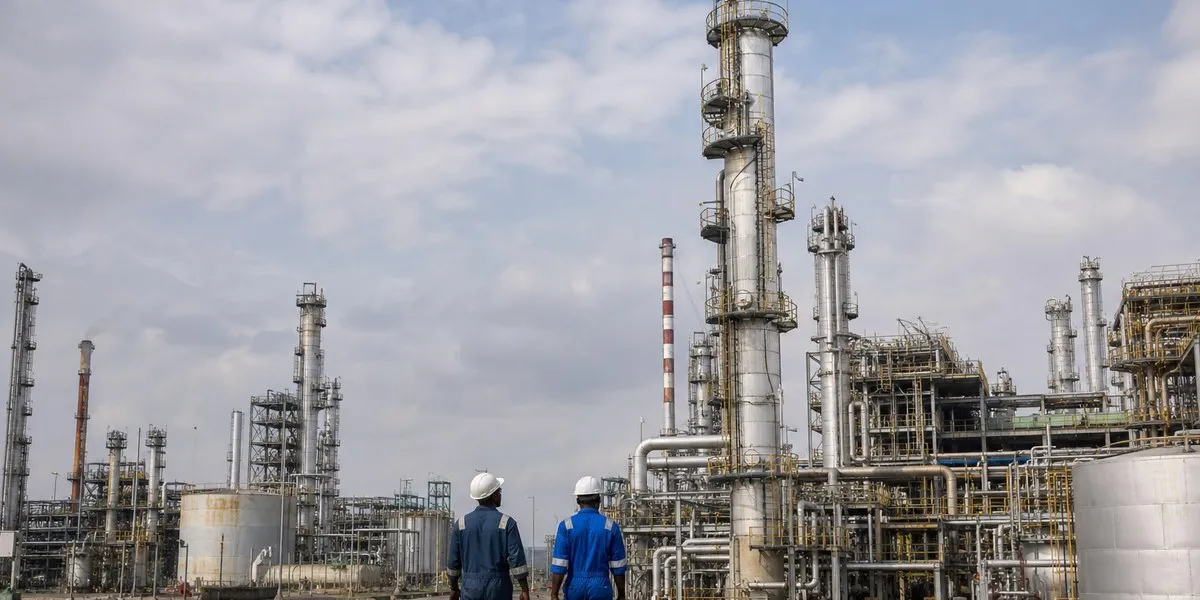
In Nigeria, former President Olusegun Obasanjo has backed calls to review the 13% share of oil revenues allocated to oil-producing states in the Niger Delta. Bayelsa State Governor Douye Diri also said that the current distribution mechanism does not ensure the region receives a fair share of oil extraction profits.
As Premium Times Nigeria reports, citing The Punch newspaper, Obasanjo spoke at the commissioning ceremony for the $1 billion Azikel Refinery crude oil distillation plant in Obunagha, Yenagoa Local Government Area of Bayelsa State. He described the 13% derivation allocation as an initial rather than final arrangement and agreed that the states and communities where oil is extracted have still not received fair benefits from the exploitation of the resources.
Bayelsa State's demands
Douye Diri linked the region's demands to an imbalance between communities where crude oil is extracted and the beneficiaries of its exploitation. He also criticized the Land Use Act, saying that the legislation and federal control over oil resources limit local communities' influence on the management of underground resources.
According to the governor, the region does not seek to keep all oil revenues, but wants to participate in determining how the resources are managed. He stressed that 13% is insufficient for producing states.
More current news is available on the UA.News Telegram channel Telegram.
Current distribution procedure
Article 162(2) of Nigeria's 1999 Constitution provides for the application of the derivation principle in the distribution of natural resource revenues. At least 13% of revenues paid into the Federation Account from natural resources in the relevant states must be allocated to those states.
The outlet notes that the issue of increasing the revenue share is also accompanied by a discussion of transparency in the use of funds that Niger Delta states already receive through derivation and other payments from the Federation Account. The region continues to face problems with infrastructure, healthcare, education, environmental degradation, and economic opportunities for oil-producing communities.
Disputes over the distribution of revenues from offshore and onshore oil extraction also intensified during Obasanjo's presidency. In 2004, Nigeria's National Assembly abolished the distinction between offshore and onshore extraction in applying the derivation principle.




