
Embraer adapts A-29 Super Tucano to intercept drones
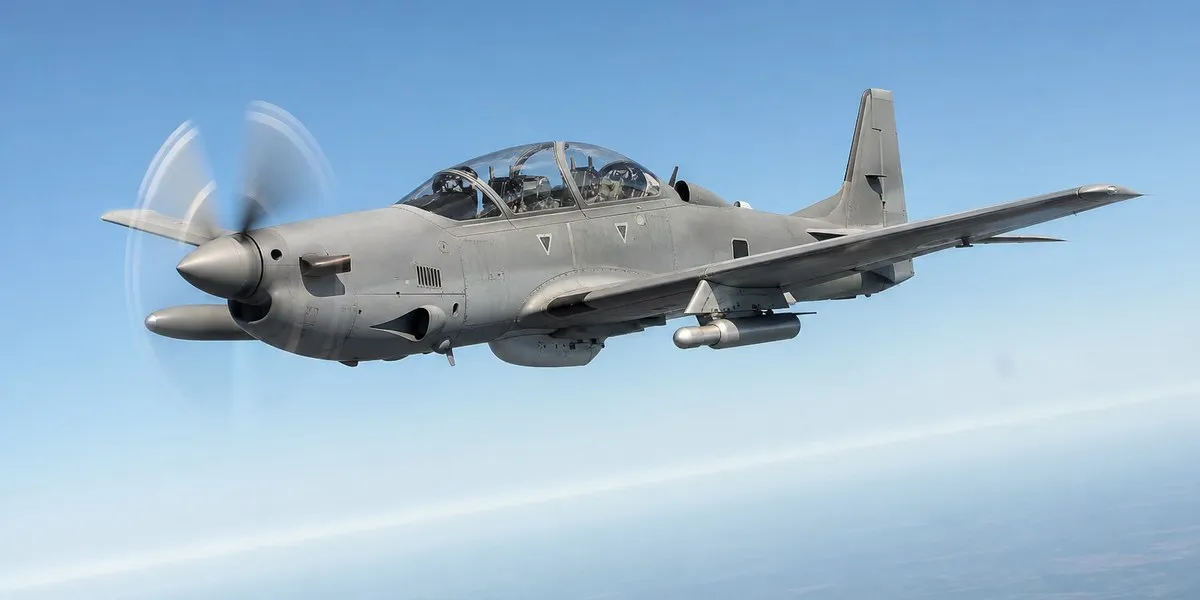
Embraer is adapting the A-29 Super Tucano light attack aircraft to counter unmanned aerial vehicles. The aircraft is intended to intercept and destroy drones at a distance from bases, infrastructure facilities and other important targets, forming an intermediate air-defense layer between ground-based air defense and fighter jets, Breaking Defense reports.
The company is working with an unnamed country on a concept demonstration using the A-29 and real drones as targets. The tests are expected to help refine the concept of operations and optimize crew interaction with integrated systems.
Data from external sources
Under Embraer's concept, the A-29 will not independently search for drones across hundreds of miles of airspace. The aircraft will receive data on an approaching group of drones via a data link from a ground-based air-defense radar or another external source.
After being guided to a designated area, the A-29 will use the L3Harris WESCAM MX-15D electro-optical and infrared system to identify and track individual drones and generate a weapons-employment solution. According to Mark Ayala, Embraer's vice president of defense sales in North America, the counter-drone configuration for aircraft that already have this system will require only a software update. Aircraft without an electro-optical and infrared system will need to be equipped with one.
More current news is available on the UA.News Telegram channel Telegram.
Missiles and machine guns
Missiles equipped with the Advanced Precision Kill Weapon System (APKWS) are planned for engaging targets. The A-29 also has wing-mounted .50-caliber machine guns, allowing hardpoints to be retained for rocket pods. According to Ayala, the machine guns can be used if missiles miss or their supply is exhausted.
Embraer believes that the turboprop-powered A-29 is better suited to fighting slow aerial targets than jet fighters. The company cites the example of the Shahed, which flies at a speed of about 115 miles per hour. Due to the much higher speed of the F-16, a pilot may have only a few seconds to visually detect the drone, designate the target, launch and maneuver to avoid a collision. In Ayala's assessment, the A-29 can reduce speed, approach from behind a group of drones and engage several targets in a single pass.
As an example of layered defense, Ayala cited Guam: the A-29 could operate in an area roughly 50–200 miles from the site, while ground-based air defense would operate in the inner zone up to 50 miles away.




