
The EU has banned fashion brands from destroying unsold collections — Bloomberg
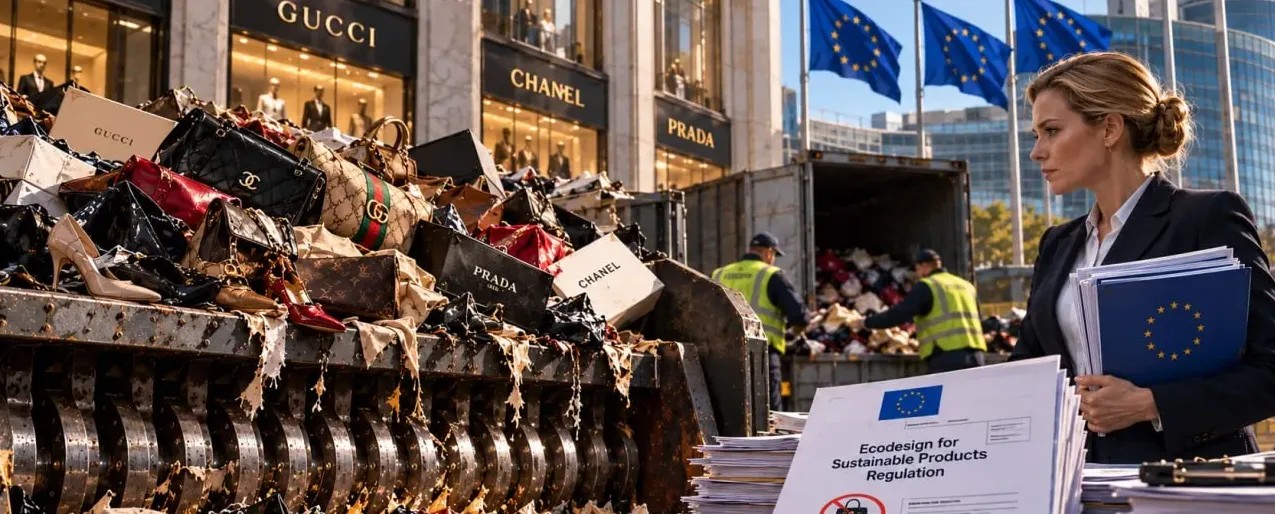
The European Union has banned large companies from destroying unsold clothing and footwear. Starting in 2027, brands will also be required to publicly report how many items they write off and why they destroy them. The new rules also affect luxury fashion houses, including Chanel, Gucci, Burberry, and Prada, which for years have sought to preserve their brand value by not selling off leftover collections at low prices.
The European Union is changing the rules for the fashion industry. Large companies will no longer be able to simply destroy unsold clothing and footwear. And starting in 2027, they will be required to publicly disclose how many items they have written off and for what reasons.
The new requirements could have a significant impact on luxury brands. Previously, some fashion houses preferred to destroy leftover items from their collections rather than sell them at significant discounts. This was their way of maintaining a sense of exclusivity and preventing expensive items from becoming more accessible on the mass market.
High-end items are sold at discounts of up to 60%
Prices on discount platforms show that even luxury brands are accumulating unsold inventory. In October, suede sneakers by Brunello Cucinelli were selling on the Yoox platform for 617 euros—roughly half the official price. A Gucci miniskirt could be purchased for 800 euros, at a discount of about 50%. A Burberry T-shirt cost less than 200 euros—60% off the original price.
In total, there were about 2,500 heavily discounted items from these three brands alone on the platform. For manufacturers who have spent years cultivating an image of exclusivity and limited availability for their products, such sales pose a problem. They show that even expensive collections don’t always find buyers at full price. And massive discounts can undermine the perception of a brand’s exclusivity.
How Chanel Destroyed Thousands of Items
The scale of this practice came to light, in particular, during a criminal case involving Chanel. In August 2026, a Hong Kong court sentenced four former employees of the company’s warehouse to prison terms ranging from four to seven years. They were found guilty of stealing goods worth 8.77 million Hong Kong dollars—approximately 1.12 million U.S. dollars. These items were to be destroyed by shredding. The police seized more than 700 products.
According to court documents, between 2016 and 2017, Chanel destroyed between 10,000 and 20,000 items every three to six months. Before destruction, the company attempted to sell off a portion of the goods. Initially, prices were reduced by 25%, and a year later, by 50%. Employees were offered the chance to purchase the items for 20% of the retail price. Any unsold merchandise was sent to an industrial shredder.
Chanel stated that the practice described does not reflect the company’s current policy. At the same time, this case has drawn attention to the amount of clothing that fashion brands may destroy instead of finding another use for it.
How Much Clothing Is Destroyed in Europe
The problem isn’t limited to the luxury segment. According to estimates cited in reports by the European Environment Agency, between 264,000 and 594,000 metric tons of textile products that had never even been used were destroyed in Europe each year. This represents approximately 4–9% of all textiles entering the market. The disposal of such a large quantity of goods also generates significant greenhouse gas emissions. According to the agency’s estimates, these emissions can reach 5.6 million metric tons of carbon dioxide equivalent.
This is not just a matter of wasting the materials and resources used to produce clothing. Manufacturing garments requires water, electricity, raw materials, and transportation. When finished products are destroyed, all these resources are effectively wasted. That is why the EU has decided to restrict this practice under the Ecodesign for Sustainable Products Regulation (ESPR).
The ban on the destruction of unsold clothing and footwear for large companies took effect on July 19, 2026. Similar requirements will be introduced for medium-sized enterprises in 2030. And starting in 2027, companies must transition to standardized disclosure of information about written-off goods and the reasons for their destruction. This means that fashion brands will not only have to change their approaches to unsold collections but also explain their decisions in greater detail to the public.
Fashion brands report on product destruction in different ways
Companies’ public statements about responsible production are already raising questions. For example, Burberry promised back in 2018 to stop destroying unsold goods. However, in its 2026 environmental policy, the company uses a narrower definition focused on the incineration and landfilling of products.
This is an important distinction, as product destruction can occur in other ways as well. For example, goods can be shredded, with the material formally sent for recycling. Therefore, mere statements about phasing out incineration do not necessarily mean that a company has stopped destroying unsold items. Kering, which owns Gucci and Saint Laurent, previously explicitly prohibited the destruction of excess inventory within the group. However, in its latest report, the company limited itself to a statement about compliance with the law.
Prada also announced its intention to stop shredding unsold clothing and footwear. Subsequently, the company stopped reporting this metric separately. A Prada spokesperson assured that the brand adheres to a zero-destruction policy. The new EU rules are intended to make such statements more transparent. When companies report according to uniform standards, their approaches will be comparable, and discrepancies between public promises and actual actions will be easier to spot.
There Are Exceptions to the Ban
At the same time, the European rules do not mean that all product destruction is prohibited without exception. Certain categories of leather goods, such as bags, are exempt from the restrictions. Product destruction may also be permitted in specific cases—for example, due to safety issues, product damage, or intellectual property rights violations.
Among the conditions specified are situations where a trademark cannot be removed without damaging the product, where repair is not economically feasible, or where a company has unsuccessfully attempted to resell the product or transfer it for reuse within the established timeframe. It is precisely these exceptions that are causing controversy. Environmental organizations and some European politicians fear that companies will be able to use them to continue disposing of unsold items.
In particular, MEP Sarah Mathieu and representatives of environmental organizations criticize provisions that allow for the destruction of products under certain conditions. One of the most contentious issues is the shredding of expensive items under the guise of recycling them into cheaper materials.
What fines do violators face?
In France, violations of these rules are punishable by a fine of up to 15,000 euros. However, the mere existence of sanctions does not guarantee that all companies will comply with the requirements. In 2024, French authorities inspected 110 textile companies. Most inspections resulted in warnings rather than financial penalties. Now, what will matter is not only the ban itself but also how effectively governments enforce it. Company reports will help reveal how much unsold inventory remains, what happens to it, and how often manufacturers take advantage of the permitted exceptions.
For the luxury industry, this is also a matter of reputation. Brands are accustomed to selling not just clothing, but exclusivity, quality, and a certain status. If it turns out that large quantities of unsold items are being destroyed to maintain high prices, this could raise uncomfortable questions from customers. The new EU rules are intended to force manufacturers to plan their collections more carefully, find ways to resell unsold items, and openly explain what happens to items that haven’t found buyers. At the same time, how effectively the ban will change the practices of fashion houses will depend on monitoring and the enforcement of sanctions. Bloomberg reported this on October 16.




