
Iran May Have Stockpiled Enough Uranium for Ten Nuclear Bombs — NYT
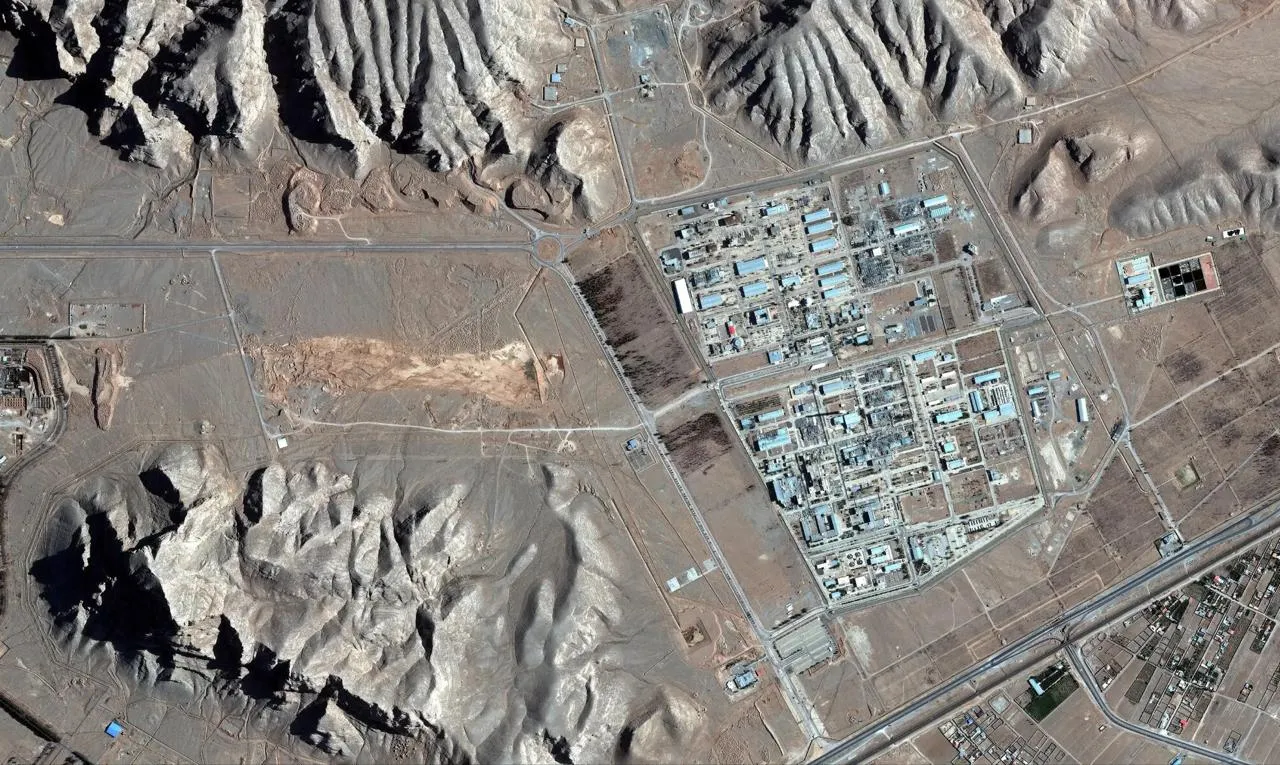
Despite large-scale U.S. strikes on Iran’s nuclear facilities, its nuclear program has likely not been completely destroyed. According to The New York Times, Tehran may have retained stockpiles of highly enriched uranium, which could potentially be enough to quickly produce up to ten nuclear warheads.
U.S. President Donald Trump had previously cited the elimination of the nuclear threat posed by Iran as one of the main reasons for military action against the country. U.S. forces carried out strikes on key Iranian nuclear facilities in an effort to severely damage the country’s uranium enrichment and nuclear fuel production capabilities.
However, according to The New York Times, these attacks do not mean the automatic destruction of the country’s entire nuclear stockpile. According to the publication, some highly enriched uranium may have remained intact. This refers to material that, if further enriched and processed, could potentially be used to build nuclear weapons.
Citing officials and experts, the NYT notes that Iran may have retained enough uranium to potentially produce up to ten nuclear bombs. At the same time, this does not mean that Iran already has ten ready-to-use nuclear warheads. There are a number of complex technical and technological steps between possessing enriched uranium and developing a fully functional nuclear weapon.
It is also important to note that following the attacks, international inspectors have faced difficulties gaining access to Iranian nuclear facilities. The IAEA previously reported losing continuous monitoring of some of Iran’s nuclear materials. As a result, the agency cannot simply confirm in real time where all the stockpiles are located and what condition they are in.
Why the strikes did not guarantee the destruction of the program
The main problem is that a nuclear program is not a single building or a single plant that can be destroyed with a single strike. It consists of equipment, stockpiles of materials, research centers, engineers, and other elements that can be dispersed or relocated. That is why even serious damage to the nuclear infrastructure does not necessarily mean the complete end of the program. If some of the materials had been moved in advance or were located outside the targeted facilities, military strikes could have set Iran back significantly, but would not have deprived it of all its capabilities.
The situation is further complicated by the lack of full international oversight. The IAEA has noted that following the military strikes, the agency lost its continuous track of some of Iran’s nuclear material stockpiles. Consequently, not all assessments today can be verified with the same precision as before the hostilities began. Even before the attacks, Iran had accumulated a significant stockpile of enriched uranium. In its June 2025 report, the IAEA estimated Iran’s total stockpile of enriched uranium in the form of UF₆ at approximately 9,040.5 kg. Of this, about 440.9 kg was uranium enriched to 60% U-235.
This is particularly significant because a 60% enrichment level is already considerably higher than that required for conventional nuclear fuel, although it does not in itself indicate the presence of ready-to-use nuclear weapons.
What the Experts Say
Arms control expert Daryl Kimball believes that the “maximum pressure” policy has failed to completely eliminate Iran’s nuclear capabilities. “The maximum pressure policy has not destroyed—and cannot destroy—Iran’s nuclear weapons capability,” Kimball stated.
In his view, the very fact that the U.S. administration is attempting to shift from military pressure to negotiations demonstrates the complexity of the task. Even after large-scale strikes, Washington is forced to seek a political solution that would allow it to control Tehran’s nuclear program.
Kimball also called the war a costly mistake in U.S. policy and stated that military action alone cannot guarantee a long-term halt to Iran’s nuclear program.
What This Means for the U.S. and Israel
For the U.S. and Israel, this situation poses a serious problem. If part of the uranium stockpile has indeed survived, then military strikes may have delayed the development of the nuclear program, but they have not eliminated the threat itself. At the same time, it is important not to overstate the significance of this data. The existence of a stockpile of highly enriched uranium does not mean that Iran can immediately build a nuclear bomb. This requires the appropriate technology, equipment, a warhead design, and the capability to deliver it to a target.
This is precisely why international assessments typically distinguish between the concepts of “enriched uranium stockpile” and “ready-to-use nuclear weapons.” There is a significant difference between them. In Iran’s case, the question is primarily how quickly the country could complete the remaining stages if it made a political decision to develop weapons.
Why Negotiations Are Important Now
The situation may bring the U.S. and Iran back to the negotiating table. If military strikes failed to completely eliminate Tehran’s nuclear capabilities, the next task is to establish control over its stockpiles and allow international inspectors to return to nuclear facilities. It is precisely the IAEA’s access that is of key importance. Inspectors must be able to verify how much uranium remains, where it is located, and what is happening to it. Without such oversight, it is much more difficult for the international community to assess the true state of Iran’s nuclear program.
Thus, while the U.S. strikes may have inflicted significant damage on Iran’s nuclear infrastructure, it is premature to speak of the complete destruction of its nuclear capabilities at this time. According to the NYT, some of the stockpiles may have survived, and due to the limited access of international inspectors, the exact scale of these stockpiles remains a matter of speculation.
Therefore, the main question now is not merely how severely Iran’s nuclear facilities were damaged. What is far more important is what exactly remains after the strikes, where the nuclear materials are located, and whether the international community will be able to regain full access to them. The New York Times reports on this.
The U.S. announced the shutdown of a network of currency exchange offices and front companies through which, according to Washington, Iran had been circumventing international sanctions. U.S. authorities claim that these entities helped Tehran conduct financial transactions and gain access to revenue from oil sales.


