
Cypriot publication reports EU preparing act for secondary raw materials market
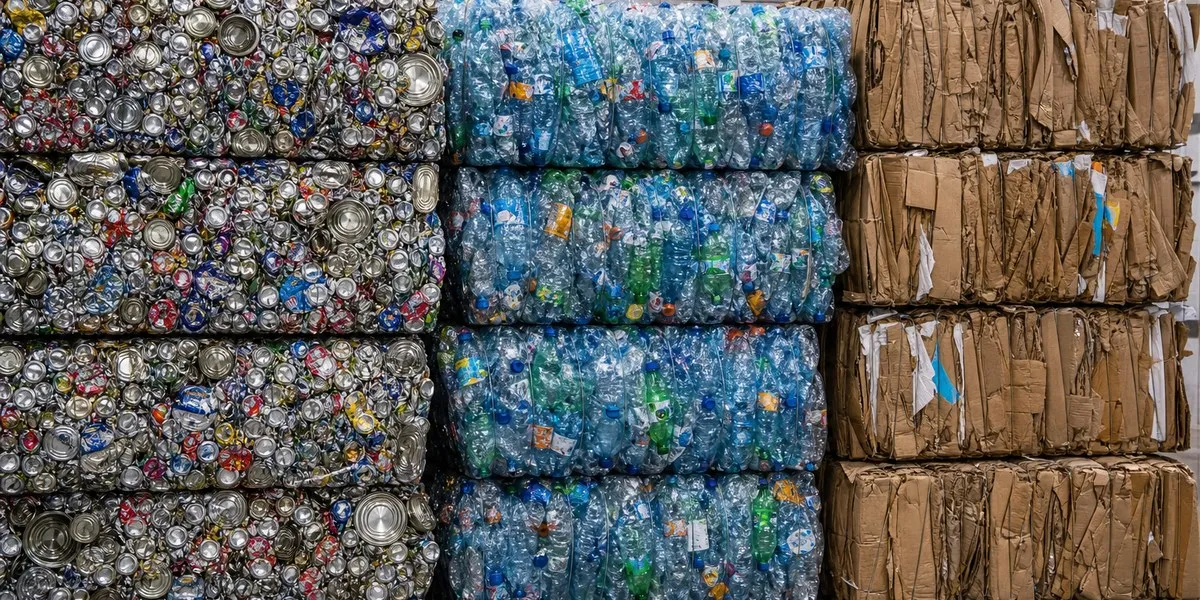
The Cypriot publication Cyprus Mail reported that EU ministers responsible for the environment and climate expressed significant support for the future Circular Economy Act. According to the article’s author, the document could become an official legislative act in 2026.
The act is expected to strengthen the European Union’s competitiveness and economic resilience, align environmental and industrial policy, remove regulatory barriers for circular business models, and improve policy coherence and implementation in the EU.
A single market for secondary raw materials
A key objective of the act is expected to be the creation of a single market for secondary raw materials. The European Commission seeks to harmonize end-of-waste criteria and simplify the cross-border movement of recycled materials.
This is linked to the EU’s goal of doubling its circularity rate by 2030, from 12% to 24%. The initiative is also expected to reduce Europe’s dependence on resource imports from countries outside Europe.
More current news is available on the UA.News Telegram channel Telegram.
The new act is expected to build on previous European initiatives. In 2015, the European Commission presented the Closing the Loop action plan to encourage the reuse, recycling and recovery of materials and products. In 2019, the circular economy became one of the central elements of the European Green Deal, and in 2025 the Clean Industrial Deal was presented, aimed at supporting energy-intensive industries, clean technologies, affordable energy, circularity and investment.
Fragmented rules and risks of missing targets
Currently, product sustainability requirements are distributed among various EU instruments, including in the areas of batteries, textiles, vehicles and consumer rights protection. In the author’s view, this fragmentation creates uneven obligations, while a single Europe-wide legal framework that would allow secondary raw materials to circulate freely on an equal footing with primary materials has still not been established.
According to the European Environment Agency and the European Commission’s 2023 early warning report, a number of member states risk failing to meet the 2025 targets of recycling 55% of municipal waste and 65% of packaging waste. The countries named include Bulgaria, Croatia, Cyprus, Greece, Hungary, Lithuania, Malta, Poland, Romania and Slovakia.
The author notes that the act could enshrine circularity indicators in legislation, including the circular material use rate and the reduction of residual waste. This could potentially create legally binding requirements for member states and, possibly, for market participants.


