
The Kremlin is expanding its influence in Africa through nuclear power plants, technology, and student exchanges
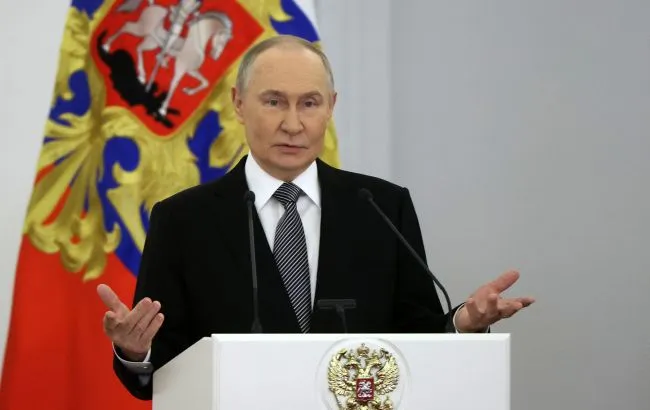
On November 27, 2026, Ukraine’s Main Intelligence Directorate stated that Russia is attempting to strengthen its influence over African countries through energy projects. The Kremlin is focusing primarily on nuclear energy, as cooperation in this area could tie these countries to Russian technology and nuclear fuel for decades. Key areas include the construction of a nuclear power plant in Egypt, the development of energy storage systems, and the promotion of floating nuclear power units.
According to the agency’s assessment, Moscow uses energy projects not only to generate revenue but also as a way to establish a foothold in the region and gain additional leverage over local authorities.
Intelligence analysts believe that Russia seeks to form a circle of states that will depend on the Kremlin for their energy needs. Such dependence could affect not only the operation of power plants but also the foreign policies of these countries.
Rosatom is expanding its cooperation with Egypt
One of the main targets of Russia’s energy expansion is Egypt. During the Egypt Energy 2026 conference, the Russian state-owned corporation Rosatom signed an agreement with a local technology company. The agreement provides for the assembly of energy storage systems directly in Egypt. Such systems are used to store electricity and subsequently supply it to consumers. They can help balance the load on the power grid, particularly during periods of unstable electricity generation from renewable sources.
The Main Intelligence Directorate notes that Moscow hopes this agreement will strengthen its position in the Egyptian energy market. Additionally, Egypt could serve as a springboard for promoting Russian technologies in other African countries. Another possible goal, according to intelligence reports, is to create conditions for circumventing Western sanctions. At the same time, the parties discussed the construction of the El Dabaa nuclear power plant. This is one of the largest Russian nuclear projects on the African continent. The main agreements regarding its implementation were signed back in 2015–2017.
The project involves the construction of four power units equipped with Russian VVER-1200 reactors. The nuclear power plant is set to become an important part of Egypt’s energy system. For Russia, this also represents an opportunity to establish a long-term presence in the country’s market through the supply of equipment, technology, and services for the plant’s operation.
Russia is promoting floating nuclear power plants
Another area of interest for Moscow is the “PEB-100” floating nuclear power unit with a capacity of 100 MW. This is a power plant mounted on a specialized floating platform. It can be used to generate electricity and supply power to remote areas or industrial facilities.
For countries with underdeveloped energy infrastructure, such solutions may seem attractive. They make it possible to generate electricity without having to build a large nuclear power plant on land. At the same time, the technology requires specialized maintenance, trained specialists, and constant monitoring of nuclear safety.
It is precisely in this that the Main Intelligence Directorate (GUR) sees one of the main risks of cooperation with Russia. According to intelligence assessments, nuclear fuel maintenance within the framework of such projects will be concentrated on Russian territory. In other words, countries that use Russian nuclear technology may be dependent on Moscow not only during the construction of facilities but also throughout their entire operational life.
In such a situation, Russia gains the ability to influence its partners’ energy security. If fuel supply, maintenance, and waste management depend on a single supplier, switching to another will be difficult and costly. This creates long-term risks for countries that choose Russian technologies.
The Kremlin is training specialists for the nuclear industry
Russia is also investing in training personnel for the nuclear energy sector. According to the Main Intelligence Directorate (GUR), approximately 400 students from more than 20 African countries are currently studying at Russian institutions of higher education. This is yet another way to consolidate its presence in the region. Students are educated under Russian curricula and familiarize themselves with local technologies and standards. After completing their studies, some of them may work at energy facilities in their home countries.
In this way, Moscow is creating not only technical dependence but also a reliance on Russian personnel. If a country uses Russian equipment, fuel, and standards, it needs specialists who know how to work with them. Training such specialists in Russia can strengthen its influence over the local energy sector. The Main Intelligence Directorate (GUR) believes that all these steps are part of a broader Kremlin strategy. Its goal is to consolidate Russia’s positions in Africa and gain additional leverage over the continent’s nations.
Russia is also involving Africans in military production
Moscow’s interest in Africa is not limited to the energy sector. Russia is also seeking workers on the continent for its military-industrial complex and individuals who can be recruited for the war against Ukraine. Specifically, in November 2026, RBC-Ukraine published a report based on an investigation by the Ukrainian Center for Security and Cooperation and Fox News. The report details a network that recruits women from various African countries to work at a factory producing “Geran” attack drones in the Alabuga Special Economic Zone in Russia.
According to the investigation, the women are offered relocation and employment under the guise of the “Alabuga Start” educational and employment program. Initially, they are told about training, civilian professions, and employment opportunities. However, upon arrival, those recruited end up working on the production line for drones that Russia uses to strike Ukraine. According to the UCSB, women from Uganda, Ethiopia, Zambia, Zimbabwe, Tanzania, Kenya, The Gambia, the Democratic Republic of the Congo, and other countries are involved in this scheme. Solomiya Khoma, an expert at the center, explained that this scheme helps Russia overcome labor shortages at enterprises within the military-industrial complex.
In addition, Moscow continues to seek out citizens of African countries to participate in combat operations against Ukraine. According to reports in Ukrainian and Western media, Russian recruiters offer foreigners jobs and high pay, but some of those recruited eventually end up on the front lines. Thus, Russia’s cooperation with African countries spans several areas—from nuclear energy and professional training to weapons production and recruitment. Ukrainian intelligence views these processes as part of a single strategy through which the Kremlin seeks to strengthen its influence on the continent. This was reported by the Main Intelligence Directorate of the Ministry of Defense of Ukraine.
The Main Intelligence Directorate of the Ukrainian Ministry of Defense reports that Russia is building a large-scale media influence network in Africa to create a favorable environment and recruit local citizens into the Russian army.
The Russian command is deploying recruited foreigners from African and Asian countries to participate in assault operations in the Huliaipole sector. According to the Ukrainian military, these foreigners are promised civilian jobs or safe contract service, but upon arrival, they are sent to the front lines.
Russia is recruiting mercenaries from countries in the Global South for the war against Ukraine.




