
Lukashenko cast doubt on Putin's claims to Ukrainian territory
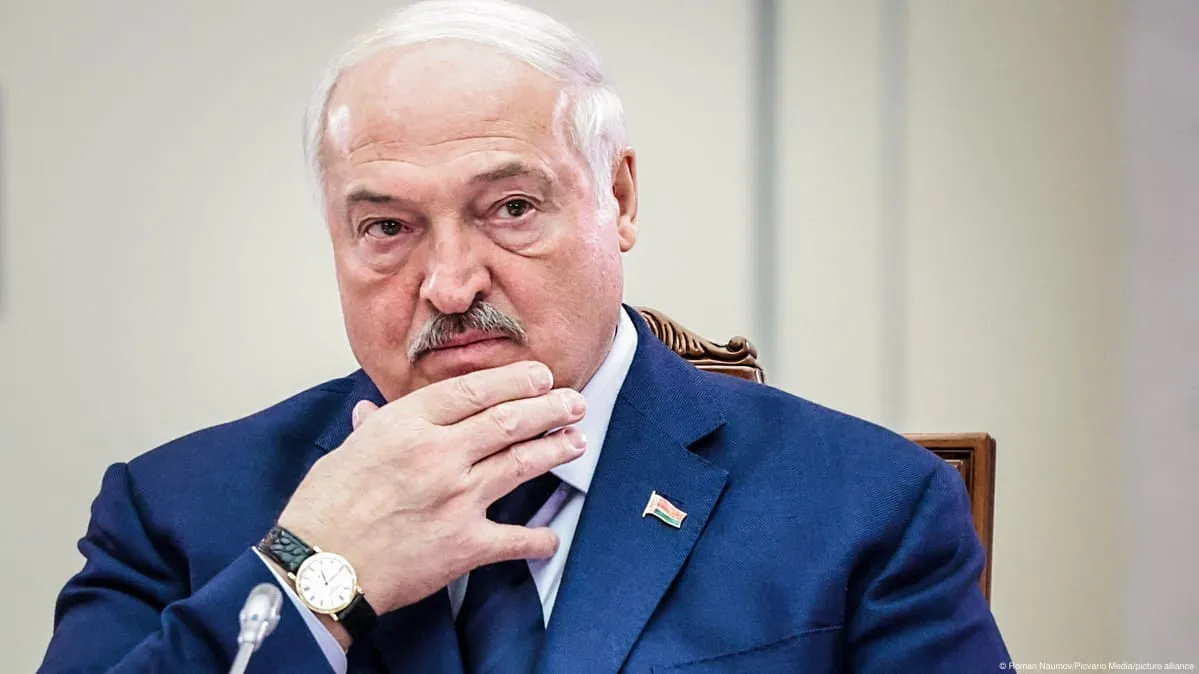
Belarus’s self-proclaimed president, Alexander Lukashenko, has cast doubt on the Kremlin’s arguments regarding “historically Russian lands.” He stated that if one were to follow that logic, then Russia itself would have to be “handed over to Mongolia,” since its territories were once under Mongol rule. At the same time, Lukashenko tried to defend Vladimir Putin, assuring that Putin allegedly does not deny the existence of the Ukrainian people and state.
The conversation was recorded on November 17. During the interview, he reflected on the historical past of Belarusians, Ukrainians, and Russians, as well as on Moscow’s territorial claims against Ukraine. Lukashenko recalled that the statehood of the East Slavic peoples dates back to the times of Kievan Rus’. That is why, in his view, it is incorrect to claim that Ukrainian lands have supposedly been Russian since time immemorial.
“Our statehood in the Middle Ages—from the 11th–12th centuries—originated there, from Kievan Rus’. And today, to say that these lands have long been Russian… They used to be Russian. And Russian lands, if you look deeper, were once Mongol-Tatar. Remember? So should we then hand over all of Russia to someone—to Mongolia?” the Belarusian leader stated.
In this way, he drew a parallel between the history of Ukrainian territories and the period of Mongol rule over the Rus’ principalities. According to his logic, if the historical affiliation of certain lands with a particular state can serve as a basis for modern territorial claims, then this principle can also be applied to Russia itself.
Lukashenko Tried to Defend Putin
Despite criticism of the arguments about “historically Russian lands,” Lukashenko did not directly accuse Putin of denying Ukrainian statehood. On the contrary, he stated that he had allegedly never heard the Russian president deny the existence of the Ukrainian people. “I have never heard Putin deny the Ukrainian people. He doesn’t even deny the Ukrainian state. That is his personal conviction,” Lukashenko said.
He also suggested that the Russian leader’s words might be misinterpreted. According to the Belarusian president, Putin is supposedly speaking about the shared past and future of the region’s peoples, rather than denying Ukraine’s existence. In this way, Lukashenko simultaneously cast doubt on Moscow’s historical arguments regarding Ukrainian territories and attempted to soften his remarks directed at Putin.
What Putin Said About “Historically Russian Lands”
Vladimir Putin has repeatedly used historical arguments to justify Russia’s claims to Ukrainian territories. In particular, he has referred to the Donbas and southern Ukraine as “historically Russian lands.”
Following the illegal attempt to annex the Donetsk, Luhansk, Zaporizhzhia, and Kherson regions in the fall of 2022, Putin declared that these territories had allegedly “returned home, to their native bosom.” Ukraine and most countries around the world do not recognize these claims and consider the territories in question to be Ukrainian.
In 2021, Putin also published an article on the so-called historical unity of Russians and Ukrainians, in which he promoted the idea of a common origin for the two peoples. Ukraine has repeatedly emphasized its own history, language, culture, and right to independently determine its future.
What does Mongolia have to do with this?
Lukashenko’s reference to Mongolia pertains to the period of the Mongol invasion and the dependence of the Rus’ principalities on the Golden Horde. In the 13th century, Mongol troops conquered a significant portion of the Rus’ lands. After that, the principalities remained subordinate to the khans of the Golden Horde for a long time, notably paying tribute. However, this does not mean that modern Russia was once part of the state of Mongolia within its current borders. The reference is to the medieval Mongol Empire and the Golden Horde, not to the modern Mongolian state.
It was precisely this historical period that Lukashenko used as an argument against attempts to define modern borders based on events from centuries ago. His statement attracted attention because it came from a politician who maintains a close alliance with the Kremlin. The interview also revealed a contradiction in Lukashenko’s position: he questioned Moscow’s historical claims to Ukrainian lands, but at the same time continued to assert that Putin allegedly does not deny Ukrainian statehood. Lukashenko made these remarks in an interview with the French magazine Le Point, published on November 25, 2026.
The self-proclaimed president of Belarus, Alexander Lukashenko, stated that his country was allegedly not involved in Russia’s attack on Ukraine and had not provided Moscow with any military bases from which to carry out the attacks. During his speech, he again used a map to support his position.
On November 24, Ukrainian President Volodymyr Zelenskyy responded to a proposal by the self-proclaimed president of Belarus, Alexander Lukashenko, to travel together to Moscow for peace talks with Vladimir Putin. Zelenskyy called the idea frivolous and suggested that Lukashenko bring the Russian president to Kyiv himself. According to him, such statements do not bring an end to the war any closer.




