
Musk won't let Ukraine strike deep into Russia via Starlink
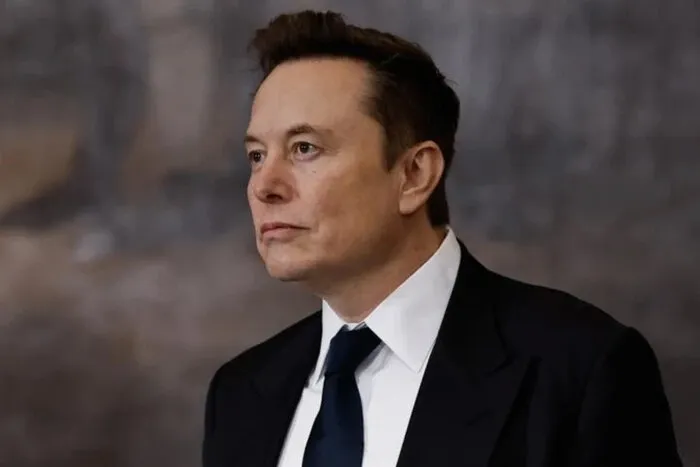
Elon Musk continues to oppose the use of Starlink to guide Ukrainian strikes against targets deep inside Russia. According to The Atlantic, Ukraine is trying to convince the American businessman to change his position, but so far to no avail. Volodymyr Zelenskyy even asked Donald Trump to influence Musk, but there has been no specific response from the U.S. president yet.
Elon Musk, who provides Ukraine with Starlink satellite communications, continues to block its use for striking Russian targets far from the Ukrainian border. The Atlantic reports this, citing its own sources. According to the publication, the Ukrainian side is trying to get this restriction revised. After being dismissed as defense minister, Mykhailo Fedorov, according to The Atlantic’s sources, tried through unofficial channels to convince Musk to reverse his decision.
However, the businessman has so far stood by his position. He continues to insist that the use of satellite communications for such operations could lead to a further escalation of the war.
According to one of the publication’s sources, there has been no positive decision from Musk so far. “At the moment, there is no positive decision. Elon keeps saying that it’s time to reach an agreement,” the source told The Atlantic. In other words, judging by this stance, Musk is not advocating for expanding Ukraine’s capabilities to strike Russian targets, but rather for ending the war through agreements between the parties.
What Ukraine Wants
Ukraine is interested in using Starlink for more than just basic internet access. Satellite communications could be a crucial component of Ukrainian military operations, particularly for data exchange and guiding high-precision weapons. According to The Atlantic, Ukraine wants to use Starlink for precision targeting of Russian missile systems—specifically, the launchers from which Russian forces are striking Kyiv and other Ukrainian cities.
For Ukraine, this issue has practical significance. Russian missile systems may be located far from the front lines and used to launch regular strikes on Ukrainian cities. If Ukrainian forces gain the ability to pinpoint their locations more accurately and strike such targets, this could complicate Russian attacks.
At the same time, the use of Starlink for operations on Russian territory remains a separate issue for Musk. He fears that such assistance could increase the level of escalation and draw the American technology company even deeper into the war.
Zelenskyy Appealed to Trump
After failing to reach an agreement directly with Musk, the issue moved to the political level. During a meeting with Donald Trump, Volodymyr Zelenskyy personally asked the U.S. president to influence the businessman. Ukraine is counting on Trump to convince Musk to reconsider the restrictions on the use of Starlink. This primarily concerns the ability to use satellite communications to precisely guide Ukrainian weapons against Russian missile systems.
However, according to sources cited by The Atlantic, Trump has not yet given a specific response to this request. In other words, it is unclear whether the U.S. president is willing to intervene in the dispute between Kyiv and Musk, or whether this could even change the businessman’s position. For Ukraine, this is an important issue also because Starlink has become one of the key elements of communication since the start of Russia’s full-scale invasion. Satellite terminals are used by military and civilian services, especially in areas where conventional communications infrastructure has been damaged or destroyed.
Why Musk’s stance matters
Starlink operates via a large network of satellites in low Earth orbit and enables communication in areas where there is no stable ground-based internet. For Ukraine, this system has become particularly important following massive Russian attacks on energy and telecommunications infrastructure. But access to Starlink does not automatically grant permission for any military use of the system. The company can impose technical restrictions on the operation of terminals in certain areas or for specific scenarios.
According to The Atlantic, this is precisely what has now become a point of contention. The Ukrainian side wants greater flexibility to use the system in military operations, while Musk opposes the use of Starlink for strikes deep inside Russia. His position is not new. Musk has repeatedly stated that he seeks to avoid steps that, in his view, could lead to a more direct confrontation between Russia and the West. Now this position has once again become the subject of negotiations between Ukraine, the U.S. administration, and the businessman.
So far, the situation remains unchanged: Ukraine is asking for the restrictions to be lifted, Musk refuses to change his position, and Trump has not given a specific answer to Zelenskyy’s request. According to The Atlantic, there is currently no new agreement regarding the use of Starlink to strike targets deep inside Russia. This is reported by The Atlantic.
On August 6, Uber announced plans to invest more than $10 billion in the development of a network of autonomous taxis. The company believes this will strengthen its position in the race to commercialize robotic vehicles and compete with Elon Musk’s projects.


