
November 13, 2026 — International Day of the Blind: How to Get Involved in the Initiative

Every year on November 13, the world observes International Day of the Blind, also known as Blindness Awareness Day. This date serves as a reminder of the rights of people with visual impairments, their capabilities, and the daily challenges they face due to an inaccessible environment. In 2026, the day falls on a Friday, and its main goal is to draw public attention to inclusion, education, and the equal participation of everyone in community life.
International Day of the Blind is observed annually on November 13. The date was not chosen at random: it was on this day in 1745 that Valentin Haüy was born in France—an educator who was among the first to systematically develop education for blind people. His work changed perceptions about whether people who are blind can learn, read, work, and acquire knowledge independently.

In 1984, November 13 began to be observed as International Day of the Blind. The date is linked to a decision by the World Health Organization. The initiative was intended to draw attention to the needs of people who have lost their sight completely or partially, as well as to highlight the importance of their education, employment, and full participation in public life.

Today, in Ukraine and other countries, this date is used for awareness campaigns, meetings, educational events, and discussions about accessibility. In public discourse, the term “International Day of the Blind” is increasingly used, as it focuses on people rather than their health condition. At the same time, the name “International Day of the Blind” remains common in calendars and event titles.
Who Was Valentin Haüy and Why Is He Considered the Founder of Education for the Blind?
Valentin Haüy was born on November 13, 1745, in France. He was an educator, spoke several languages, and was interested in educational opportunities for people who cannot see. One day, he was struck by how blind people were being mocked at a fair. This incident inspired him to dedicate himself to a cause that would change their situation. Gayouy believed that a lack of sight should not deprive a person of the opportunity to receive an education. He developed a method of printing in raised letters that could be recognized by touch. Thanks to this, blind students could learn the alphabet, read texts, and master academic subjects.
In 1784, in Paris, Gauy began teaching a blind boy named François Lezueur. Eventually, the number of students grew, and the educator established a school for children with visual impairments. His school is considered one of the first specialized institutions of its kind in the world. There, children not only learned to read and write but also studied music and mastered various trades.

Hautier sought to prove that blind people could be educated, work, and support themselves independently. He was also involved in publishing educational materials and developing special teaching aids. His ideas spread beyond France: he helped establish educational institutions in other European cities, including St. Petersburg.
How Gauy’s script differed from the Braille alphabet
The history of education for the blind is often associated with two names—Valentin Haüy and Louis Braille. However, they worked at different times and created different reading systems. Haüy used raised, standard letters that could be felt with the fingers. This was an important step, but the system had limitations: it was difficult to read, and producing books took a long time.

Louis Braille was born in France in 1809. He lost his sight as a child following an accident and later studied at a Parisian school for the blind founded by Gajuy. There, he became familiar with various methods of conveying information through touch and began working on his own system. As a result, Braille created a raised-dot script in which characters consist of combinations of six dots. These are recognized by the fingertips. This system made it possible to read and write more quickly and later became the foundation for educating blind people in many countries.
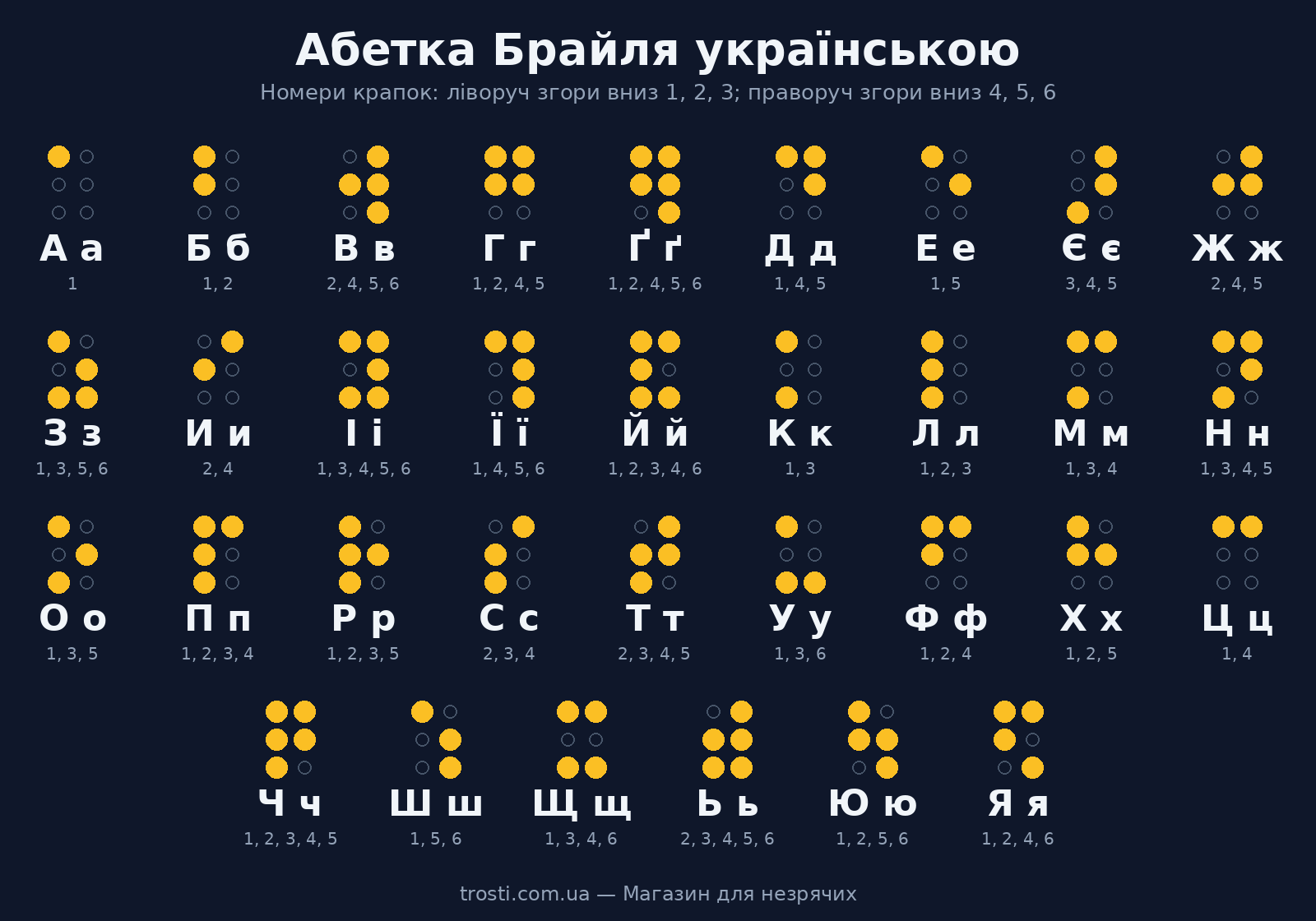
Today, Braille is used in books, educational materials, elevators, information signs, and some packaging. It also has special symbols for mathematics, music, and other fields of knowledge. It is important to note that the Braille alphabet did not replace the significance of Haüy’s work: it was his efforts to make education accessible that became one of the key milestones on this path.
Why This Day Is Important
International Day of the Blind is not only meant to remind us of people who are blind or have low vision. It also draws attention to the barriers that society often creates. For example, it can be difficult for a blind person to navigate the city independently if cars are parked on sidewalks or if there are no tactile strips or audible signals at crosswalks.
Another issue is access to information. Not all websites, mobile apps, and electronic documents are compatible with screen-reading software, which reads text aloud or transmits it through special devices. If a website has a confusing structure and the buttons lack text labels, a person may not be able to use the service on their own.

Education is also crucial. Children with visual impairments must be able to learn alongside their peers, use adapted textbooks, and receive assistance from specialists. This requires accessible educational materials, specialized equipment, and trained teachers. Employment is no less important. People who are blind can work in various fields, pursue education, develop professional skills, and build careers. However, for this to happen, employers must provide accessible workplaces, adapted programs, and equal opportunities in the hiring process.
How Many People Worldwide Have Visual Impairments
According to the World Health Organization, at least 2.2 billion people worldwide have vision impairments at near or far distances. In at least one billion cases, these problems could have been prevented or remain undiagnosed and untreated.

The causes of vision impairment vary. Among the most common are nearsightedness, farsightedness, cataracts, glaucoma, and age-related macular degeneration. Some of these conditions can be corrected with glasses, medication, or surgery. However, access to eye care depends on the country, a person’s income, and the capabilities of the healthcare system.

Vision problems can occur at any age. Children need timely diagnosis so that vision problems do not interfere with their education and development. For adults, vision loss can make work and daily activities more difficult, and for older adults, it can make getting around and communicating more challenging. That is why it is important not to put off getting your vision checked and to consult specialists if you notice any changes. At the same time, not all vision problems can be prevented or cured. People who have already lost their sight need accessible rehabilitation services, training, and support to help them maintain their independence.
How International Day of the Blind Is Observed
On November 13, various countries hold awareness campaigns, lectures, exhibitions, and meetings with blind people and rehabilitation specialists. Libraries and educational institutions organize introductions to Braille and showcase special books and reading devices. Such events help people better understand how those with visual impairments access information and learn.

Demonstrations of assistive technologies are often held. These may include electronic devices that read text aloud, screen-reading software for computers and smartphones, special watches, navigation tools, and household appliances with voice prompts. Participants are shown how these tools help with learning, work, and daily life.
Nonprofit organizations also use this date to discuss the accessibility of urban spaces. They draw attention to the need for tactile guide paths, audible traffic signals, accessible bus stops, and clear wayfinding in public buildings. Some events focus on employment, education, and the protection of the rights of people with visual impairments. There is no single mandatory format for the celebration. In different countries, programs depend on local organizations and community needs. The main goal of such events is not simply to raise awareness about blind people, but to give them the opportunity to speak for themselves about their own experiences, challenges, and suggestions.
How to Properly Assist a Blind Person
In everyday life, offering support often starts with a simple question. If it seems like someone needs help, you should first introduce yourself and ask if they’d be open to receiving it. Don’t immediately grab the person’s hand or cane, or try to force them across the street. They may be able to navigate on their own or need a completely different kind of assistance. If the person agrees to be escorted, it’s best to ask how they’d prefer to move. Typically, a blind person is asked to hold their guide’s arm above the elbow so they can feel their movements. Before stairs, curbs, or other obstacles, you should warn them in advance and explain where they are located.

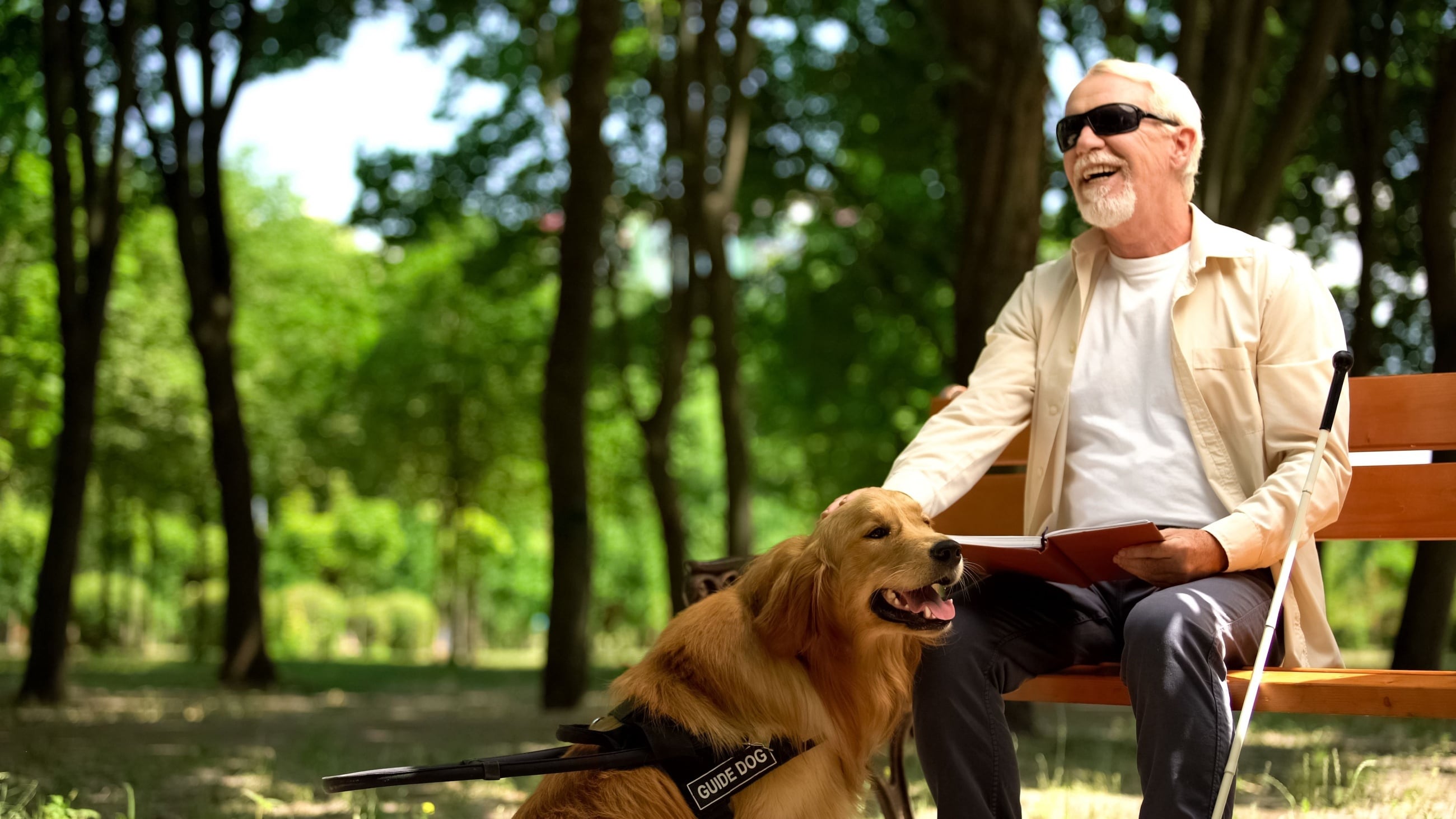
When speaking, address the person directly, not their guide. There’s no need to raise your voice or speak too slowly unless the person asks you to. Common words like “look,” “see,” or “see you later” are perfectly appropriate—there’s no need to artificially alter your usual speech. If a guide dog is present, do not distract it, pet it, or feed it without the owner’s permission. While working, the dog must remain focused on the task at hand. Also, do not touch the white cane or move it without the person’s consent.
Interesting Facts About Blind People and Accessibility
1. A white cane is more than just a mobility aid. It helps a person detect obstacles, curbs, and changes in the surface. With its help, blind people can navigate streets and indoor spaces independently. At the same time, using a cane does not always indicate complete vision loss; people with partial vision impairment also use it.
2. Not all blind people use Braille. Some read using text-to-speech software, audiobooks, or screen magnification. The choice depends on age, visual acuity, personal needs, and skills.
3. Guide dogs undergo special training. They help their owners navigate around obstacles, find crosswalks, and move around safely. A guide dog does not make decisions for its owner but follows commands and helps the owner find their way.
4. Modern smartphones have accessibility features. Screen-reading apps can read aloud the names of buttons, notifications, text on web pages, and menu items. Thanks to this, people who are blind can send messages, read the news, use banking apps, and interact on social media.
5. Tactile markers are needed not only on streets. Raised signs, Braille inscriptions, and tactile maps are used in hospitals, educational institutions, museums, and transportation hubs. They help people independently find the rooms they need and navigate unfamiliar spaces.
How International Day of the Blind Differs from World Sight Day and Braille Day
The calendar includes several international observances dedicated to vision and people with visual impairments. Their goals overlap, but each has a distinct focus. World Sight Day is observed on the second Thursday of October. It is dedicated to eye health, disease prevention, and access to eye care. In 2026, this date falls on October 8.
World Braille Day is observed on January 4—the birthday of Louis Braille. It serves as a reminder of the importance of access to information, education, and reading for people who are blind. On this day, people discuss the use of Braille in education, books, and everyday life. International Day of the Blind on November 13 takes a broader view—focusing on the rights, opportunities, and status of people with visual impairments in society. It serves as a reminder that accessibility should not be a one-time event, but rather a standard part of urban spaces, education, employment, and public services.
How to Get Involved on This Day
You can meaningfully observe International Day of the Blind even without participating in a large event. For example, you can check whether an organization’s or educational institution’s website is accessible to screen-reading software, support community initiatives, or share information about the rights of people with visual impairments. You can also find out what needs local organizations and volunteers working in this field have.

It’s also worth paying attention to the space around you. Don’t leave bicycles, scooters, or cars on tactile paving; don’t block walkways; and don’t clutter sidewalks. For someone who navigates using a white cane, such obstacles can pose a serious problem.

Another way to get involved is to support information accessibility. For example, add text descriptions to images on social media, use clear headings on websites, and avoid conveying important information solely through color or images. These small changes make the digital space more accessible to a wider range of people. International Day of the Blind reminds us that a person’s independence depends not only on their personal abilities but also on how accessible the world around them is. Equal rights begin with concrete solutions—a safe sidewalk, an accessible website, and the opportunity to learn and work. And these conditions are needed not just one day a year, but every day.




