
Meta removes election parody in India — Al Jazeera
Meta has removed in India a parody video by stand-up comedian Brijesh Jha about the removal of him and his family members from the voter list in the state of West Bengal. The video, published on September 29, received 1.7 million views, and two days later Instagram removed it, citing local legislation. Al Jazeera reports.
In the video, Jha claimed that India’s chief election commissioner, Gyanesh Kumar, had disenfranchised millions of voters on the instructions of the Bharatiya Janata Party (BJP), led by Prime Minister Narendra Modi. The comedian linked the removal of the parody song to the authorities’ response to a journalistic investigation into the revision of voter lists.
Disputes over voter lists
According to the Indian Express, two of the three members of the election commission formally objected at least 14 times to Kumar’s key decisions related to the special intensive revision of voter lists. This procedure was launched in June last year to identify deceased, duplicate or questionable voters.
As part of the review, more than 130 million people were removed from the lists — nearly 14% of India’s total number of voters. As Al Jazeera notes, most of those removed were Muslims, who usually do not vote for Modi’s Hindu nationalist party. Opposition politicians and critics accused Kumar, who was appointed by Modi’s government, of acting in the interests of the BJP and demanded an independent investigation.
More current news is available on the UA.News Telegram channel Telegram.
Protests and content blocking
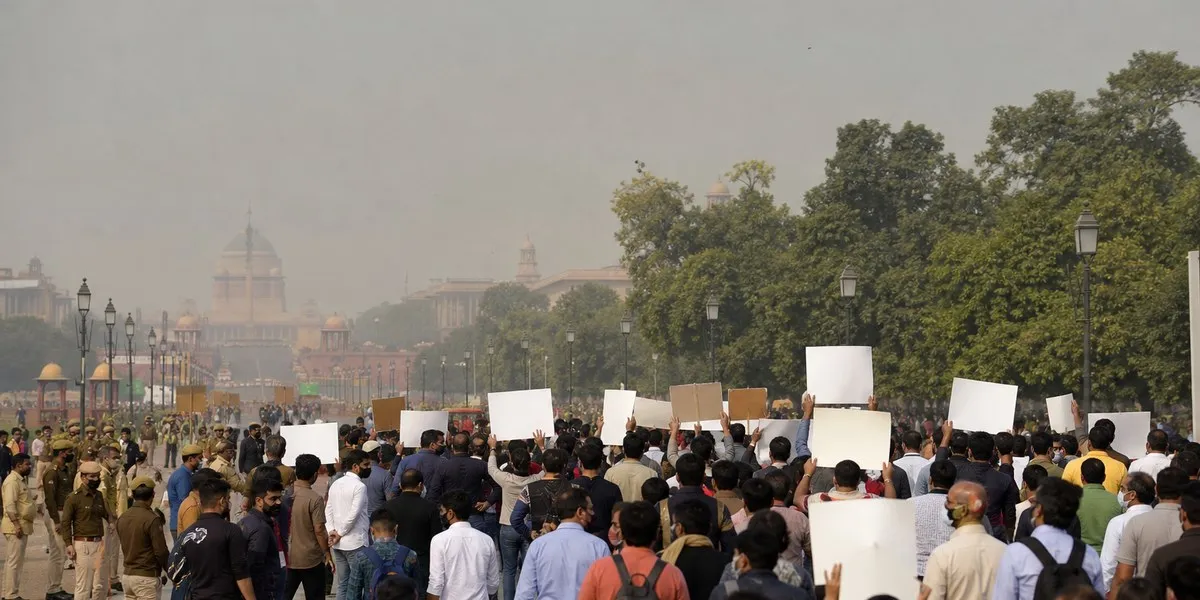
After this information was made public, protests began in India demanding the resignation of the head of the election commission. In New Delhi, police briefly detained opposition leader Rahul Gandhi and other representatives of the Congress party, who were trying to march to the election commission’s office. The BJP responded by saying that opposition parties were attempting to change the government and were attacking the country’s democratic and constitutional institutions.
In February, Modi’s government tightened rules on online content: platforms must remove materials deemed illegal by a government body or court within three hours of receiving an order, instead of the previous 36 hours. The Indian Express reported that from March to July, the government issued nearly 195,000 content-blocking orders for Instagram, Facebook and YouTube. The government rejected the newspaper’s report, saying that part of the large volume of posts may be illegal.
Political cartoonist Satish Acharya said that his Instagram account in India was blocked from September 28 until late in the evening on October 5, and several of his cartoons, including some published up to three years ago, were removed.




