
Possible oldest dwelling in the Western Hemisphere discovered in Alaska — Live Science
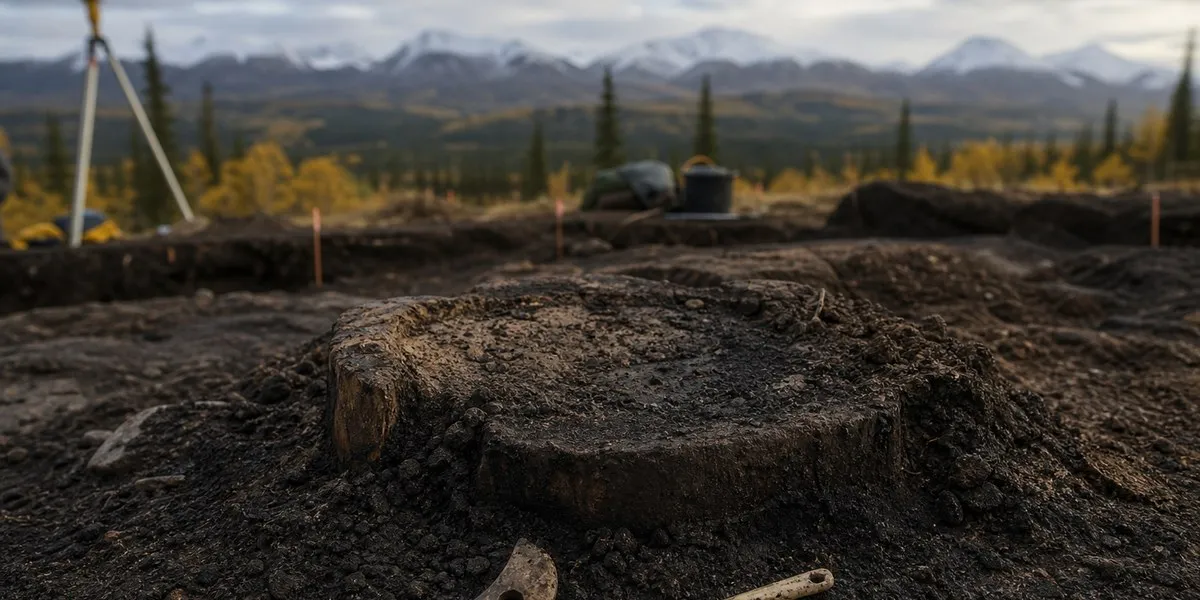
Archaeologists excavated the Sheg Hdalti site in interior Alaska, United States, which is about 13,800 years old, and found signs of what may be the oldest dwelling structure in the Western Hemisphere. The site is located about 55 kilometers southeast of Fairbanks.
As Live Science reports, ancient people used this camp for about a thousand years. The name Sheg Hdalti means “They were there” in the Athabaskan language of Alaska’s Indigenous peoples.
Signs of an ancient dwelling
Researchers found a hearth, a small pit and an impression in the soil left by a wooden post. In their view, these elements may have been the remains of a shelter or an early tent dwelling. Nearby, they also found an earth oven containing charcoal and animal bones, which was likely used to slowly cook meat for a large family group.
During the excavations, tens of thousands of artifacts were recovered, including stone tools, fragments of bone needles and an antler pendant. In a study published in the journal Science Advances, this complex was described as the earliest possible example of a dwelling structure in North America.
More current news is available on the UA.News Telegram channel Telegram.
Connections with Asia and other regions of the Americas
Among the finds are diamond-shaped bifacial stone tools made of rhyolite and basalt. They are similar to objects known from areas of present-day northern Siberia. Obsidian artifacts also indicate that the volcanic glass was brought to the site from a geological source hundreds of miles to the northwest.
Archaeologists found the bones of more than a dozen wolf-like animals. An analysis of the jaw of one of them showed that it belonged neither to a dire wolf nor to a Pleistocene Beringian or gray wolf, but to a population of wolf-like animals characteristic of central Alaska. According to the researchers, the period of the site’s existence and its location are indirect evidence that its inhabitants may have kept dogs.
Researchers described eight fragments of bone needles found at Sheg Hdalti as the oldest needles in the Western Hemisphere. The antler pendant, drilled on one side and pointed on the other, resembles personal ornaments known from early sites south of the Canadian ice sheets.




