
An island in the middle of the ocean, home to just 220 people and thousands of penguins
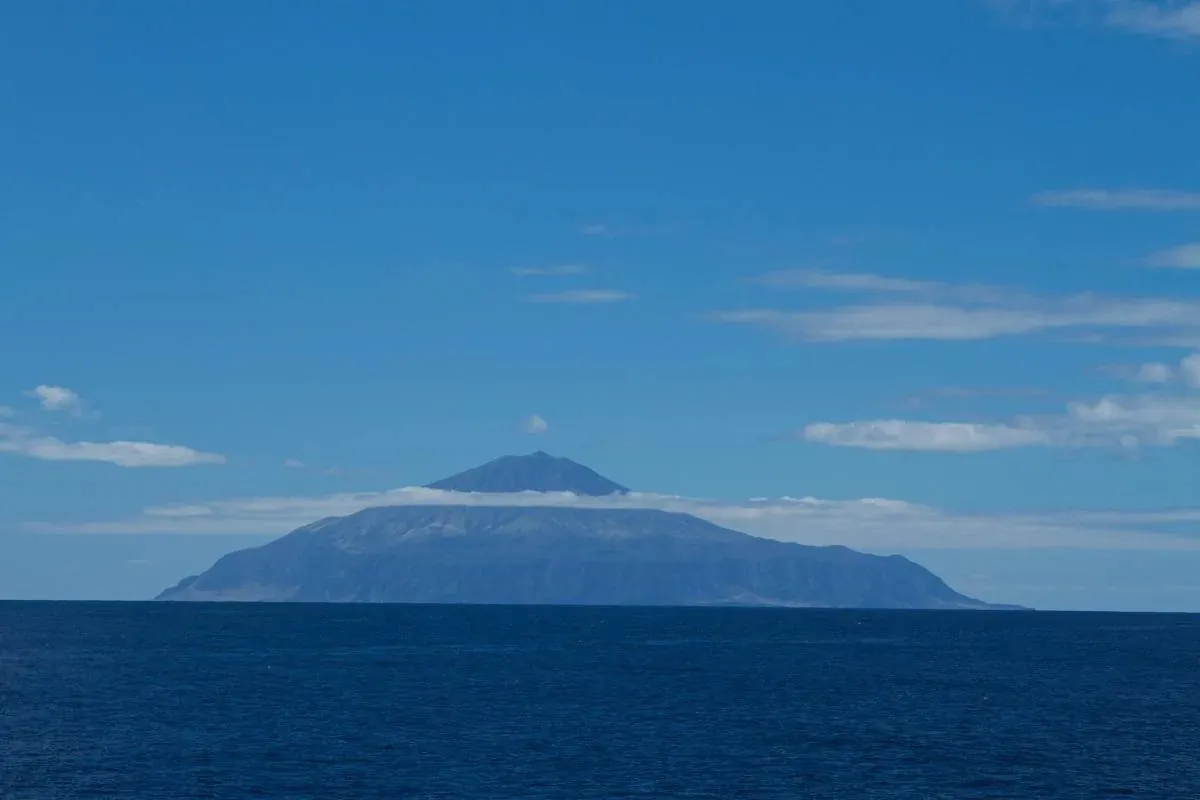
In the middle of the South Atlantic lies Tristan da Cunha—one of the most remote inhabited islands in the world. Only about 220 people live there; there is no airport, and the nearest major city can only be reached by ship. At the same time, the island has become home to huge colonies of penguins, fur seals, and other rare animals.
Tristan da Cunha is situated in the middle of the South Atlantic, far from the nearest continents. According to the British publication Express, living side by side with penguins is a normal part of life here. However, things that many people take for granted—such as a quick trip to a neighboring city or a flight—are out of reach for the locals. The island has no airport or even a runway. You can get there by ship from Cape Town in South Africa. The distance is over 2,700 kilometers, and the journey usually takes about six days. However, under unfavorable conditions, the trip can take as long as 15 days.
The nearest coast of South America is approximately 3,700 kilometers away. Because of this isolation, the island is often compared to the setting of the movie *Cast Away*, where the protagonist finds himself far from civilization.
A Small Community with a Rich Shared History
About 220 people live permanently on Tristan da Cunha. The local community is so small that most residents know each other well. According to the population update from October 21, 2026, all of the island’s residents share just 11 different family names. The only permanent settlement is called Edinburgh of the Seven Seas. This is where the community’s daily life is centered. However, the usual urban infrastructure that residents of large cities are accustomed to is lacking here.
For example, you can’t have groceries delivered to your home or quickly pop into a supermarket. There is one large grocery store on the island. It supplies locals with basic goods imported from abroad: flour, coffee, chocolate, toilet paper, and wine. There’s also a pub here—The Albatross. The establishment operates in the British tradition and has become one of the places where locals gather.
How the island’s residents make a living
Despite its remoteness from the rest of the world, Tristan da Cunha maintains trade ties with other countries. One of the main local exports is lobsters. They are shipped to Australia, New Zealand, the United States, and European countries. Other residents are engaged in agriculture, crafts, and nature conservation. The island also has an unusual source of income: it issues postage stamps and commemorative coins, which are purchased by collectors from various countries.
Tourists can also visit Tristan da Cunha, but organizing such a trip is not easy. Due to limited transportation options and the lack of infrastructure for mass tourism, the number of visitors is small. Those wishing to visit the island must complete administrative procedures in advance and arrange their trip. After that, they’ll spend several days at sea.
Why the Island Belongs to the United Kingdom
Although Tristan da Cunha is located thousands of kilometers from the British coast, its residents hold British citizenship. The island’s history with Great Britain dates back to the early 19th century. In 1816, Britain annexed the archipelago. This occurred shortly after Napoleon was exiled to the neighboring island of Saint Helena. British authorities feared that supporters of the former French emperor might use Tristan da Cunha as a base for an attempt to free him. Therefore, London sent a military garrison there.
Today, the archipelago is part of a British overseas territory. It comprises four main islands: Tristan da Cunha, Nightingale, Inaccessible, and Gough. The latter three have no permanent residents, but they are by no means uninhabited.
Thousands of penguins and rare marine animals
One of the archipelago’s main features is its natural environment. Thanks to the currents of the South Atlantic and the Antarctic, the surrounding waters have become a habitat for many marine animals. Here you can encounter humpback whales, sperm whales, dolphins, and blue sharks. The latter are among the shark species that are heavily fished worldwide, particularly due to the high value of their fins.
Huge colonies of marine animals are found along the coast. According to National Geographic, the islands of the archipelago are home to about 200,000 crested penguins, over five million thin-billed petrels, and approximately 300,000 sub-Antarctic fur seals. To protect this unique natural environment, a marine protected area covering nearly 700,000 square kilometers was established around the archipelago in November 2020. At the time of its creation, it was the largest in the Atlantic Ocean.
For a small community living far from major cities and continents, wildlife conservation is of particular importance. Therefore, the protection of marine animals and the environment has become one of the key priorities for life on the archipelago. Express reports on this.




