
Tunisian police halt unemployed graduates’ march to capital — Al Jazeera
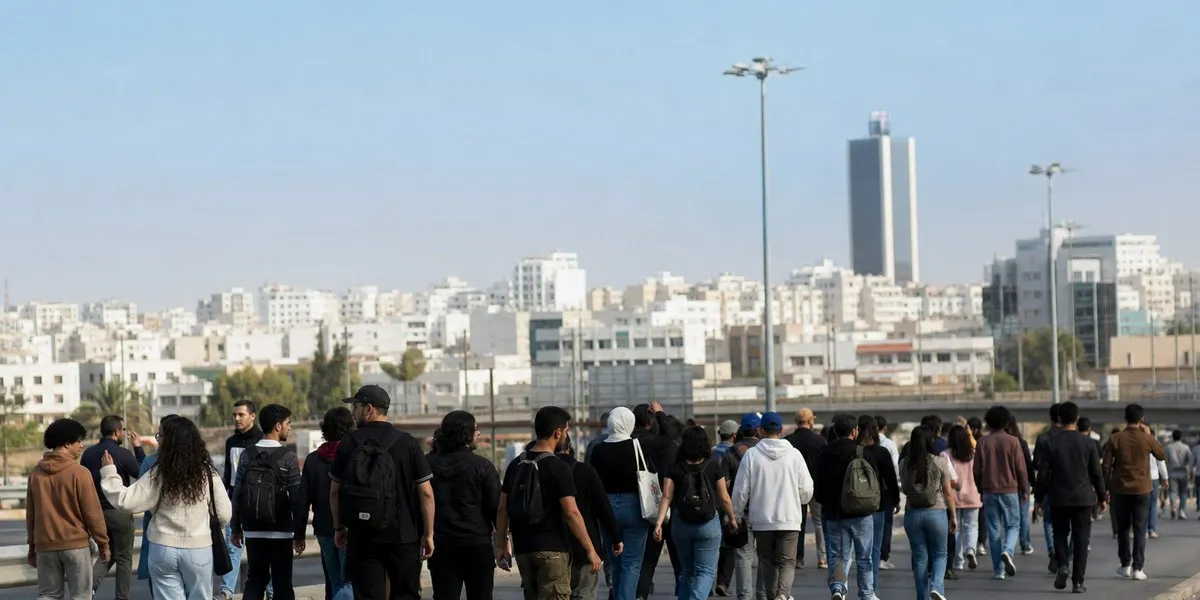
Tunisian police on October 6 stopped in the city of Borj Cedria, south of the capital, a march of unemployed university graduates demanding jobs and the implementation of a law on employment in the public sector. According to Al Jazeera, participants were allowed to continue their journey individually, but not as a group.
March to the capital
The so-called March of Dignity began on September 27 in the city of Menzel Bouzaiane in the central part of the country. Participants planned to cover about 300 kilometers to Tunis and then reach the suburb of Carthage, where the presidential palace is located. According to the organizers, there were 23 people at the start of the march, and other graduates joined them along the way — the coordinating committee estimated the number of participants at more than 120.
The marchers made stops due to exhaustion and injuries. They demand that the authorities define a practical mechanism and timetable for implementing Law No. 18 of 2025. The document provides for the exceptional recruitment into the public sector and civil service of graduates who have been unemployed for a long time. The law entered into force on December 23, 2025, and provides for phased recruitment over a maximum of three years.
High youth unemployment
According to Tunisia’s National Institute of Statistics, the overall unemployment rate in the country stood at 14.9% in the second quarter of 2026. Among university graduates, it reached 26.6%, including 35.6% among women and 14.2% among men. Among young people aged 15 to 24, unemployment stood at 35.4%.
More current news is available on the UA.News Telegram channel Telegram.
Graduate Cherine Ghanmi, who completed her studies in 2012, said she still cannot find a job and depends on support from her parents. She also views President Kais Saied’s public companies program skeptically; it is intended to promote local development and employment.
On October 17, thousands of people protested in Tunisia over deteriorating living conditions, unemployment and restrictions on freedoms. The demonstration was led by the Tunisian General Labour Union, opposition groups and civil society organizations. According to the statistics institute, the country’s economy grew by 2.7% in 2025 and by 2.4% in the first half of 2026. At the same time, as the source notes, economic growth does not necessarily create enough available jobs.
Power and water supply disruptions became an additional factor of discontent, coinciding with extreme heat in several regions of the country during the summer. Such problems complicated the work of small businesses and increased financial pressure on households.




