
Russia is suspected of attempting to drive a wedge between Poland and the Czech Republic
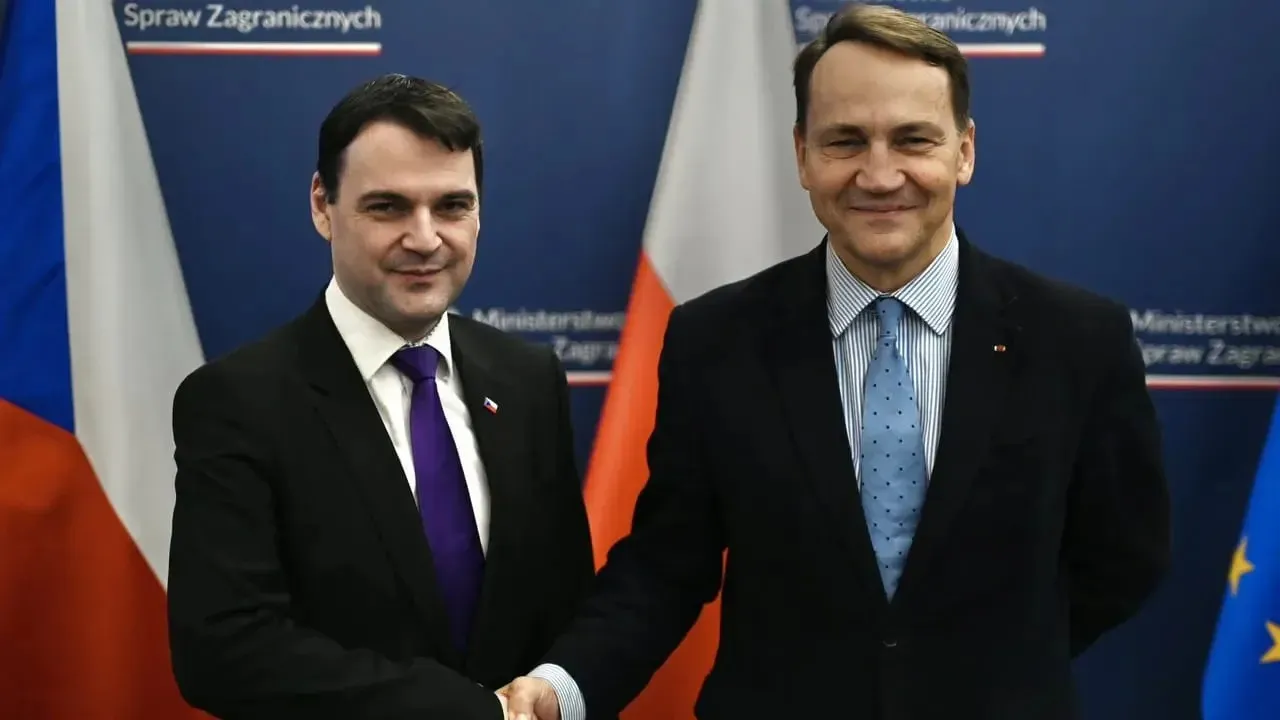
A large-scale disinformation campaign was uncovered in Poland and the Czech Republic, during which a fabricated story was spread about Warsaw’s alleged territorial claims on Prague. The perpetrators created a fake “Czech Radio” website, forged social media accounts, and even a fake document regarding the transfer of 638 hectares of Czech territory to Poland. Russia is suspected of being behind the operation, though its organizers have not yet been officially identified.
The Polish website CyberDefence24.pl reported on the disinformation campaign. According to the site, unknown attackers circulated two fake articles in the Polish media about the so-called “territorial debt” of the Czech Republic to Poland. To do this, they created a website that imitated “Czech Radio,” as well as fake Facebook pages. Through these channels, they disseminated messages on behalf of fictional diplomats and other government officials.
The main hoax involved a purported document from the Polish Ministry of Foreign Affairs. It claimed that Poland was demanding a change to the Polish-Czech border and the transfer of approximately 638 hectares of Czech territory to Poland. The authors of the hoax tried to make the story appear to be a genuine diplomatic dispute. They cited supposedly official documents and statements by Czech officials.
However, suspicious elements were found in the fake document. The text was written in Czech, but the last few words were in Polish. CyberDefence24.pl speculated that the document might have been created using artificial intelligence. The attackers also gained access to the website of the Polish regional radio station Radio PiK. There, they posted an article citing alleged Czech media sources. The article claimed that Warsaw was supposedly planning to occupy hundreds of hectares of Czech territory.
Poland’s Response
Polish Foreign Minister Radosław Sikorski responded to the appearance of the fake reports. “Don’t let them drive a wedge between us,” he wrote on social media.
Sikorski also recalled the historical dispute over Zaolzie. “The annexation of Zaolzie was one of the most foolish decisions in the history of Polish foreign policy, but I hope our Czech brothers remember: Poland, represented by President Lech Kaczyński, publicly apologized for this at Westerplatte in 2009,” the Polish minister emphasized.
Polish Prime Minister Donald Tusk also responded to the situation. He posted an image of Rex and Krotik—popular Polish and Czech characters—and wrote that Poland and the Czech Republic are true friends.
Where Did the Story About the Territorial Debt Come From?
It is not the story of the long-standing territorial dispute itself that is entirely fabricated, but rather its presentation and the claim that Poland allegedly decided to take Czech territory. The Czech Ministry of Foreign Affairs explained that there is indeed a long-standing dispute between the countries over 368 hectares of land.
The issue arose after the demarcation of the Czechoslovak-Polish border under the 1958 treaty. When the new border was established, its length was reduced by approximately 80 kilometers. After calculating the territories gained and lost by both sides, a difference of approximately 368 hectares emerged in Poland’s favor. Since 1992, Prague and Warsaw have periodically discussed how to finally resolve this issue.
At the same time, this does not involve preparations for the transfer of hundreds of hectares of territory or a forced border change. In February 2026, Czech Foreign Minister Petr Macinka discussed this issue with Sikorski. According to him, the parties did not plan to provide either territorial or financial compensation. “There will be no question of any territorial or financial compensation. On the contrary, we are saying that we will resolve this dispute through a joint flood protection project,” Macinka stated.
In other words, the actual dispute between the countries concerns a long-standing territorial issue, but a disinformation campaign has turned it into an allegedly current demand by Poland to have part of the Czech Republic transferred to it.
Why Russia Is Suspected
Polish and Czech authorities suspect Russia of carrying out this disinformation operation. NASK, the Polish domain name registrar, noted that the methods used in the campaign are similar to those previously associated with Russian information operations.
At the same time, NASK emphasized that the organizer of the attack has not yet been definitively identified. “The attackers’ modus operandi corresponds to methods known to be used by Russia. At this stage, the organizer of the incident has not been definitively identified,” NASK stated.
Lukáš Valášek, a journalist for the Czech publication Zoznam Zprávy, drew attention to the scale and coordination of the campaign. According to him, the attackers used several tools simultaneously: artificial intelligence, a fake media website, and fake social media accounts. This created the impression that the same information was supposedly coming from several independent sources at once.
What Were They Trying to Achieve?
According to Polish and Czech media reports, the main goal of the campaign may have been to worsen relations between the two countries. To this end, the attackers exploited the sensitive topics of borders and historical territorial disputes. Such reports can quickly stir up public outrage, especially when they are presented as coming from supposedly official sources.
In this case, the fake story was intended to create the impression that Poland was making new territorial claims against the Czech Republic. Currently, Czech and Polish law enforcement agencies are continuing to investigate who was behind the operation. At the same time, representatives of both countries have urged the public not to fall for provocations and to verify information through official sources.




