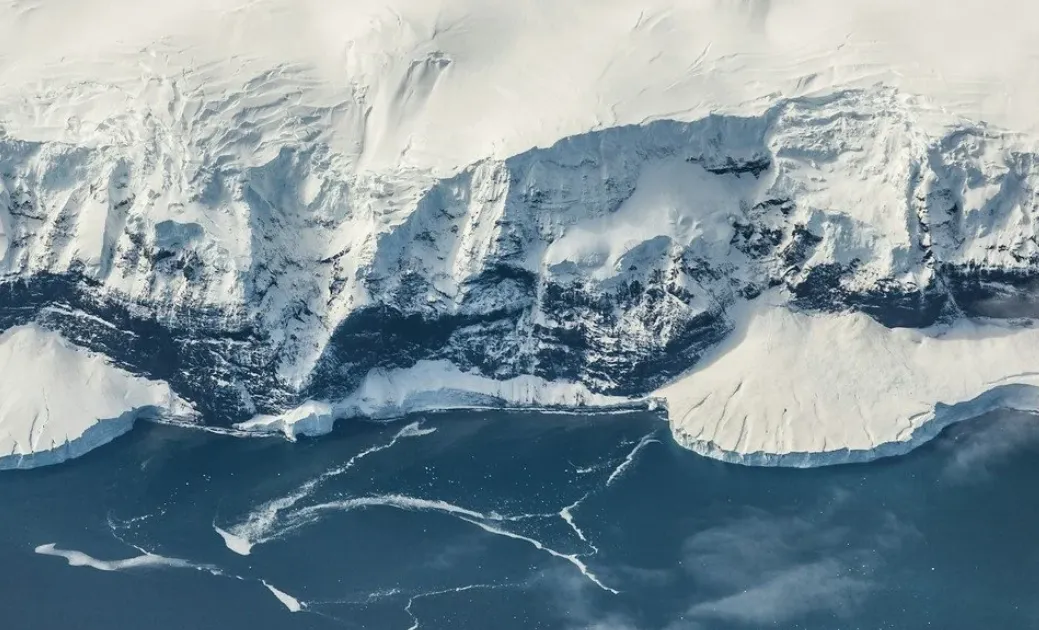
The autonomous underwater vehicle Ran explored the area beneath the Dotson Ice Shelf in West Antarctica and discovered unusual structures on its underside.
During the 2022 expedition, the vehicle operated under the ice for 27 days, covering more than 1,000 km. Using multibeam sonar, it created six high-resolution maps covering a total area of about 140 km².
Scientists discovered terraces ranging from 200 to 2,000 meters wide with steep cliffs up to 5 meters high. In some places, they formed multi-level systems with elevation differences of up to 40 meters. The sonar also detected unusual teardrop-shaped depressions and through-going faults.
Researchers attribute the formation of this terrain to ice melt, ocean currents, tides, and water turbulence.
In 2024, scientists decided to repeat the study, but the Ran disappeared after its first dive. The submersible did not return to the data collection point, and searches using acoustic devices, a helicopter, and drones yielded no results.
Scientists speculate that the submersible remains somewhere beneath the ice shelf. Due to its loss, researchers are currently unable to repeat the measurements and determine how the discovered seafloor topography has changed.