
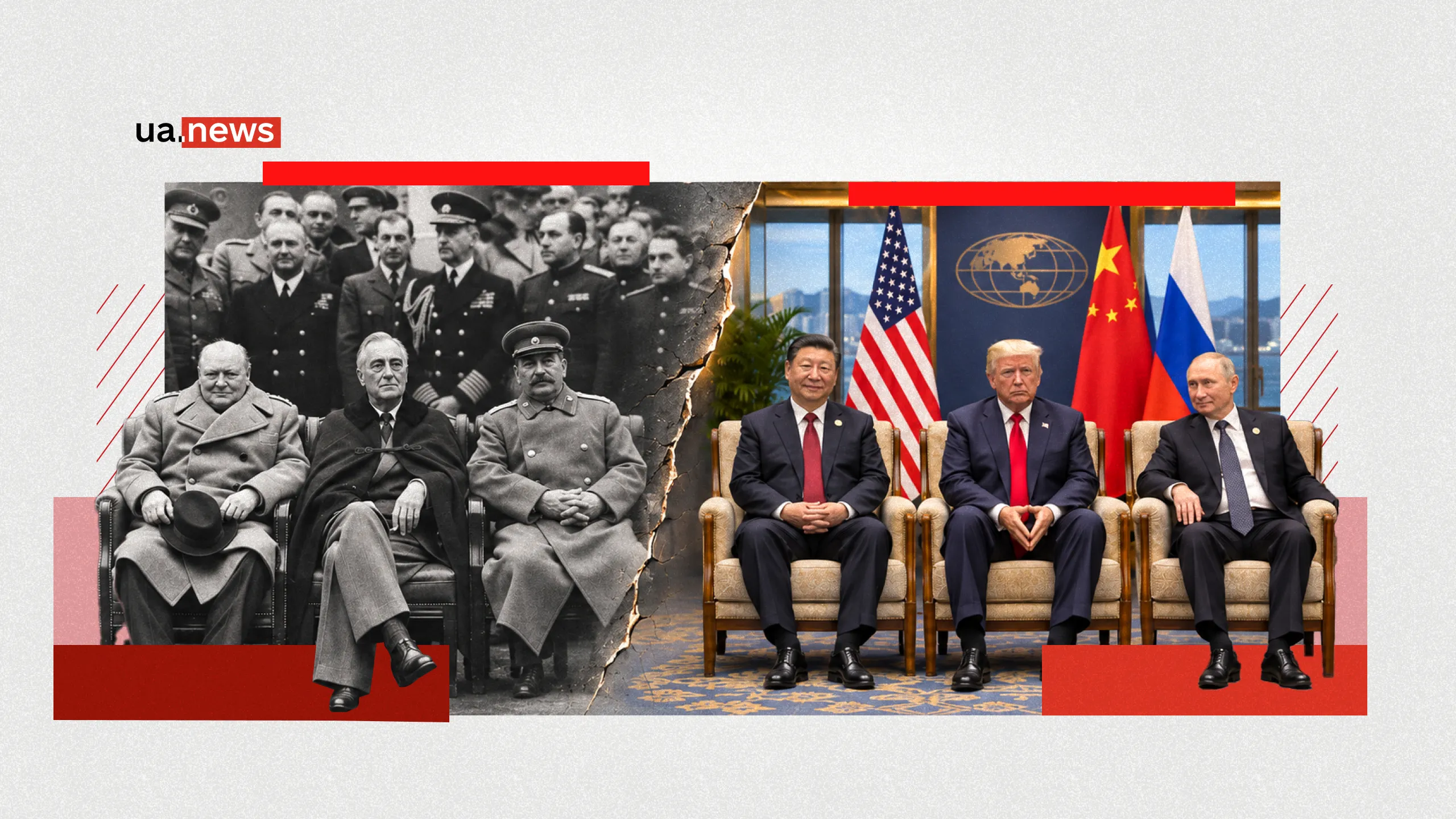
Today, Wednesday, November 18, the 33rd Asia-Pacific Economic Cooperation (APEC) Summit began in the Chinese city of Shenzhen. Traditionally, this forum brings together leaders from more than twenty countries in the region to discuss free trade, investment, and the stability of global supply chains.
However, this year the economic agenda has been overshadowed by major international politics, as Shenzhen has become the venue for unprecedented high-level talks. As early as Thursday, November 19, the first-ever trilateral meeting between U.S. President Donald Trump, Chinese President Xi Jinping, and Russian dictator Vladimir Putin will take place. The media and the expert community have already repeatedly dubbed this format the “new Yalta” due to fears that the leaders of these three countries will attempt to redraw spheres of influence behind closed doors — just as Roosevelt, Stalin, and Churchill once did.
Expectations for the talks in Shenzhen remain extremely tense and controversial. What exactly are the agreements being prepared behind the scenes at the Chinese summit? Are any even being prepared? What should Ukraine and the world expect? UA.News posed these questions to political experts. Read more in our article.
The alarming expectations surrounding the meeting between Trump, Putin, and Xi do not reflect reality: Volodymyr Fesenko, director of the “Penta” Center for Applied Political Studies
We need to distinguish what is actually happening in China these days. The APEC summit in Shenzhen is a major event attended by dozens of countries. However, on the sidelines of this summit, a separate meeting between Trump, Putin, and Xi will take place. Let me emphasize once again: this is a “side meeting.” This is unusual, as such meetings are typically bilateral. But this time, it turned out this way.
Undoubtedly, all of this is generating interest and tension. Incidentally, it was Russia that first introduced the term “New Yalta” into global discourse. This is a long-standing idea of Putin’s; he has been promoting it for over 10 years. And taking advantage of the fact that three leaders will be at the summit, the Kremlin has proposed a trilateral meeting and is presenting it as a “new Yalta.” But we’re talking about purely symbolic matters. Putin wants to play the role of a sort of Stalin, dividing the world after victory, just as in 1945. But the reality, to put it mildly, is different. Of this trio, only Xi holds a strong position. Putin and Trump, on the other hand, look more like “lame ducks.” Trump lost the congressional elections, and Putin also has his problems—the strike on the Crimean Bridge was particularly symbolic. Therefore, calling this a meeting of victors is a gross exaggeration.
Furthermore, in 1945, Stalin, Churchill, and Roosevelt were allies. Putin, Trump, and Xi are not allies today; there are contradictions among them all. So the most likely scenario is a simple discussion of international issues without any concrete decisions. Russia is pushing for a joint statement after the meeting, but there is no agreement yet from the U.S. and China. There isn’t even a specific agenda.
Whether Ukraine will be discussed is also unclear at this point. There are indications that neither the U.S. nor China wants to raise this issue. If that is the case, then Putin’s attempts to secure some kind of agreement on a Russian-led framework for ending the war will be fruitless. The key point is this: even if there were to be some kind of joint position on Ukraine—though this is highly unlikely—it would still be impossible to end the war on Russia’s terms without Kyiv’s consent. Therefore, in my view, it is not worth expecting any impact, particularly on the negotiation process. That’s a huge exaggeration.
The greatest risk is a bilateral meeting between Putin and Trump, because Putin could influence the U.S. president. But overall, all the anxious expectations that this meeting will somehow change world politics, and so on—they do not correspond to reality.

It’s
hard to talk about a “new Yalta” when there’s no safe route to Crimea: Yevhen Magda, director of the Institute of World Policy
The Ukrainian Armed Forces emerged as the main beneficiary or influencing factor at the Shenzhen meeting. They delivered a precision strike on the Kerch Bridge. You know, it’s very difficult to talk about a “new Yalta” if you don’t have a safe route to Crimea. And Ukraine has demonstrated this quite clearly.
Russian diplomacy—and Putin personally—put a great deal of effort into ensuring that a three-way meeting would take place in Shenzhen to discuss the future of the world. But it turned out that the situation is radically different. Yes, a wide range of issues is being discussed there today, and Russia is also present in this process, but not at the level it would like.
Therefore, I urge you not to overreact to what is happening in Shenzhen, since there are many disagreements between the U.S. and China. It will be extremely difficult for them to reach an agreement. And Russia, in essence, will be sitting on the sidelines. It will not become a major player, no matter how much Putin puffs out his cheeks and tries to demonstrate his imagined grandeur.

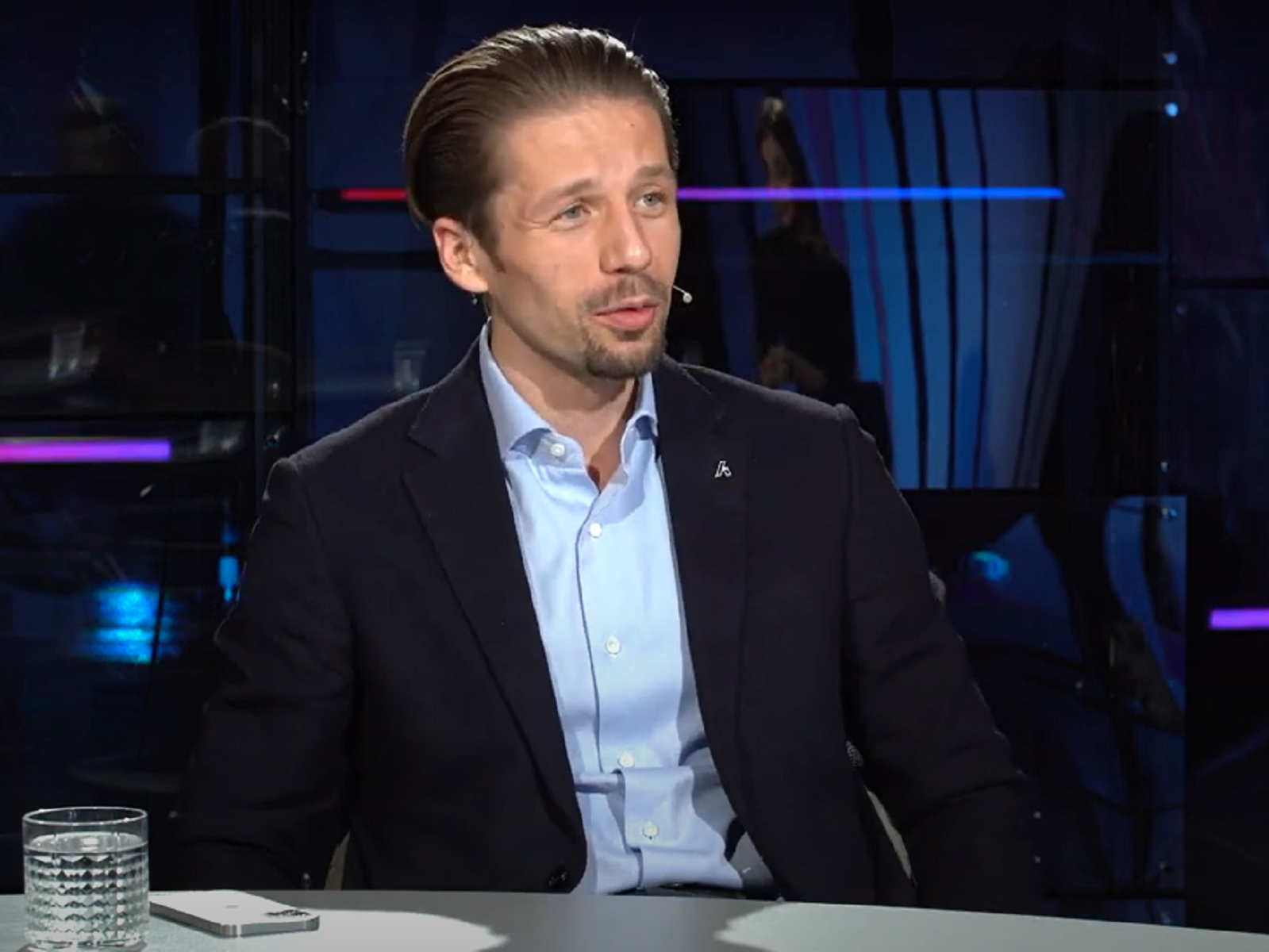
We’re attaching too much importance to the meeting in Shenzhen: political scientist Andriy Vihirinsky
I am generally opposed to drawing parallels with Yalta. People who make such assumptions somehow completely fail to take into account the circumstances under which the Yalta Conference took place. Yalta was about reorganizing the world, in which all three participants formed a coalition that had defeated Hitler and Nazi Germany. Consequently, all of them were already quite exhausted by the hostilities that had, in fact, posed a threat to them over the previous years. And then these parties had to determine among themselves how they would coexist in the new world order, where they were the victors.
This gave rise to the issue of spheres of influence and their division: which party, within its own security perimeter and under various security agreements, would occupy a certain territory or exercise control over it. These were relationships that were more or less reciprocal in nature and involved both competition and, at times, cooperation. Therefore, if we are to draw analogies with Yalta, a meeting of the three nuclear powers—the world’s largest—is, first and foremost, a meeting at which they must agree on how to coexist and avoid conflict with one another. In this case, they need to find common ground on issues that are of critical importance to each of these countries. For the United States, this is the presence of China and Russia in the Western Hemisphere. For Russia, it is the issue of Eurasian security. For China, it is the issue of Taiwan.
Therefore, such a meeting is more like another stage in a multi-stage negotiation process, within which the parties have already established their respective red lines. In particular, this applies to Taiwan: preventing an increase in the number of entities that recognize Taiwan’s independence or promote its independence from China. This is a separate track of negotiations that constantly serves as the backdrop for the dialogue between China and the United States. When it comes to active conflicts and preventing escalation, the primary focus is on upholding agreements to prevent an increase in the number of countries possessing nuclear weapons, as well as preventing their use in ongoing conflicts.
When it comes to conflicts that limit the ability to cooperate and compete and cause harm to all parties to roughly the same extent, the primary focus is on the Strait of Hormuz. The question is how to end the conflict, ensure the resumption of shipping, and restore the operation of gas and oil refining facilities. This, in turn, will help lower prices, ease inflationary pressures, and so on.
In other words, in a competitive world where actors plan to compete with one another without resorting to military force or direct confrontation, there is no question of complete agreement on the entire spectrum of issues. Such a meeting or interaction involves a situational, short-term—until the next summit or consultations—definition of the nature of behavior regarding issues of mutual interest.
Nuclear weapons are a matter of common interest. The Strait of Hormuz is also a matter of common interest. As for issues of European or Eurasian security, China may take the position: “You know, we believe that how the war ends is your business. But if you decide to push through a certain type of agreement via the UN Security Council, we’re ready to support that approach.”
In other words, we attach great importance to this meeting, given that it brings together the world’s first and second largest economies and, in fact, the three leading nuclear powers. But the nature of their relationship does not involve a common enemy or the circumstances that existed in Yalta—victory over a common adversary. On the contrary: the U.S. and China are poised for a long-term confrontation, particularly regarding their roles in the Indo-Pacific region. And the most important thing for them in this process of establishing dialogue and competition is to avoid sliding into direct military conflict.
But this is, rather, a matter of bilateral relations between the United States and China. In these relations, Russia’s role—as the participants themselves see it—is that it can provide assistance to China just as China has provided assistance to Russia. But, for example, Russia will not participate directly in the war, either through combat operations or by providing military assets.
What Zaluzhny spoke about should become standard practice for us: the so-called global decision—that is, a global decision that is not made without a global emergency, meaning a global threat or a global crisis. If we use this terminology, there is currently no global threat to these countries on such a scale. Therefore, there is no basis for formulating any kind of joint, general, or global decision.
A
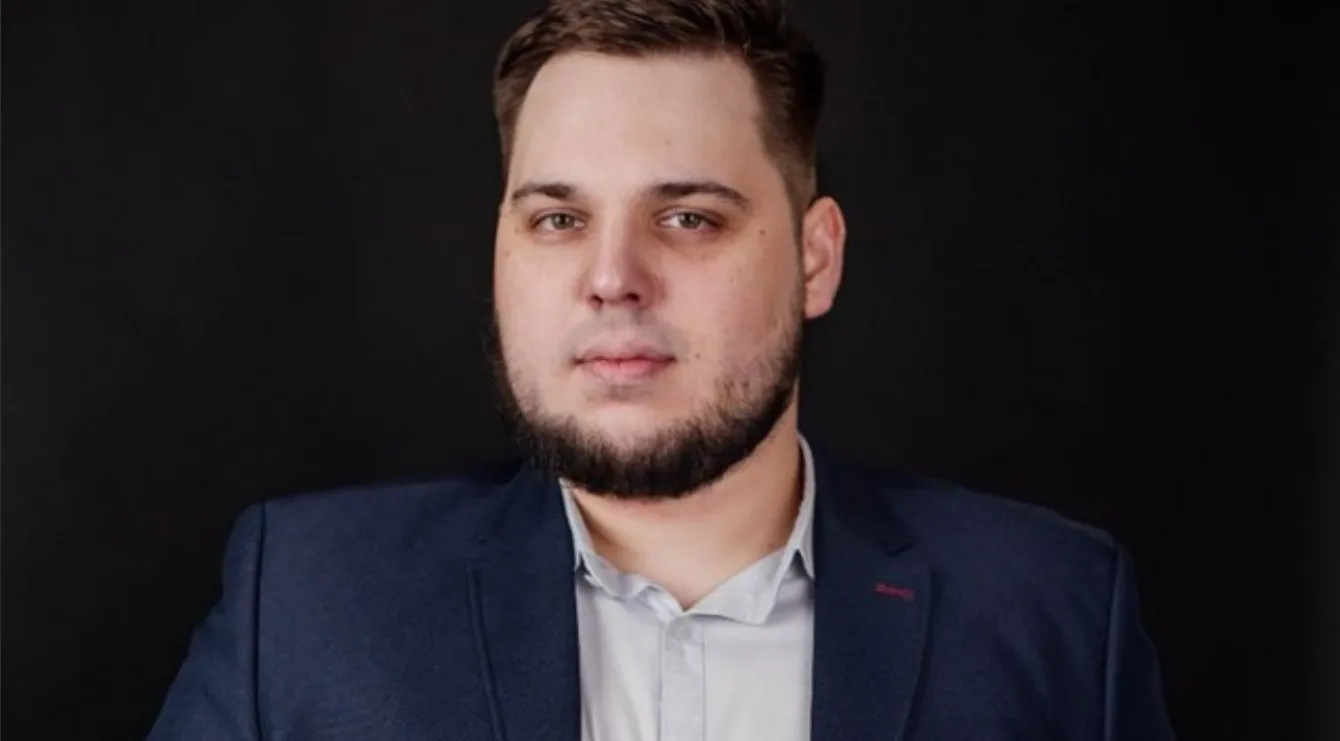
joint meeting between Xi, Trump, and Putin does not imply a joint strategy: political scientist Maksym Honcharenko
The summit between Trump, Putin, and Xi in Shenzhen is, first and foremost, a symbolic gesture. It demonstrates the return of great-power diplomacy, within which issues of international security become the subject of discussion among major centers of power. But it is premature to call this a reincarnation of “Yalta.” This is neither about the division of spheres of influence nor a shared vision of the future. Most likely, what we are seeing now is an attempt by each participant to demonstrate their own influence on international processes.
The countries are approaching the meeting with different positions and goals. Trump is interested in maintaining his image as a global leader and has come seeking diplomatic results. Therefore, the U.S. may expect the president to achieve a media victory regardless of the outcome: Trump’s team will interpret the very fact of the meeting as a normalization of relations and a sign of respect from China, as well as Russia’s willingness to negotiate. For Putin, this meeting is a chance to take a step toward breaking out of international isolation. It will be presented to the Russian public as a restoration of Russia’s position as an equal partner with the “major players” in global security—Washington and Beijing. Xi, for his part, is strengthening China’s international standing, securing diplomatic leverage for himself and cementing his status as a neutral “problem-solver.” All of this leads us to the conclusion that the mere fact of a joint meeting does not automatically imply the existence of a shared strategy.
The
risk for Ukraine still exists. And it lies in the very principle of discussing the country’s future without its full and direct participation. Negotiations between Washington and Moscow on the Ukrainian issue may encompass not only ways to end the war but also Kyiv’s very geopolitical fate: its foreign policy course and security guarantees. This creates an obvious risk that Ukraine’s position as a participating state will be treated as a variable that can be shifted unilaterally.
Beijing is the most interesting player here. It is a direct economic competitor of the U.S. and wields significant influence over Russia. But so far, it is not ready to use these opportunities to pressure Moscow and bring the war to an end on terms acceptable to Ukraine. For Xi, it doesn’t matter what Putin is up to, as long as the Russian state remains under control and becomes increasingly dependent on China. Yes, he understands that Russia is a country in crisis. But as long as this crisis remains manageable, he will maintain a partnership with Moscow while simultaneously trying not to worsen relations with the U.S. China’s most likely role is to balance the interests of the other two parties.
One of the most significant aspects is the struggle for influence over Europe and the attempt to strategically sideline it from the decision-making process. It is the European states that have the greatest stake in a just and lasting peace, so they will be the most scrupulous in scrutinizing the terms and guarantees of future agreements. In contrast, Trump, who wants the agreements to be a done deal, and Putin, who seeks to avoid tying his own hands for the future, are resisting the participation of EU representatives. Under these circumstances, it is critically important for Kyiv to maintain coordination with its European partners and prevent a disconnect between the realities of the negotiation process and Ukraine’s security interests.




