
A unique lake has been discovered beneath the ice in Greenland: Scientists warn of the risks
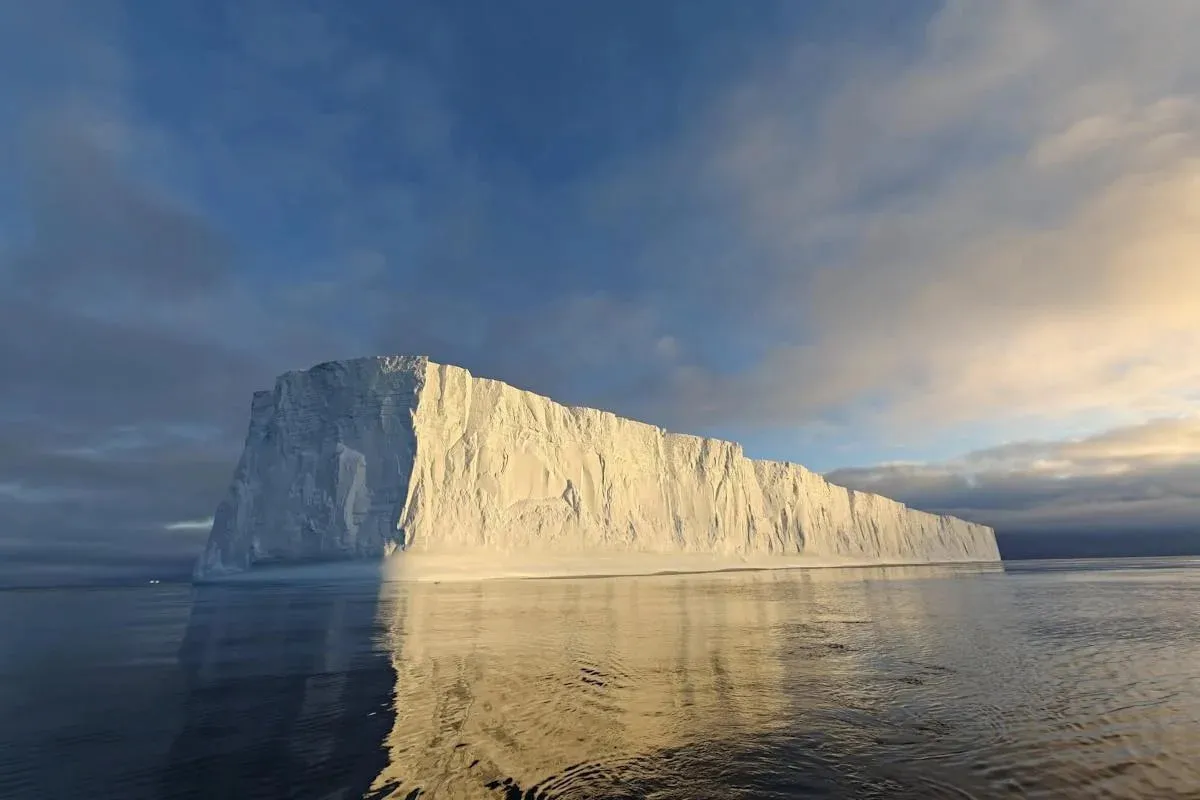
A unique lake located inside the ice has been discovered in Greenland. According to scientists, it may have contributed to the weakening of the Petermann Ice Shelf, from which a giant iceberg subsequently broke off.
On August 4, 2026, a massive iceberg broke off from the Petermann Ice Shelf in northern Greenland. This was the glacier’s largest loss of floating ice since 2012 and the largest calving event since 2020.
Petermann connects the Greenland Ice Sheet to the Arctic Ocean. In 2021, researchers discovered the world’s first known estuary on a ice shelf—a place where fresh meltwater mixes with salty ocean water.
After analyzing satellite images and long-term data on ocean conditions, scientists determined that the estuary first formed in 2014. It then disappeared when the surface water froze or flowed off the ice shelf. In 2016, the body of water reappeared, and this cycle repeated itself for several years.
The cause is linked to a river of meltwater that gradually cut through the ice shelf. Its channel deepened below sea level, so warmer, salty ocean water began flowing back into the river and mixing with the fresh water. According to scientists, the constant formation and disappearance of the estuary weakened the ice, contributing to the formation of cracks and, ultimately, may have contributed to the August calving event.
Previously, scientists believed that rivers on ice shelves could be beneficial: they drain water into the ocean and reduce the load from accumulations of meltwater. Estuaries, on the other hand, can have a negative impact.
Researchers fear that as the climate warms and ice shelves thin, such bodies of water will become more common. This is particularly important for Antarctica, where about 75% of the continent is surrounded by ice shelves. Scientists estimate that the first estuaries there could appear within the next 30 years.
Meanwhile, the broken-off iceberg is drifting through the Nares Strait. After colliding with Joe Island, it continued on its way. In warmer waters and narrow straits, the giant ice mass will likely begin to break into smaller pieces and gradually melt.
Giant Iceberg Breaks Off from Greenland – Details
An iceberg covering more than 76 square kilometers has broken off from the Petermann Glacier in Greenland—the largest since 2012. Satellites are tracking its movement. Scientists had expected the break-off to occur elsewhere and to form a larger iceberg. After breaking away, the iceberg moved down the fjord at a rate of nearly 3 km per day before colliding with Joe Island. Despite the impact, it did not break apart.
A new study by researchers at the Cooperative Institute for Research in Environmental Sciences explains how an unusual body of water inside the ice shelf may have played a role in this.
Switzerland’s glaciers lost 5.5% of their ice volume in 2026 — Asharq Al-Awsat.
Antarctica recorded its third-lowest sea ice extent.
Scientists from the UAE will study the risks of landslides and glacial floods in Nepal.




