
China describes the oldest known semiaquatic mammal — Cyprus Mail
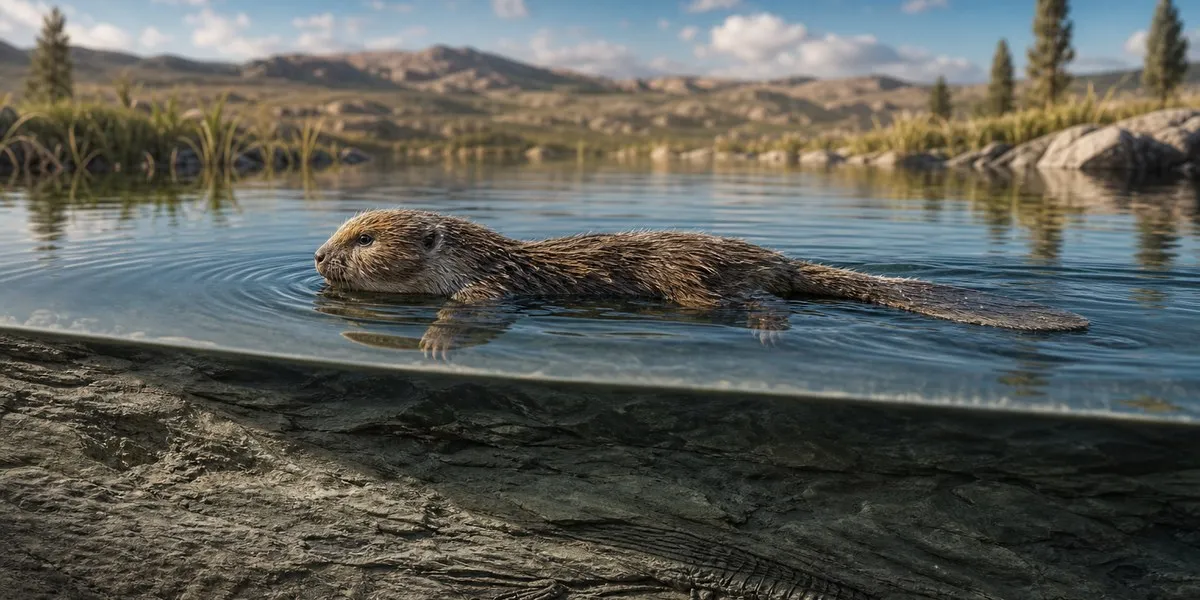
In Inner Mongolia, China, researchers discovered fossil remains of the species Megacauda sungei, which lived about 165 million years ago during the Jurassic period. Scientists called it the oldest known example of a semiaquatic lifestyle in the evolutionary history of mammals, Cyprus Mail reports.
Adaptations to life in water
Megacauda was approximately 50 centimeters long and weighed between one and two kilograms. Its body and hind legs were proportionally similar to those of a platypus, although the animal did not have the characteristic bill. Its broad, flattened tail, covered in small scales, resembled that of a beaver or platypus. The scientific name Megacauda means “large tail.”
Paleontologist Thomas Martin of the University of Bonn suggested that the animal swam by paddling with its front and hind legs while making wave-like movements with its tail. It may also have dug burrows along the banks of rivers or lakes. The remains were found in rock formed from lake sediments.
More current news is available on the UA.News Telegram channel Telegram.
Diet and throat structure
The structure of Megacauda’s jaws and teeth indicates a predatory diet. Its backward-curving tooth cusps may have helped it hold slippery prey, including fish. Bone fragments were found in the fossil animal’s stomach area, indicating that it consumed small vertebrates; numerous salamander fossils were found in the same rocks.
The well-preserved specimen also contains impressions of skin and fur. Fine bony structures and articulated hyoid bones associated with throat and tongue muscles were found beneath the skull. According to the researchers, this anatomy enabled it to breathe and feed simultaneously and supported a swallowing method characteristic of modern mammals.
Megacauda belonged to the docodonts, a group of mammals that appeared about 200 million years ago, existed for around 90 million years and left no modern descendants. Other docodonts lived on land, in burrows or in trees.




