
In Russia, scientists are being persecuted for donating to the Navalny Foundation
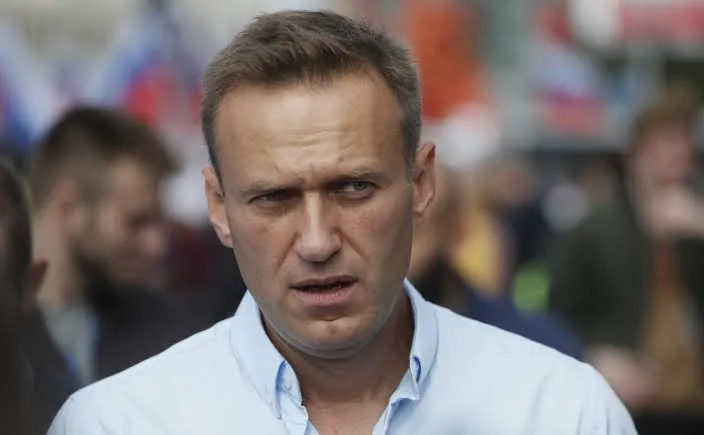
In Russia, criminal cases are being brought against researchers and professors who previously donated money to the Anti-Corruption Foundation (FBK), founded by Alexei Navalny. According to Mediazona, the FSB has initiated at least three such cases over the past year, and in the spring, Moscow courts received at least six similar cases. Some researchers have already received actual prison sentences—even for transfers of just a few thousand rubles.
Russia’s Federal Security Service is initiating criminal cases against employees of research institutions and university professors who previously provided financial support to Alexei Navalny’s organizations. According to “Mediazona,” these cases are being brought under Part 1 of Article 282.3 of the Russian Criminal Code—concerning the financing of extremist activities. Russian law enforcement agencies are applying this article, in particular, against people who transferred money to the Anti-Corruption Foundation. The organization has been designated as extremist in Russia, and its activities have been banned. Now, even small donations to the foundation can serve as grounds for criminal prosecution.
According to Mediazona, over the past year, the FSB has initiated at least three cases against employees of research institutes and university professors in Moscow and the Moscow Region. At the same time, at least six similar cases were filed with Moscow courts this spring.
Ornithologist Sentenced to 3.5 Years in a Penal Colony for Two Money Transfers
One of the most recent known convicts is Sofia Rosenfeld, an ornithologist who worked at the Institute of Ecology and Evolution of the Russian Academy of Sciences. On October 7, the Gagarinsky District Court of Moscow sentenced her to three and a half years in a penal colony. The basis for the conviction was two donations to the Anti-Corruption Foundation—1,000 rubles each. The total amount was 2,000 rubles.
According to the publication, Rosenfeld is now the third woman to receive an actual prison sentence for financially supporting Navalny’s allies.
Mathematician Sentenced for Transfers Totaling 3,500 Rubles
Another case involves Andrei Dimov—an associate professor at the Higher School of Economics and a senior research fellow at the Steklov Mathematical Institute. On May 26, the Zyuzinsky District Court of Moscow sentenced him to three and a half years in a general-regime penal colony. The court found the mathematician guilty of making transfers to the FBK totaling 3,500 rubles.
Another case involves physicist Dmitry Kazakov, director of a laboratory at the Joint Institute for Nuclear Research. On September 26, 2025, the Dubna City Court in the Moscow Region fined him 300,000 rubles. According to “Mediazona,” the basis for the ruling was two transfers to the fund, each in the amount of 500 rubles. That is, the total amount of donations was only 1,000 rubles.
Thus, the cases against Dimov, Kazakov, and Rosenfeld involve transfers ranging from 1,000 to 3,500 rubles. The penalties, however, varied significantly: from a large fine to several years in a penal colony.
All three cases are linked to a single FSB unit
As “Mediazona” notes, the cases against Dimov, Kazakov, and Rosenfeld were initiated by the same unit—the 4th Department of Directorate “P” of the Fourth Service of the Russian FSB. This department is responsible for counterintelligence oversight of industry. It also works with major state-owned technology corporations, including “Rostec” and “Roscosmos.”
The repetition of the same pattern across several cases may indicate a systematic approach to persecuting individuals who previously supported the FBK. At the same time, the data presented here pertains to specific cases described by journalists and does not allow for determining the total number of all such cases in Russia.
Cases against academics show that not only well-known political activists but also people working at universities and research institutions can face criminal prosecution. In the cases cited, the basis for the charges was small monetary transfers made earlier in support of an organization that the Russian authorities had designated as extremist. This has been reported by Russian media.
The Security Service of Ukraine has documented the crimes of Artem Sharlai—the head of the so-called “department for work with religious organizations” of the Russian Federation’s occupation administration in the temporarily occupied part of Zaporizhzhia Oblast.




