
Justice Kagan says US Supreme Court rulings undermine voting rights — TIME
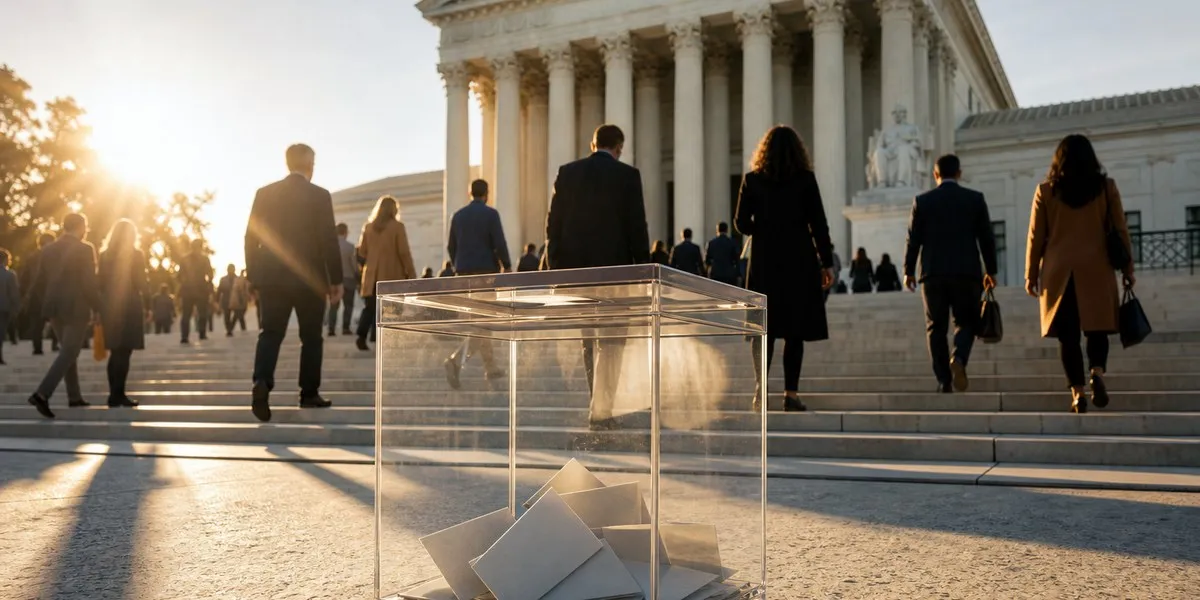
US Supreme Court Justice Elena Kagan, speaking at the Catholic University Law School in Washington, said that rulings by the court’s conservative majority are weakening American democracy and voting rights ahead of the midterm elections. TIME reported this.
According to Kagan, the court does not take into account the negative impact of its decisions on the political system and has created a democracy that functions worse than it should. She mentioned rulings concerning electoral districts, campaign financing, and presidential powers.
Electoral districts and minority rights
Kagan drew attention to the Louisiana v. Callais case concerning the creation of a second electoral district in Louisiana where Black voters constituted a majority. In April, the Supreme Court struck down this map and, in Kagan’s assessment, weakened provisions of the Voting Rights Act of 1965. Following the ruling, Republican-led states began proposing new district maps that, according to the publication, could weaken the electoral influence of Black voters.
University of California, Los Angeles law school professor Rick Hasen told TIME that the consequences are already evident in Louisiana and Alabama, where districts in which Black voters could elect their preferred candidates were eliminated. Kagan also mentioned the 2019 ruling in Rucho v. Common Cause, which bars federal courts from blocking district maps solely because they give an advantage to a particular party.
More current news is available on the UA.News Telegram channel Telegram.
Money in politics and presidential powers
The justice also criticized the June 6–3 ruling in National Republican Senatorial Committee v. FEC. It struck down limits on political party spending coordinated with candidates, including on television advertising. Her statement came amid forecasts of the most expensive election cycle in US history.
Separately, Kagan mentioned the ruling in Trump v. Slaughter, in which the court removed protections for Federal Trade Commission members against dismissal without cause and expanded presidential control over independent agencies. University of Chicago professor Aziz Huq said that the ruling strengthened the president’s ability to direct subordinate officials.
Possible steps by Congress
Hasen believes that Congress could pass a nationwide law against partisan manipulation of congressional district boundaries. Lawmakers could also attempt to amend the Voting Rights Act to restore safeguards narrowed by the court ruling. At the same time, any such new provisions could be challenged in court. Even if Democrats regain control of Congress, President Donald Trump could veto legislative initiatives.




