
Unitree developed robotic dogs based on research funded by the U.S. Army
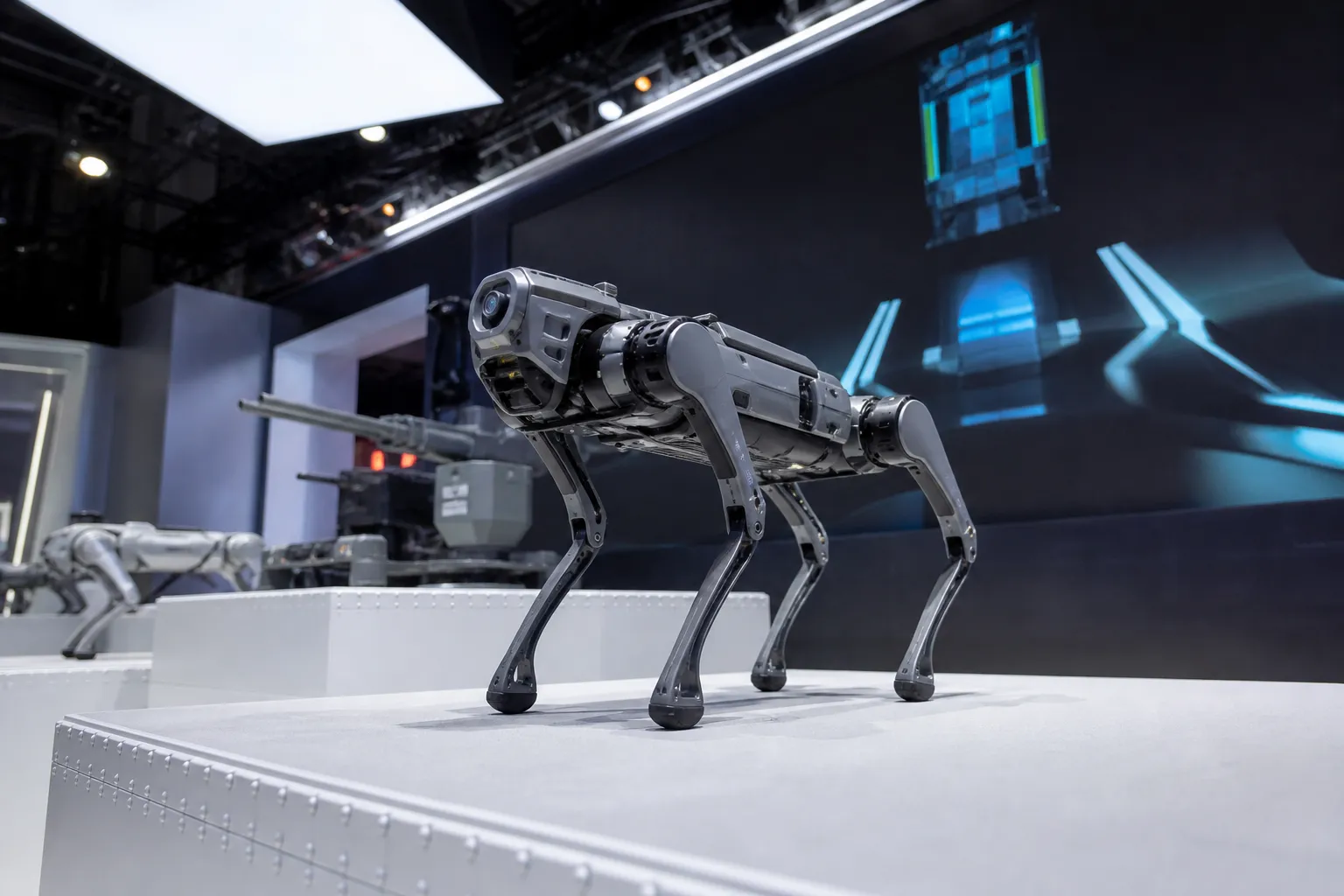
China's Unitree Robotics incorporated technological solutions developed as part of programs funded by the U.S. Army into the design of its most successful robot dogs. This was reported by The Japan Times, citing a former U.S. defense technology official and three researchers involved in these projects.
According to Ben Katz, who worked at the Massachusetts Institute of Technology’s Laboratory for Biomimetic Robotics, the dimensions of the popular Unitree Go series match those of the Mini Cheetah robot he worked on almost to the millimeter. Gavin Kennelly, a former researcher at the University of Pennsylvania, stated that the military project effectively served as the basis for the first Unitree robot produced on a large scale.
The research was conducted as part of the Robotics Collaborative Technology Alliance, which was funded by the U.S. Army from 2010 to 2020. The alliance included researchers from the University of Pennsylvania, MIT, Boston Dynamics, NASA’s Jet Propulsion Laboratory, and other institutions. In 2016, researchers at the University of Pennsylvania removed the heavy central gearboxes and placed motors in the robots’ legs, which improved the machines’ ability to respond to terrain. In 2019, MIT unveiled the Mini Cheetah, which was capable, among other things, of performing backflips.
Katz noted that within six months of the publication of his master’s thesis on the Mini Cheetah’s actuators, Chinese manufacturers had already begun producing copies of them. Unitree founder Wang Xinsheng cited the MIT research and a University of Pennsylvania article funded by the U.S. Army Research Laboratory in his 2016 master’s thesis. At the same time, Unitree claims to have independently developed the motors, gearboxes, controllers, and some of the sensors for its four-legged robots.
For more breaking news, follow the UA.News Telegram channel.
Researchers do not consider Unitree’s use of these findings to be improper, as the results of the programs were published openly to advance robotics. Amanda Ligon, a spokesperson for the U.S. Army Research Laboratory, stated that the research has strengthened the U.S. robotics ecosystem and laid the groundwork for further work by both the government and the private sector.
According to the company’s documents, Unitree sold more than 5,500 humanoid robots and 18,000 quadrupedal robots last year. Its Go2 model, introduced in 2023, costs about $1,600. Meanwhile, Ghost Robotics—founded by Kennelly and a supplier of robots to the U.S. military and government agencies—shipped approximately 1,000 Vision 60 robots. Their price exceeds $165,000.
In June, the Pentagon added Unitree to its list of Chinese military companies, designating it as a company that supports China’s defense-industrial base. Unitree insists that its robots are intended for civilian use. According to the publication, Chinese state television featured Unitree robots alongside soldiers of the People’s Liberation Army, and a modified B1-series robot equipped with an assault rifle.




