
More than 6% of wetlands destroyed in the Amazon over 40 years — Mongabay
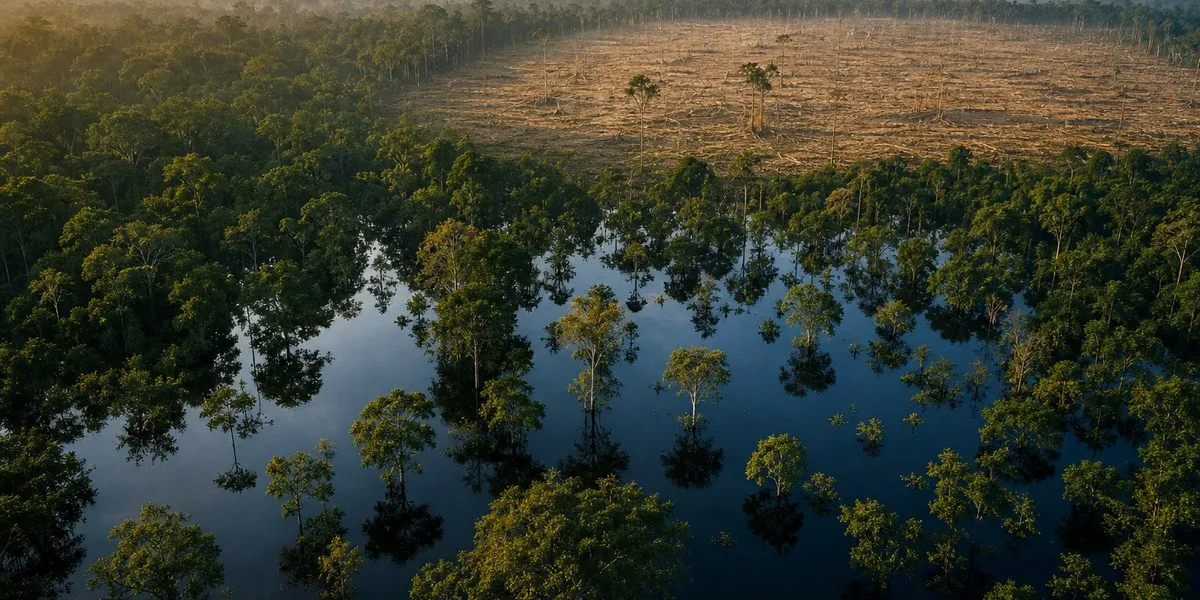
In the Brazilian part of the Amazon, more than 6% of the total area of floodplain forests and other wetlands has been cleared over the past 40 years. Nearly one-third of these losses occurred in 2015–2024, Mongabay reports, citing a new study.
According to the study’s lead author, State University of Campinas researcher Guilherme Lobo, the area of converted land is roughly equivalent to the territory of Belgium. Wetland ecosystems cover about 30% of the Brazilian Amazon. Every year, the region’s rivers overflow their banks and flood surrounding forests for several months.
The greatest losses on undesignated lands
The researchers compared the scale of land clearing across 13 land-use categories. The highest share of human-converted land was recorded on public territories for which authorities have not yet assigned a specific designation: the median clearing rate there reached nearly 14%.
More current news is available on the UA.News Telegram channel Telegram.
Lobo said such plots are burned to demonstrate their use and later claim ownership rights. According to a 2026 Imazon study, federal and state laws create incentives for land-grabbing practices known in Brazil as grilagem.
Protected areas show lower rates
The lowest level of wetland conversion was recorded in territories under military control — less than 0.01%. In formally recognized Indigenous territories, the figure was 0.2%, while in Indigenous territories still awaiting demarcation, it was 0.3%. In other strictly protected areas, it also did not exceed 0.3%.
The fastest annual rates of clearing were found in agrarian reform settlements, where plots are allocated to farming families. Five years after such settlements were established, the share of converted land reached 1.4%, compared with 0.9% before their creation. After 15 years, the figure rose to 24%, compared with 8.5%. In sustainable agrarian reform settlements, where families collectively own land and harvest forest products, changes occurred more slowly — from 2.4% to approximately 3.5%.




