
Tens of thousands protest in Spain over Ceuta crisis
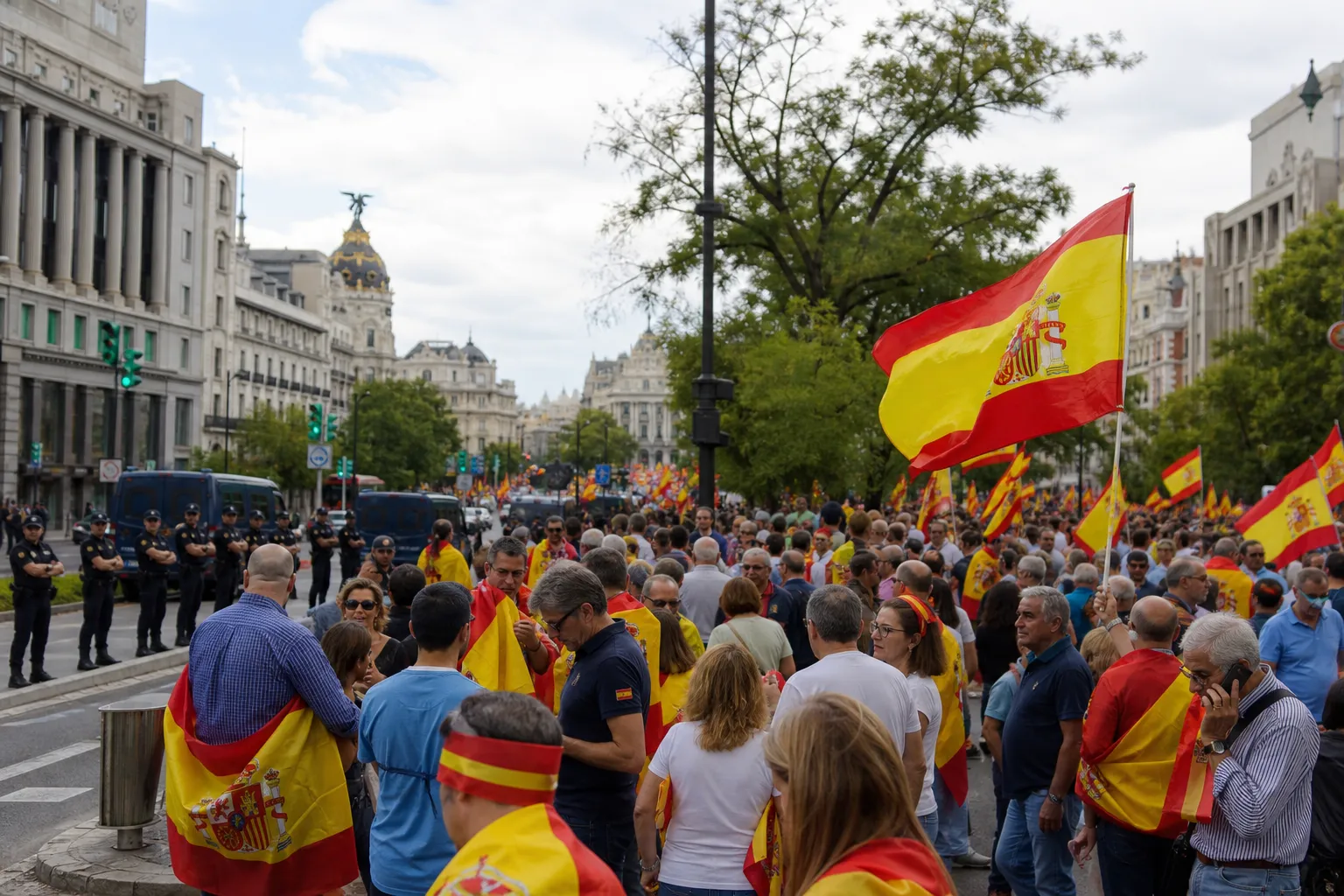
Tens of thousands of people took to the streets in Spain to protest the migration crisis in Ceuta and the actions of Prime Minister Pedro Sánchez’s government. In Madrid, about 50,000 people took part in the demonstration, according to authorities, Deutsche Welle reports.
Protests on Ceuta Day
The rallies coincided with Ceuta’s annual official holiday, which is usually marked by celebrations. This year, it took place amid ongoing tensions at the border between the Spanish exclave in North Africa and Morocco.
Large demonstrations also took place in Barcelona, Valencia and Seville, where participants waved Spanish flags. The protests in Madrid and more than 200 other cities and towns were officially organized by the non-partisan Spanish Federation of Municipalities and Provinces.
Spain’s Minister of Territorial Policy Ángel Víctor Torres said the protests were politically motivated. According to him, their goal was not to support Ceuta and its residents, but to attack Spain’s government.
Police actions and support for the city
After the demonstration in Madrid ended, an Associated Press journalist reported hearing gunshots and explosions. According to the newspaper El País, police used rubber bullets and tear gas to disperse the crowd.
More current news is available on the UA.News Telegram channel Telegram.
The conservative and far-right opposition used the rallies to criticize the government, accusing it of pursuing a policy of appeasement toward Morocco. Counter-demonstrations against racism were reportedly held in some cities.
Spain’s government rejected claims that it had left Ceuta without support. This week, it allocated €309 million for the city’s social services, including migrant accommodation, as well as security infrastructure.
Migrants remain in the exclave
At the end of July, a large number of migrants crossed the border from Morocco into Ceuta. The Spanish government says that most of those who arrived in the exclave have already left, but between 5,000 and 8,000 people still remain there.
Among the migrants are unaccompanied minors. Some people remain on streets and beaches while authorities try to provide them with accommodation, registration and return to Morocco those who are eligible for it.
Ceuta’s leader Juan Jesús Vivas called on the central government to strengthen the border with Morocco. In a video address, Pedro Sánchez said that the government was using all available resources to restore calm for Ceuta’s residents.




