
Yemeni authorities warn of risk of hospital shutdowns in Taiz due to siege — Al Jazeera
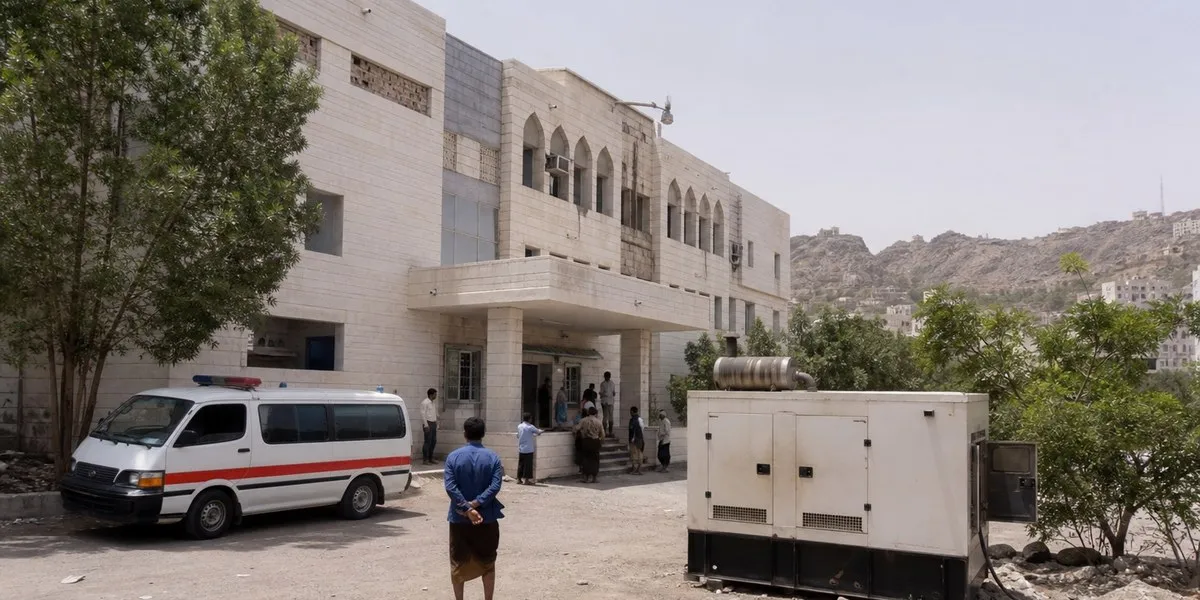
Yemen’s internationally recognized government has warned of the threat of an “imminent medical and humanitarian catastrophe” in the besieged city of Taiz in the country’s southwest. Yemen’s Ministry of Public Health and Population said that stocks of medicines, intravenous solutions, medical supplies and fuel at the city’s medical facilities are nearly exhausted.
As Al Jazeera reports, under the current conditions, emergency care, surgical services, intensive care units, dialysis and neonatal care may cease operating. The government ministry said this poses an immediate danger to patients, the wounded, pregnant women and newborns.
Fuel for generators and ambulances
The fuel shortage also threatens the operation of power generators, ambulances, and systems for storing medicines and vaccines at the required temperature. The ministry warned that this could lead to severe complications and preventable deaths.
Yemeni authorities called for the siege to be lifted immediately, supply routes to be opened, and safe passage for patients, ambulances, medical personnel and humanitarian aid to be guaranteed. They also appealed to the UN and humanitarian organizations to deliver medicines, intravenous solutions, medical supplies, oxygen and fuel to Taiz.
More current news is available on the UA.News Telegram channel Telegram.
Main route blocked
According to Nabil Jameel, head of the Yemeni government’s Planning and Development Office in Taiz Governorate, about 2.8 million people live in government-controlled areas of the governorate, while another 200,000 people have recently been displaced by the fighting. He described the current siege as larger in scale and more severe in its consequences than the 2015 siege.
The Houthis launched an offensive along the Red Sea coast in Taiz Governorate in September, capturing the port city of Mocha. By October 4, they had taken the city of At-Turba, cutting off the last main road between Taiz and other government-controlled areas. In early October, Yemeni government forces, supported by Saudi Arabia, launched a counteroffensive.
Jameel said the black-market price of a 20-liter canister of gasoline had risen from 30,000 to 90,000 Yemeni rials. The UN Refugee Agency and the World Health Organization had warned that the fighting threatens Yemen’s already fragile healthcare system.




