
Journalist Rose George explores problems of global fishing industry — Live Science
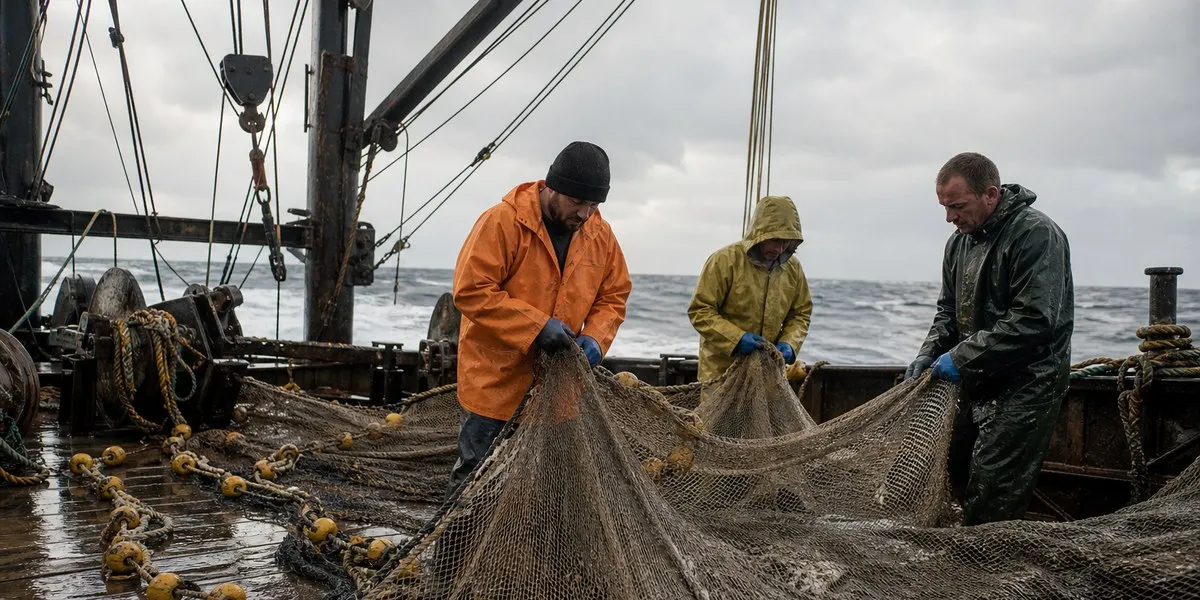
British journalist and writer Rose George examined the problems of the global fishing industry in her book Every Last Fish: A Deep Dive into the World of Fishes and Fishing, including overfishing, illegal fishing, working conditions at sea and fish welfare. She spoke about her work on the book in an interview with Live Science.
The book was published by Granta Books in 2025. It was also shortlisted for the 2026 Royal Society Trivedi Science Book Prize. While working on it, George travelled across different continents, went to sea on trawlers, spoke with fishers and aquaculture workers, and explored research into fish intelligence and sentience.
Pressure on marine resources
According to Live Science, the fishing industry faces growing fish production and consumption, overfishing, and illegal, unreported and unregulated fishing. The publication notes that these factors harm marine ecosystems and make their sustainable management more difficult. The situation is also affected by warming seas, which are changing the distribution of marine populations and reducing fish size.
More current news is available on the UA.News Telegram channel Telegram.
George noted that humanity is shifting towards ever greater consumption of farmed fish compared with fish caught in the wild. She sought to show fish not only as a food product, but also as animals with complex abilities that, in her view, receive too little public attention.
The experience of fishers in Senegal
The author compared the situation of small-scale fishers in England and Senegal. According to her, Senegalese fishers suffer particularly from catches of fish, some of which goes to produce fishmeal in other countries. George also said that sardinella, a fish important to nutrition in Senegal, has become much less available there.
She stressed that the problems are caused not only by illegal activity: according to George, the Senegalese government sold licences to Chinese and Spanish trawlers. The author called fishing a dangerous profession because of the risk of people being killed or injured, vessel accidents and work with heavy equipment. In the book, she also addresses severe abuses at sea, including reports of slavery and killings, and notes that the sea is difficult to control because of its scale.




