
China has more than 300,000 agricultural drones — ECNS
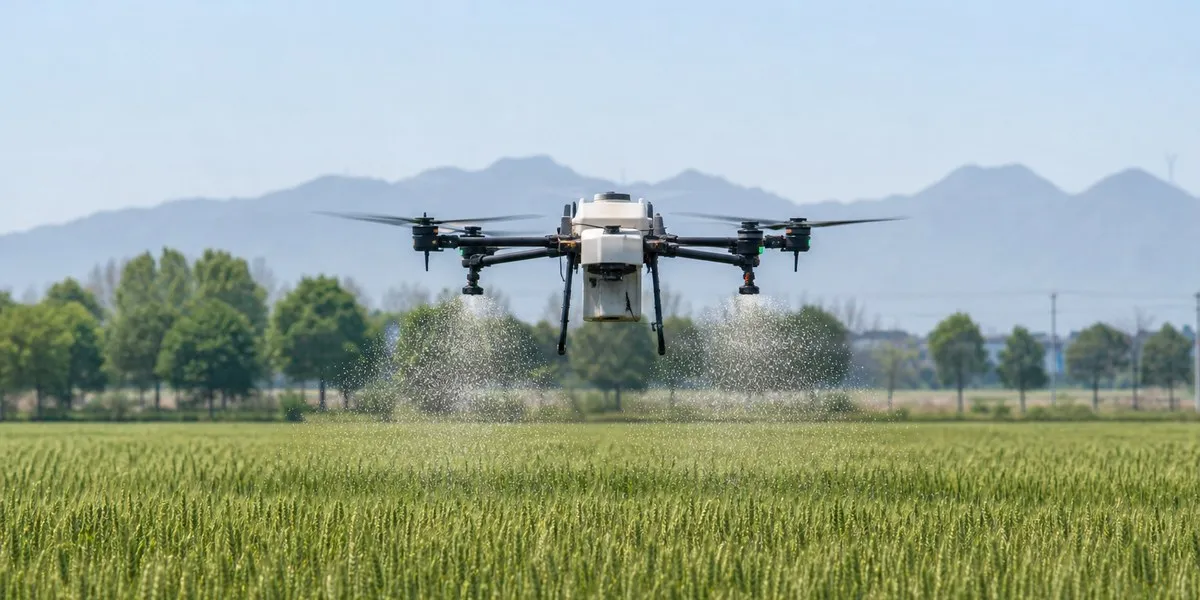
China uses more than 300,000 agricultural drones, the highest number in the world. Their annual area of use exceeds 30 million hectares, ECNS reports, citing data from China’s Ministry of Agriculture and Rural Affairs.
Field treatment and costs
Agricultural drones have become one of the main means of plant protection in the country. According to the data provided, they can operate more than 20 times more efficiently than manual labor, reducing water consumption by more than 50% and pesticide use by 20–40%.
In Huangyan District of Taizhou City, Zhejiang Province, farmers are being trained to operate agricultural drones as the autumn harvest enters a critical phase. One of the trainees, 63-year-old Wang Zhiliang, is learning theory, flight control and maintenance in order to obtain an operator’s license and improve the efficiency and precision of rice cultivation.
According to Wang, hiring two workers to spray about three hectares costs 450 yuan, while drone operations cost 280 yuan. Wang Haili, head of a local drone technology company, said that training drone operators for plant protection costs about 3,000 yuan.
More current news is available on the UA.News Telegram channel Telegram.
Transport and fertilization
Drones are also used for irrigation, fertilization and short-distance cargo transport. Farmer Huang Ning, who manages 13 hectares of melon crops in Yunnan Province, said drones can increase overall work efficiency by 40–50% amid labor shortages during peak seasons.
At a water bamboo cultivation cooperative in Guan’ao Village, drones can spray plant protection products and apply fertilizers across 33 hectares of fields per day. Jiang Liangzhen, deputy director of the cooperative, said this makes it possible to save 5,000–6,000 yuan per treatment and reduce annual labor costs by 30,000–40,000 yuan. In mountainous areas, drones also transport freshly harvested oranges down the slopes.
Nie Pengcheng, director of the Department of Ecological and Environmental Planning at the New Rural Development Institute of Zhejiang University, noted that the sector faces a shortage of qualified operators and needs to improve operating standards and criteria for assessing service quality.




