
China prepares ban on fully electric concealed car door handles from 2027 — Motor1
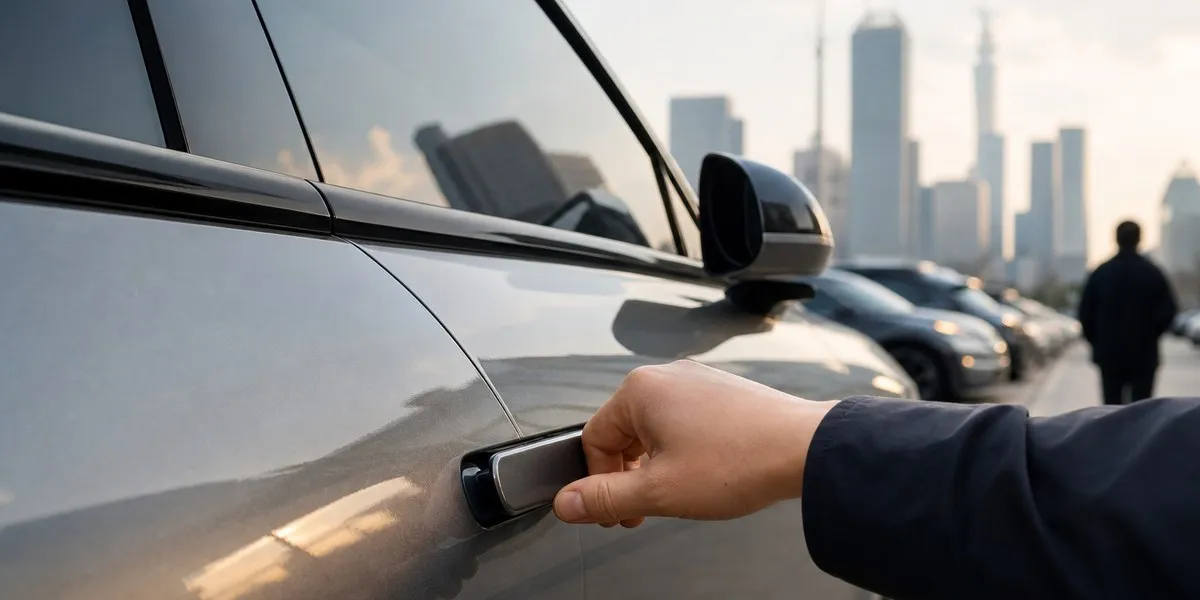
China’s regulator has prepared draft safety rules that provide for a ban on fully electric concealed exterior door handles from January 1, 2027. Such mechanisms depend on power to extend and open the doors, while the new requirements are intended to ensure that doors can be opened mechanically in the event of a power loss.
Motor1 reports that manufacturers submitting a new vehicle design for registration in China will have to provide additional technical data and safety verification materials for designs that regulators classify as innovative. These include, in particular, fully concealed handles that electronically extend from the bodywork.
Mechanical door opening
Semi-concealed or recessed handles may remain permitted if they can be used mechanically. They must also provide a hand-grip space measuring at least 2.4 by 0.8 inches.
More current news is available on the UA.News Telegram channel Telegram.
The draft rules concern more than just door handles. For safety-critical functions, including exterior lighting, windscreen wipers and demisting windows, physical controls instead of access solely through touchscreen menus are proposed.
Requirements for certified models
Automakers have until July 1, 2027, to submit additional technical materials and verification results for models that have already received certification for sale in China. This also applies to the BMW iX3 for the Chinese market without retractable handles. A separate safety standard for door handles provides such vehicles with a longer transition period for possible design changes.
For the registration of new models, regulators propose documenting 51 additional parameters, including the reliability of the design and software, resistance to environmental conditions, heating and cooling performance, as well as water and dust protection. Innovative designs must also undergo durability testing for at least 18,600 miles. Production suspensions and recalls may be applied only to models for which documents are not submitted within the established deadline and which are subsequently found to pose a real safety risk.




