
ProLogium announces mass production of solid-state batteries in Taiwan
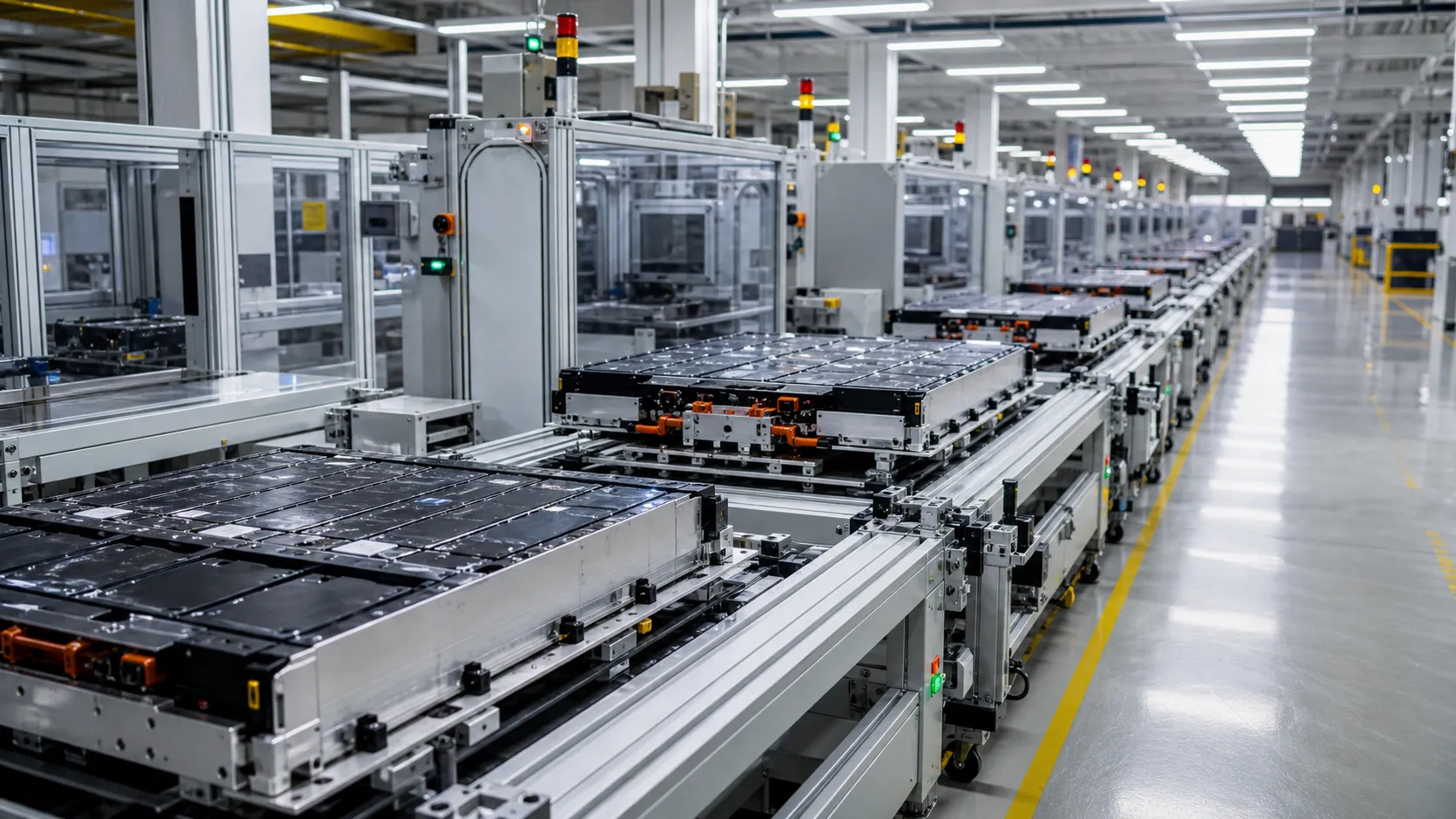
Taiwanese company ProLogium has announced the start of mass production of fully solid-state battery cells on the Taoke line in Taoyuan, Taiwan. The company, which has received investments from Mercedes-Benz and other industry representatives, produces large-format Generation 3.5 Lithium Ceramic Battery pouch cells with a capacity of 185.4 ampere-hours.
As InsideEVs reports, the facility’s initial production capacity is 0.5 GWh. This roughly corresponds to 6,000 battery packs for electric vehicles with a capacity of 80 kWh each. ProLogium plans to double production at its Taiwanese site by 2030.
Cell energy density
German organization TÜV tested the Generation 3.5 cell and recorded a gravimetric energy density of 381 Wh/kg and a volumetric density of 903 Wh/l. According to InsideEVs, the figure of 381 Wh/kg is approximately 30% higher than the level of common nickel-manganese-cobalt cells, which usually have up to 300 Wh/kg at the cell level.
More current news is available on the UA.News Telegram channel Telegram.
For comparison, the gravimetric energy density of lithium iron phosphate cells, which are increasingly used in electric vehicles, ranges from 150 to 200 Wh/kg. Generation 3.5 uses a composite solid electrolyte and a ceramic separator with a proprietary edge-frame design. It creates an additional separator around the perimeter of the electrodes to isolate possible burrs and ensure sealing and insulation.
Testing and production expansion
UL Solutions tested ProLogium’s large-format cell under the Chinese GB/T 43568-2026 methodology, introduced in July for more precise differentiation between fully solid-state batteries and cells with liquid electrolyte. During the test, the cell was kept in a vacuum at a temperature of 120 °C for six hours. The recorded mass loss was less than 0.05%, below the 0.5% threshold that allows companies to label products as fully solid-state batteries.
ProLogium also reports that the previous Generation 3 version can charge from 5% to 80% in eight and a half minutes. For Generation 3.5, the company states charging from 5% to 80% in less than 10 minutes. In Dunkirk, France, ProLogium plans to launch another facility in 2028 with an initial annual capacity of 4 GWh and a maximum capacity of 44 GWh; production ramp-up is expected to continue until 2030.


