
Blue Origin develops third stage for New Glenn rocket — Space.com
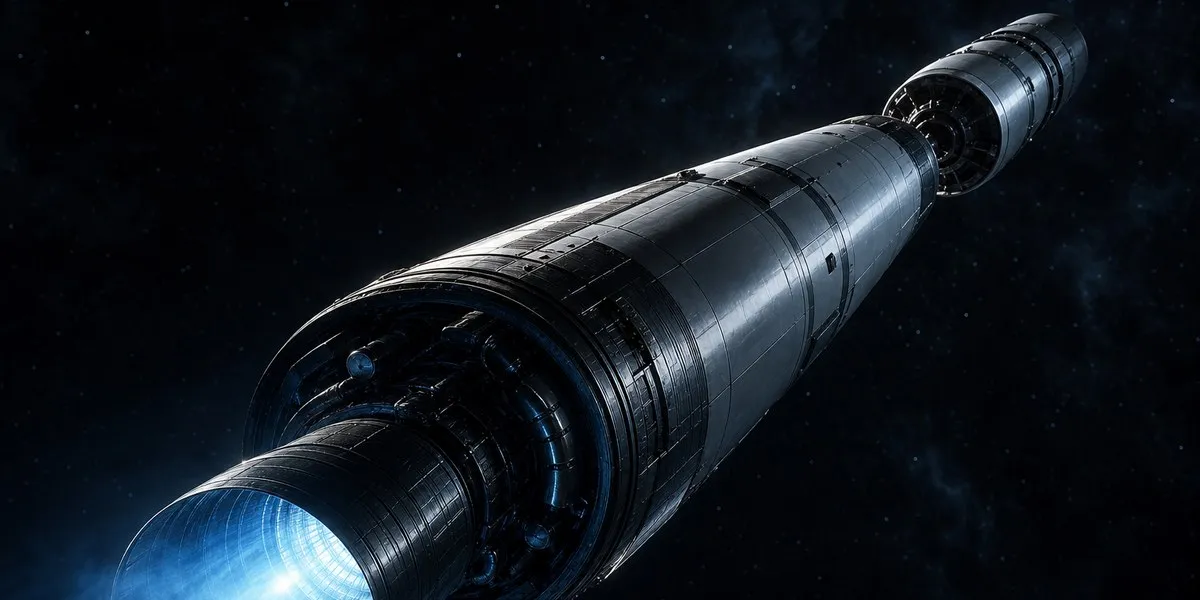
Blue Origin announced the development of the GS3 third stage for the New Glenn heavy-lift launch vehicle. It is intended to expand the rocket’s capabilities for directly deploying satellite constellations into geostationary orbit, as well as for heavy scientific and research missions to the Moon and deep space, Space.com reports.
Capabilities of the new stage
The GS3 will be equipped with one BE-7 engine, developed by Blue Origin for the Blue Moon spacecraft. NASA selected Blue Moon as one of two private spacecraft for crewed lunar landings under the Artemis program; the other is SpaceX’s Starship.
According to Blue Origin, Blue Moon missions will not require New Glenn launches with a third stage. At the same time, GS3 will be able to support extended operations near the Moon. The company said that delivering a significant cargo mass directly onto a lunar transfer trajectory will make it possible to reduce flight time and preserve more propellant for orbital operations.
An unnamed government customer has already booked a mission using GS3 to cislunar space. Its launch is planned for 2028.
More current news is available on the UA.News Telegram channel Telegram.
Northstar engine
At the same time, Blue Origin said it is working on a new first-stage engine, Northstar. Like the BE-4, it uses liquid oxygen and liquid methane. According to the company, Northstar is 30% lighter than the BE-4, has 50% fewer parts, and delivers 715,000 pounds-force of thrust compared with 640,000 pounds-force for the BE-4.
Blue Origin also said that manufacturing improvements have reduced Northstar assembly time to less than one day. Eleven months passed from program approval to engine testing. The company did not name the date of its first flight.
New Glenn is currently a two-stage rocket standing 98 meters tall. Its reusable first stage is equipped with seven BE-4 engines, while the second stage has two BE-3U engines. The rocket’s basic version can deliver up to 45 tonnes to low Earth orbit and up to 13 tonnes to geostationary transfer orbit.




