
MIT researchers reprogrammed NK cells in mice — ScienceDaily
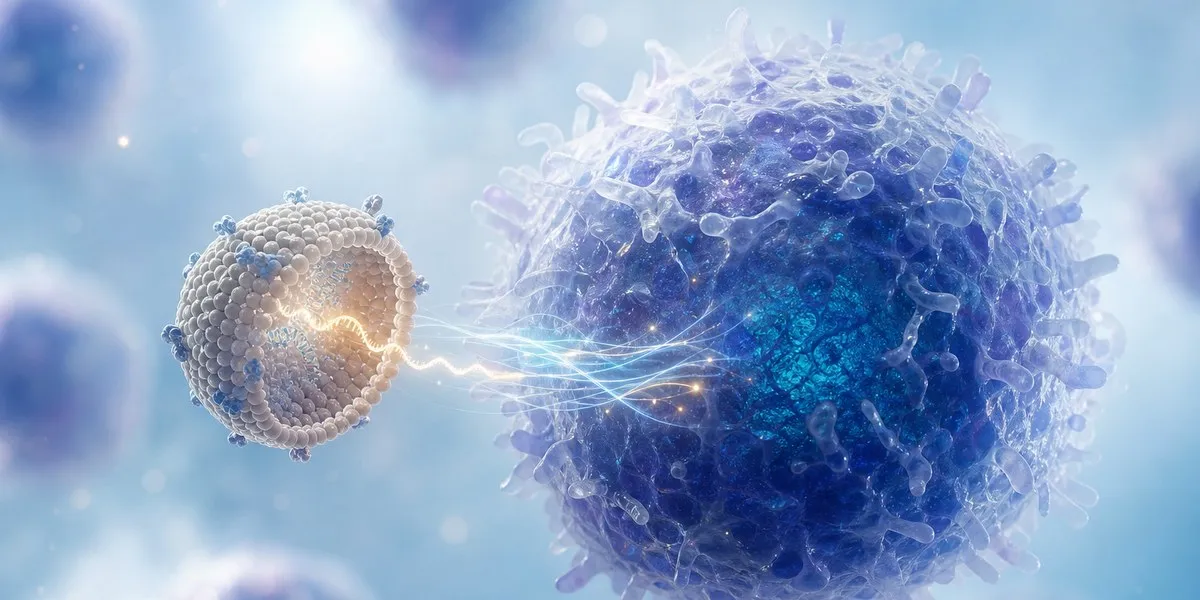
Researchers at the Massachusetts Institute of Technology have developed a way to reprogram natural killer cells (NK cells) directly inside the body. In experiments in mice, lipid nanoparticles containing messenger RNA helped immune cells recognize and destroy tumor or pathological T cells, ScienceDaily reports.
Nanoparticles deliver instructions to NK cells
For CAR-T therapies, immune cells are usually removed from a patient, genetically modified in a laboratory, grown to the required quantity, and returned to the body. The MIT team's method involves injecting lipid nanoparticles coated with antibody fragments. They help deliver messenger RNA to NK cells.
Messenger RNA contains instructions for producing a chimeric antigen receptor, or CAR. Such a receptor can be configured to recognize certain proteins, including CD19 on B cells or CD3 on T cells. This turns NK cells into CAR-NK cells capable of attacking a specified target.
Results of mouse trials
After the nanoparticles were administered, researchers were able to modify about 80% of the NK cells targeted by the technology. In a model of aggressive melanoma, complete remission was recorded in three out of five mice that received nanoparticles designed to target NK cells at cancer.
More current news is available on the UA.News Telegram channel Telegram.
In humanized mice with T-cell lymphoma, tumors disappeared completely after five nanoparticle injections. According to the researchers, the results were comparable to the effect of CAR-NK cells produced by the traditional method outside the body.
Potential use in autoimmune diseases
Separately, the method was tested in a model of autoimmune hepatitis, in which pathological T cells attack liver cells. A single nanoparticle injection eliminated autoreactive T cells, after which the damaged liver tissue of the mice recovered.
The work was published in the journal Nature Biotechnology. The authors believe the approach could simplify the production of cell therapies in the future, but the technology's safety and effectiveness for humans still need to be tested. Currently, no CAR-NK therapy has been approved by the U.S. Food and Drug Administration.




