
Google DeepMind unveils new AI version for robots — Ars Technica
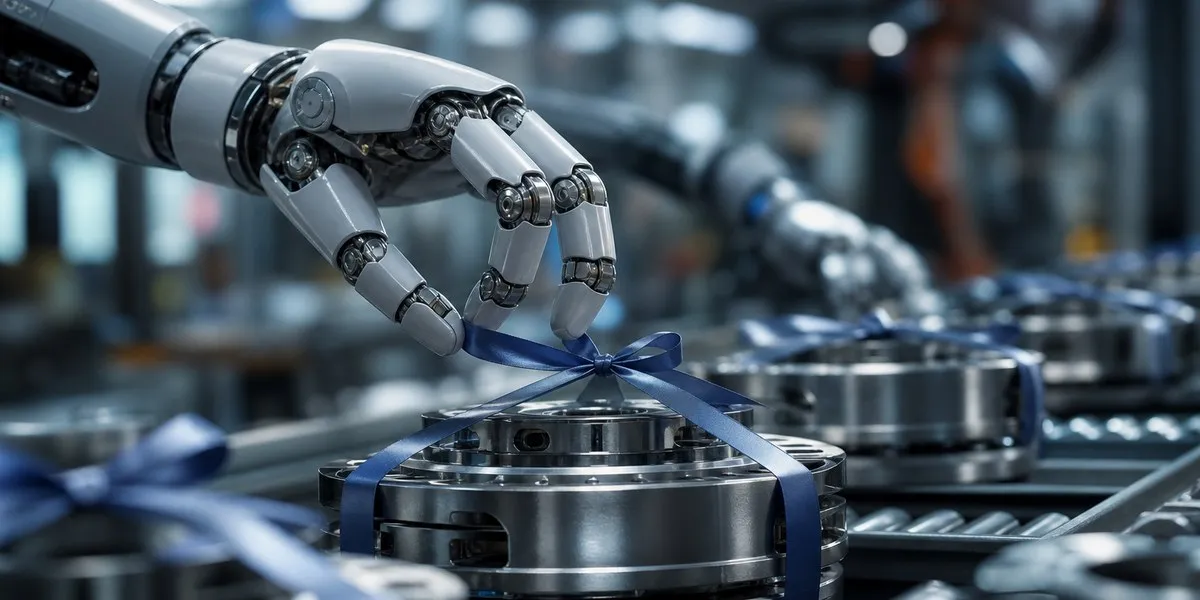
Google DeepMind has unveiled Gemini Robotics 2.5, a new version of its artificial intelligence platform for robots. As Ars Technica reports, the system is intended to perform real-world physical tasks more accurately, quickly and safely, including in industrial production settings.
The platform combines the Gemini Embodied Reasoning model, which analyzes instructions and camera video to plan actions, with the Gemini Robotics component, which generates commands for robot movements. DeepMind says Gemini Robotics 2.5 handles tasks requiring high precision and hand dexterity better.
Tests at Mercedes-Benz factories
During the evaluation, the model was tested on more than 200 tasks, including serving food with tongs and working with a pipette. The company also demonstrated how Apptronik's Apollo 2 humanoid robot with five-fingered hands ties a bow. Manipulating deformable objects, including ribbons, is among the difficult tasks in robotics.
According to Google, in laboratory tests Gemini Robotics 2.5 showed a 30–100% higher success rate than the previous version and completed tasks 20–30% faster. Apollo 2 robots equipped with the system assembled automotive components at several Mercedes-Benz factories in Europe with a 96% success rate.
More current news is available on the UA.News Telegram channel Telegram.
DeepMind director Kanishka Rao said that closing the remaining 4% gap to nearly error-free performance of repetitive work would be difficult. DeepMind's head of robotics, Carolina Parada, stressed that developers have to choose between maximum accuracy in specific scenarios and robots' ability to perform a broad range of tasks.
Testing robot safety
To train the system, DeepMind used Gemini 4 Argon, which created thousands of simulations based on data from real cameras. These digital models helped generalize new tasks and operating conditions more quickly. At the same time, Gemini Robotics 2.5 runs on cloud servers, so its use involves latency when processing commands.
DeepMind also released the open ASIMOV-Jailbreak dataset with 1,500 prompts designed to test whether a robot can be induced to perform a dangerous action. According to the company, using Argon in the system resulted in a 98.8% safety rate against such attempts, while Gemini Robotics ER 2 scored 73.5% on Google's benchmark. Gemini Robotics 2.5 is not yet available to the general public, but it has already been provided to Google's partners, including Agile Robots, Apptronik and Boston Dynamics.




