
US physicists propose sensor to measure frame-dragging effect — Live Science
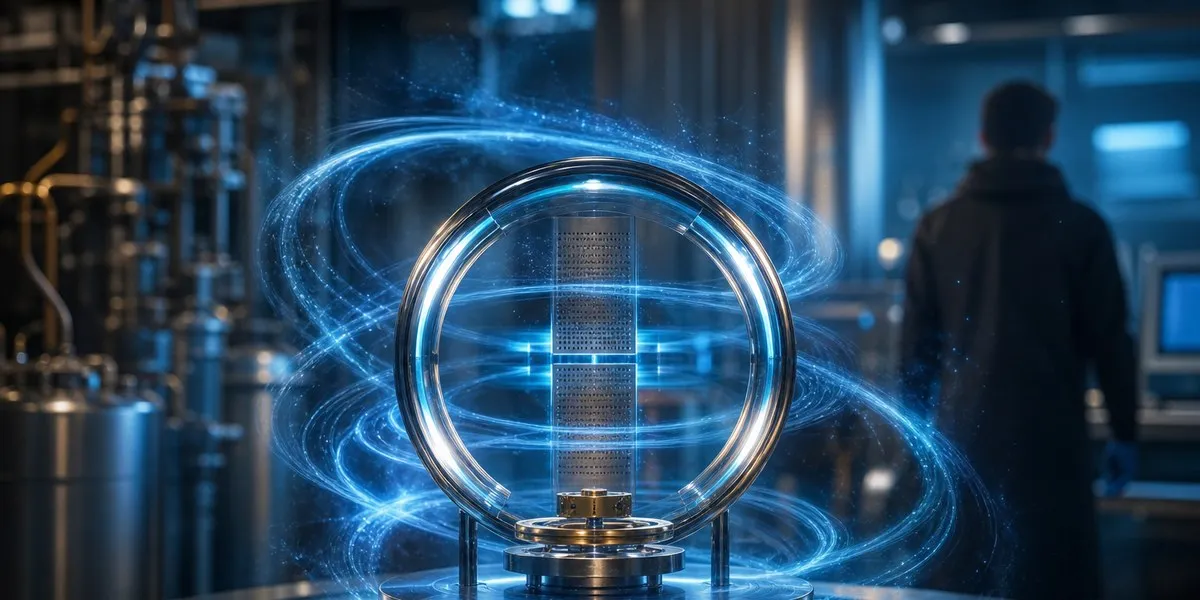
Physicists in the United States have proposed a tabletop quantum device to measure an extremely weak effect in which Earth’s rotation warps spacetime around the planet. As Live Science reports, the proposed sensor could potentially achieve the precision of the best satellite measurements, but in minutes rather than years.
Testing general relativity
Einstein’s general theory of relativity predicts that a massive rotating object drags spacetime along with its motion. Near Earth, this effect, known as frame dragging, is very weak. It has previously been measured only from orbit — through changes in the motion of gyroscopes or satellites.
NASA’s Gravity Probe B satellite confirmed the prediction in 2011 with an uncertainty of about 18%. In July, researchers reported that the LARES-2 satellite made it possible to reduce the uncertainty to 0.2%, although this required about three years of laser tracking. Such calculations also require accounting for Earth’s uneven mass distribution and gravitational irregularities.
More current news is available on the UA.News Telegram channel Telegram.
A loop of superfluid helium
The concept of the new instrument involves a loop of superfluid helium-4 — a substance cooled to a state in which it flows without friction and behaves as a single quantum object. The loop is to contain a thin barrier with nanometer-scale openings, known as a Josephson junction. Superfluid helium, but not ordinary liquid helium, can pass through it.
According to the authors’ calculations, Earth’s rotation will affect helium’s quantum state and change the frequency of its oscillations in the loop. At temperatures below 0.7 kelvin, thermal noise decreases sharply. Operating such a sensor requires openings about 1 nanometer wide — dozens of times smaller than those used in previous helium devices.
The researchers note that the necessary materials are still being developed and have not yet been integrated into a working sensor. If the device can be built, it could, by their estimates, measure the effect with 0.2% precision in about 35 minutes. Using a quartz or sapphire membrane could potentially reduce this time to about one second.




